
A-
Genre: Nonfiction
The Trembling Hand: Reflections of a Black Woman in the Romantic Archive is a great book for people who are interested in the Romantics (in this context, I’m referring to artists who were part of the artistic movement known as Romanticism). Author Nabugodi assumes that you are already at least somewhat familiar with this movement and with the lives and works of William Wordsworth, Samuel Coleridge, Mary and Percy Shelley, John Keats, and Lord Byron. It’s not an introductory work. However, for readers with an interest in the movement and for those interested in the intersections of Race, history, and art, this is an invaluable resource.
Nabugodi uses specific items as her entry point into each of the authors mentioned above. My only substantial complaint about this book is that it doesn’t include pictures. However, the internet is a thing so it’s not as though it’s difficult to find pictures of, for instance, Wordsworth’s teacup or Shelley’s baby rattle.
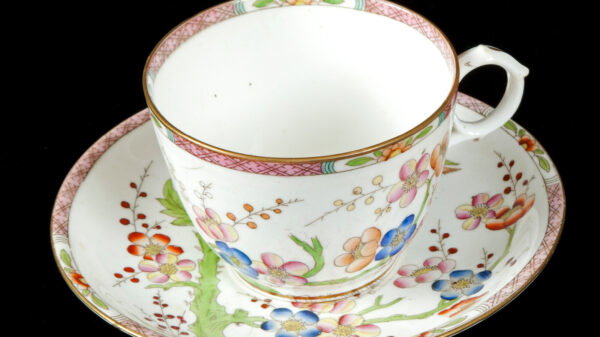
Each of these objects in some way demonstrate the ways in which the lives and the works of the Romantics intersected with slavery and racism in both conscious and sub-conscious ways. Nabugodi is not interested in seeing things through a “fair for its day” lens although she is rigorous about historical, social, and economic context. She is unflinching and both academic and personal in her approach. Nabugodi has many deeply intellectual things to say, but my favorite line remains:
Having spent several months thinking about the Boat Sonnet in all its versions and contexts, I conclude that Wordsworth has an issue with Black women and that I have an issue with Wordsworth. This is an occupational hazard. Every now and then I reach a point where I simply cannot take any more racist bullshit from the Romantics.
The Romantics talked about freedom, but their lives were impossible to unwind from the issue of slavery and concepts of white supremacy. Some were vocal abolitionists, but all of them were steeped in, and unable to fully reject, the ideas of white supremacy that were universal among white people of the era.
For instance, Percy and Mary Shelley refused to use sugar in their tea as a protest against the slave trade in Jamaica, yet they maintained a friendship with slaver Matthew Gregory Lewis. Sometimes the Romantics wrote intentionally and explicitly about Black people, real or otherwise.
But other times their writing simply reflected the world they lived in:
For what it is worth, I do not believe that Keats spent a second thinking about contemporary Africans when he endowed his Hyperion with curly locks and Aethiopian associations. Nor do I think that he set out to write a white supremacist epic…my point is that his Hyperion demonstrates the extent to which Romantic-era ideals about beauty and grandeur are impossible to disentangle from the period’s white supremacist worldview.
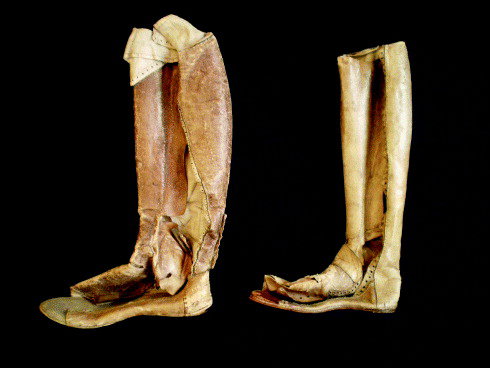
I found myself especially fascinated (and sickened) with the chapter “Byron’s Boot.” While I detest Lord Byron (ask me why!) I do find sympathy with him over our mutually dreadful feet. Both of us went through a variety of special shoes and braces and I recently had an ankle fusion. So while I detest him in various ways, I can’t help but feel a certain kinship that only those of us with crappy feet can share.
This chapter looks at, among other things, the “historical link between disability and Blackness…by putting Black people’s ability to think and feel into question, enslavers implied that we are better off enslaved; that our stunted lives would be destroyed by a freedom that we do not have the ability to handle.”
In the epilogue, Nabugodi states,
Discussing my work on the book with friends, colleagues, and sometimes strangers, I have encountered a sense of incomprehension that the poets who wrote so beautifully about freedom would hang out with slave owners in their spare time. The fact is they clearly did not mind. For them, the existence of race-based slavery was part of everyday life. There was no question of cancelling anyone over their Caribbean connections. Perhaps this also explains the silence: slavery was so ordinary to them that they had nothing to say about it.
The Romantics lived in a time that is very similar to our own. I find myself daily living within a system that hurts people in ways that are both old (the same terrible ‘isms’ still apply) and new (the Romantics would not have been able to conceive of the way ICE uses AI in surveillance – even Victor Frankenstein would not have imagined the sick alliance between ICE and AI services such as Palantir).
Even when the Romantics spoke out against slavery, they couldn’t shake the underlying attitudes of white supremacy. The book made me very, very angry and deeply sad, but also better equipped to discuss the people who lived during this time period. The book has given me a new way to read the Romantics, and it also reminds me to question the damaging foundational beliefs of my own society and how I might unintentionally support them.
This book is available from:





As an Amazon Associate we earn from qualifying purchases.
We also may use affiliate links in our posts, as well.
Thanks!

Can you share a link to the Boat Sonnet the author is referencing? I was curious and found three different Wordsworth poems involving boats, but couldn’t see anything that looked like the “problem with black women” she mentioned.
This article includes it: https://www.journals.uchicago.edu/doi/10.1086/TWC24042775
CarrieS – Thank you!
This sounds so good!
Woooow, all my old English major instincts have all sharpened. This sounds like it was a BRILLIANT read, thanks for sharing this.