

This month’s Kickass Women takes us to the silver boom town of Potosí, located in what is now Bolivia, in the 1600s. This city was riddled by crime, but two teenage girls, Ana Lezama de Urinza and Eustaquia de Sonza, took it on the task of cleaning it up.
At the time, Potosí was adjacent to a massive silver mining operation owned and run by the Spanish colonizers. Most of the silver was sent by boat to Spain, although some was sent to Buenos Aires to enrich the Spanish there, and some was sent via trading ships to the Spanish East Indies. Pieces of eight, coins valued for international currency, were minted at Potosí from local silver. The area still holds one of the world’s largest silver deposits and is mined for silver and for tin.
Back in the 1600s, the silver that so enriched the Spanish was mined by enslaved Indigenous people and other low-paid workers who were plagued by accidents, mercury poisoning, disease, and other hardships. The tiny town ballooned into a city holding over 200,000 people, including wealthy Spanish colonizers, business people from other countries, enslaved people from Africa, and Indigenous Andeans. Like most boomtowns, Potosí was known for gambling, drinking, and crime.
Eustaquia was born into a wealthy Potosí family of Spanish aristocrats which adopted Ana, an impoverished, homeless orphan, when Ana was 12. The girls became great friends and, later, devoted lovers. They loved spying on Eustaquia’s brother’s fencing lessons, and were good enough at fencing that their parents allowed them to have their own lessons in swordsmanship, riding, and shooting.
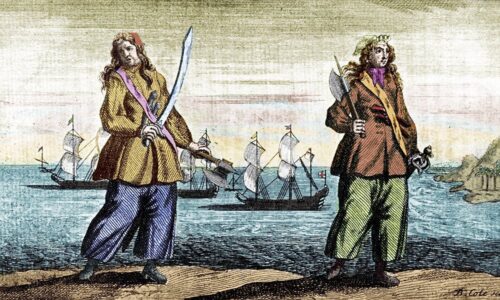
The teens began sneaking out of the house in disguise and picking fights, which they always won. They then upgraded to superhero status, spending the next five years fighting crime (and also drinking and gambling and participating in bullfights, all while wearing men’s clothing). During this time period they earned the nickname ‘The Valiant Peruvian Ladies of Potosí.”
Eventually Eustaquia’s father died and she inherited the estate and retired from her life of crime fighting. Ana lived with Eustaquia until Ana died from an injury sustained in a bullfight. Her devoted partner in combat and in love, Eustaquia, died soon after, due to what was said to be a broken heart.
My sources were:
History Naked: Valiant Ladies of Potosí
Cultura Colectiva: Valiant Ladies of Potosí
For a fun YA novel about these women, try Valiant Ladies by Melissa Grey ( A | BN | K | AB ).
If you want to learn more about the exploitative practices that continue in present-day mining in Potosí, check out the documentary The Devil’s Miner.

It’s interesting to consider how class plays into stories like this one, isn’t it? If any poor women of color led lives of joyous adventure we don’t hear about it.
Seguing to a biography that left me with mixed feelings about its hero….. have you read “The Great Divorce” by Ilyon Woo, In the 1810s in New York State, Eunice Chapman undoubtedly kicked a lot of ass in her campaign to get back the children her husband had kidnapped and placed in a Shaker community, and accomplish the almost impossible feat of getting a true divorce. But she was not scrupulous about her methods, for instance whipping up her neighbors’ religious bigotry and xenophobia when it served. The book also contains portraits of notable women who were Shaker leaders. That too left me with mixed feelings. The Shaker life and beliefs were in some ways very radical and gender-egalitarian, in some ways severely repressive. For instance they taught Eunice’s children to never speak to their mother who was Hell-bound and could only be a corrupting influence.