
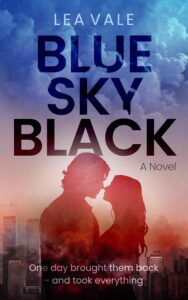
 Lea Vale is the author of Blue Sky Black, a dual-timeline recent history romance that takes place, in part, on 9/11/2001. We talk about writing recent history, especially recent traumatic history, into romance, we also discuss the power of the HEA, and we chat about her NHPR show, Check This Out!
So I want to be clear here that we discuss 9/11 on and off throughout the episode. Both of us witnessed the attacks on New York and the aftermath, so that perspective might be difficult or upsetting to listen to. We don’t get too much into the particulars, but we do discuss what is and what isn’t present in different accounts. Please look after yourself.
You can watch this episode on YouTube!
❤ Read the transcript ❤
↓ Press Play
This podcast player may not work on Chrome and a different browser is suggested. More ways to listen →
Here are the books we discuss in this podcast:


Make sure to disable your ad blocker to see all the books.
You can find Lea Vale at her website, LeaVale.com, and on Instagram @LeaValeAuthor.
Music: purple-planet.com
If you like the podcast, you can subscribe to our feed, or find us at Apple Podcasts, Spotify, or wherever you listen to your favorite shows!
❤ More ways to sponsor:
Sponsor us through Patreon! (What is Patreon?)

What did you think of today's episode? Got ideas? Suggestions? You can talk to us on the blog entries for the podcast or talk to us on Facebook if that's where you hang out online. You can email us at sbjpodcast@gmail.com or you can call and leave us a message at our Google voice number: 201-371-3272. Please don't forget to give us a name and where you're calling from so we can work your message into an upcoming podcast.
Thanks for listening!
Transcript
❤ Click to view the transcript ❤
[intro]
Sarah Wendell: Hello and welcome to episode number 742 of Smart Podcast, Trashy Books. I’m Sarah Wendell. My guest today is Lea Vale. Lea is the author of Blue Sky Black, a dual timeline, recent-history romance that takes place in part on September 11th, 2001. We talk about writing recent history, especially recent traumatic history, into romance, and we also discuss the power of the Happily Ever After. Then we chat about her New Hampshire Public Radio show, Check This Out, which I will be a guest on later this year.
Now, I want to be clear here that we’re going to discuss 9/11 on and off throughout the episode, and both of us witnessed the attacks on New York and the aftermath. We both lived there at the time, and so that perspective might be difficult or upsetting to listen to. We don’t get too much into the particulars, but we do discuss what is and what isn’t present in a lot of different accounts, so if this is too much, please look after yourself.
In the show notes, I have some recommendations for some other books that have included or depicted 9/11, and you can find them at smartbitchestrashybooks.com/podcast under episode 742.
I have a compliment this week. This compliment is for Margaret:
Margaret, your friends think that you are the human personification of endless cake and cookies in a room full of the good bubble wrap, the kind that makes the really satisfying pop, because you are that much fun.
Our Patreon community is full of lovely humans who would love to welcome you, most especially me! Our Patreon support keeps me going, makes sure every episode has a transcript from garlicknitter – hi, garlicknitter! – [Hello! – gk] – and because of the Patreon community, I was able to turn off dynamic ads – the ones you hear before and after an episode? – to avoid right-wing propaganda and ads for ICE. Our Patreon community is some of the greatest, and if you join, you get PDF scans of the full issues of RT, which are typically not available digitally anywhere else, and you get this lovely Discord, plus you get to be part of the Holiday Wishes episodes, which we are signing up for now. If you are in the Patreon, look for the link at patreon.com/SmartBitches, or look in the Discord to find the sign-up link. Our end of the year Holiday Wishes are some of our most popular, where my guests are all of you, and I cannot wait to welcome all of you onto the show.
All right, are you ready to get started? Let us do this interview! On with the podcast.
[music]
Lea Vale: Thanks for having me! I’m Lea Vale, and I am the debut author of Blue Sky Black, which is my very first romance in the world. But I have been writing traditionally published books, literary fiction, and publishing with Hachette for the last seven years. And so I have the whole agent team, you know, that whole thing, that whole part of the universe, but this is my foray into romance. And I’m super excited to be here because I feel like this is where my heart is in so many ways. I’ve been reading romance books for, well, my entire life.
And I very much had the privilege to start a podcast of my own called Check This Out. And as the podcast grew, I got to have more and more incredible authors on the show, and some of my favorites came on. I had Jennifer Armentrout and Callie Hart.
Sarah: I know.
Lea: I know. So for those listening, Sarah’s jaw just dropped, ‘cause they’re like, Oh my gosh! And these authors would come on the show, and they’re overnight successes on their like thirtieth books, right? Thirty-fifth, fortieth books. And I would tell them after we stopped recording, You know, I secretly write romance and read romance, like, all the time. And they would say to me, Why aren’t you publishing it? And I was like, Well, I don’t know if anyone would ever read it, and they were like, Who cares? Put it out there!
Sarah: Yes, just go ahead.
Lea: Right?
Sarah: Run it up the flagpole; see who salutes!
Lea: Yeah, yeah! And maybe you’ll be an overnight success at book twenty, like me, you know? And, and I just thought they’re right! Why not? And so I just finally got the guts up, I guess, to do it and to start self-publishing, just like them, just like so many of my favorite
authors. And I put out Blue Sky Black!
Sarah: That is fantastic. Congratulations. So this is your, you are publishing this. This book is your production. So you’ve done both traditional and indie pubbing now at this point.
Lea: Yeah.
Sarah: They’re, they’re a little different. They’re just a little different. It’s, it’s different when it’s just you. I’ve done both as well, and it’s quite an experience.
So let’s talk about your book. This is a, this is a dual timeline story that takes place in very recent history, and one of those timelines is on 9/11, like the actual 9/11. What led you into this story? This is a big, this is a big setting. I think that’s the best way to put it. This is a very big and complex setting in which to place a romance. You’re, you’re, you’re setting yourself up for a big challenge. What led you into this story?
Lea: Yeah, I really appreciate that question, Sarah, and that you, we’re approaching this with the sort of gravitas I think that it deserves. So for the record, Lea Vale will have a bunch more very traditional romances coming – [laughs] – but I started with Blue Sky Black because it’s my most personal book that I’ve ever written. And it really started from my own experience on 9/11, being down there, being just a block away from the World Trade Center after the first plane hit and losing a friend. And it was, it was horrific. And I wanted to write this story, you know, since it happened. And I tried so many different iterations, and it just didn’t work until I finally let myself write this as a romance.
And people ask me all the time, How can you write a romance about 9/11? Like, that just doesn’t make sense, right? And for me, the answer is, this is the only possible way to write about it, because romance goes so deep and dark. Like, the best books out there really, really tackle hard subjects. And 9/11 is an incredibly hard subject. But romance always ends on hope. There’s a happily ever for now, right? That’s why we read it, because we love, we know that we’re, we can go through all these horrible things because there’s hope.
So once I had that framework for this book, for my story, for my friend’s story, I was in! You know, the book just finally came together, and I, and I was able to write it and leave on hope, and write through the darkness because I was writing towards hope, and that’s how Blue Sky Black came together.
Sarah: That makes a lot of sense, that it, having that space where you know that there’s a happy ending, it’s a very safe place for readers to put any anxiety that they might have about what they’re reading because they know, Okay, I’m going into this story with these elements; I know that it’ll be okay in the end, that everyone will be fine. And that’s the agreement. Like, that’s the, the unspoken contract of romance. If you read a mystery, you expect them all to solve the mystery. No one’s just going to throw up their hands and be like, Well, can’t figure this one out! Might as well go home. Like, that does not happen, unless it’s a cliffhanger.
Lea: Right.
Sarah: When you’re involving 9/11 in a book, it, I could just imagine in your writing, you had to tread very carefully of what, what you were going to talk about and what you were not going to talk about. And in the dual timelines, you have the past in the ‘90s, and then you have the, the – it’s not the present, ‘cause it’s 20-, 2001. So you have the ‘90s and 2001, so it’s two periods of the past. How did you keep them straight? What were you doing to manage these dual timelines when one had so much going into it before you even introduced the characters? What was your approach to the dual timeline?
Lea: Right. So I love this question, because as a writer, you always have to sit down and ask yourself, right, is this a dual timeline? Is this straight? Am I doing flashbacks? Right, like, how am I writing this? And what is my universe? It, right, you can’t start writing until you have that and your point of view. Right, and yet it, this rarely comes up in interviews, right? Like, how did you start this here? How did you think about this?
Sarah: My favorite question: how did you enter this world? What, what led you in? Did you see something? Did you, did something strike your memory? Did you notice a picture and, like, did something grab you? What was the point of entry? is always –
Lea: Yeah, yeah!
Sarah: – my favorite question, yeah.
Lea: I love it too, which is maybe why I love listening to you, Sarah.
[Laughter]
Lea: ‘Cause I, right, this is like the writer brain here coming out. So I have written many versions of Blue Sky Black. Like, I’ve literally been trying to write this for ten years. Yeah. And I started it as literary fiction. Again, there wasn’t that same hope that I was writing towards, and it just wasn’t working. And, and it was so hard to write this as a narrative with a straight timeline that just, you know, you can’t stay on 9/11 for three hundred pages. I, I couldn’t do it! It’s too much. No! Like, not happening.
And so I, I went back to, well, what brought these kids – they’re early twenties, so for me they’re kids, right? Or these young adults – what brought them to the World Trade Center on September 11th? And so that’s really where I got to the dual timeline. Like, as much as for the reader, for me, it’s also a break. It’s let’s go back to the ‘90s when they all meet. And this is where you get the love story. This is where you get, you know, Zelda meets Ari and her best friend Charlie, and you see them growing up in ‘90s grunge, and they’re working in a pawn shop. And, you know, Ari’s this artist, and he goes to Paris, and you get this romantic view of the world. Because for me, 9/11 was really the last normal morning in America.
Sarah: Oh, that’s –
Lea: And there’s, like –
Sarah: – so true. The before and after, it – yes. Yes.
Lea: Yes!
Sarah: The, the, the before and the after are completely different worlds. Yeah.
Lea: Yes! They’re, they’re entirely different worlds. And so I wanted to capture that pre 9/11, that moment where you could just breeze through to the, security to your, you know, your gate at, at the airport. You’re not –
Sarah: You could meet people at the gate! You could go to the gate and meet them there! [Laughs]
Lea: Exactly, right! Like, it was just this whole other world. We had Napster, we had Cosmo, we had, it was like, the internet was just starting. And I remember just feeling like the whole world was opening up in 2000, 2001. And I wanted to capture all of that and that feeling of youth which I feel like America was in at that point, and, and get that feeling, because that is part of what makes 9/11 such a tragedy. Yes, the three thousand murders, right, the horror of terrorism; that is a tragedy, absolutely. We cannot forget that. But the other tragedy that I think we do forget is that excitement of the internet starting, the world starting to get smaller, this feeling of everything changing.
And so by doing, doing the dual timeline and writing about the kids discovering the internet, getting their first email, all that, right? We build up to what is exactly so exciting on the morning of 9/11 when we have Zelda and Charlie’s huge meeting, make or break, right? Are they going to get funded? Are they going to take their pawn shop online? And then boom, everything just comes to an abrupt halt.
Sarah: Yeah. And that realignment of priorities. Like, up until –
Lea: Yeah, yeah.
Sarah: – that moment, the pawn shop going online, their business idea, their pitch deck, like, all of that is the most important thing. And then within two hours, it is the least important thing. Yeah, that is a very big change.
Now, you, you mentioned when you emailed me that you see the HEA as emotional armor, which I think is a really good way of describing it. Can you explain what you mean, especially within the context of your characters and your experience writing this book?
Lea: Yeah! It’s – thank you for recognizing that, because I truly do think of it –
Sarah: It’s a great way of describing the HEA. It is emotional armor. Like I said earlier, romance is a safe place to put scary emotions, because you’re going to be guided towards a, a positive resolution. Yeah! Emotional armor is a really good way of putting it.
Lea: Yeah, thank you! It, it is that armor; it is that knowing that your characters might not have everything resolved perfectly, but they’re going to end on a note of, again, this, this idea of hope that I have a way forward. I can still go forward, right? I can still look forward. I can have a life. I can live for her, with her inside of me, you know, and this is how I feel about my friend too. Like, it was horrible losing her, and I think back on that and all that we had as kids growing up. She was a very good childhood friend of mine. And you know, we literally grew up in summers at the pool together. Our parents would drop us off at 8 a.m. – [laughs] – pick us up at 6 p.m. They had no idea what happened in between those ten hours.
Sarah: Cell phone! What’s that?
Lea: Ex-, exactly. Like –
Sarah: Are the street lights on? Time to go home.
Lea: Exactly! I mean, you know, we did some incredibly stupid things together, some brilliant things together – [laughs] – right, as kids. You can imagine all the kinds of things we were up to. Our supervisors, by the way, were lifeguards, you know, and their only job was to make sure that we didn’t drown. So we were completely unsupervised, yeah.
It was a dream, and, and I lived that with this friend of mine. And then to just, for her, to have her just disappear, right? It, it was impossible to even imagine that that had happened, that someone that special literally disappeared. There’s no trace of her anywhere. And so I could only dig into that story and talk about her with that emotional armor of knowing that there is a way forward out of this.
Sarah: Yeah.
Lea: What I loved most about her was we would show up every summer at the pool together. We didn’t really talk to each other much during the year. This is a very, you know, ‘80s, ‘90s growing up story. Yeah! And, and, and yet I felt like she knew me better than anybody else in the world. And, and we would show up in June, and no one ever said, like,
Hey, how was school this year? Like, How was, how did English go? No! We were just like, What’s up? What are we doing today?
Sarah: Yep!
Lea: And, and that friendship was so important to me, you know, in terms of just somebody taking me for who I was, and me taking her for who she was, and we were just there to have summer and have fun and do stupid shit.
Sarah: it reminds me actually of summer camp friends, that when you go to summer camp, first of all, you are on your own. You are unsupervised. You are, you are yourself. Your parents aren’t around; no one is there to inform anybody who you are. You show up as you all alone, which is, when you’re showing up at the pool by yourself or you’re showing up at camp by yourself or into activities as a kid and there’s no one around you to inform who you are, like, Oh, so-and-so I went to school with, or so-and-so is, you know, my mom’s best friend, like, none of that is there. You just show up as you? That’s such a, like, brutally important part, I think, of childhood, to have no predetermined information about you in a space where you can just be yourself, and then you, you find the people who you match with? Like, that’s very, very valuable. But also the idea that because you’re unsupervised, you have total autonomy? Within a safe space: like, you’re at the pool, but total autonomy for kids is like, oh, it’s, it’s like drugs!
[Laughter]
Sarah: It’s so great! It’s amazing!
Lea: It was.
Sarah: So then you become yourself because you are completely autonomous.
What was your initial concept for your characters? Did you know who they were when you started, or did they change as you wrote and develop on their way to the end of the book?
Lea: So, this book, as I mentioned, started ten years ago as literary fiction, very different, very different characters, and it really was bad. I mean, I gave it to my agent, and she’s like, I’m not really sure where to start the critique. [Laughs]
Sarah: Ouch!
Lea: I know, I know! I was like, Oh my gosh. But I had to get this book out! I had to get Blue Sky Black out. It’s, you know, you, you talk to writers, and I think we all have at least one book in us that just has to be published. And that’s what Blue Sky Black was for me. And so when I started out, the characters Zelda and Ari were, yes, they were more literary in that they were sort of constructed, as, as opposed to these feeling humans that you see in romance. [Laughs] I mean, good literary fiction you’re feeling too, but it’s a different way. Like, I spent too much time creating the scaffolding around them. And, you know, this schooling and the computer science and, like, just sort of this whole Russian background, and there was a Russian judge character. It was like, yeah.
Sarah: That’s a very different book! [Laughs]
Lea: It was very different. It did not work. Nobody else will ever read those versions. Thank
you to my agent, Eve Attermann, who read these – [laughs] – and told me to keep writing other things.
But yeah, like I said, I couldn’t get these characters out of my head, and so I would finish a book, a def-, like a literary book, and then I would think, hmm, let me let me take another turn with Charlie and Zelda, Ari, and then it would not work again. Until about a year ago, and finally, I, I don’t know; I just let myself write it more from let’s just let them go. Stop thinking about their arcs; stop thinking about, you know, all these literary conventions or whatever. And it’s a second-chance romance because it’s a second chance at life. Because Zelda’s going to make it through, and what is she going to do with this sec- – she lived. She made it through 9/11. And what is she going to do with this gift of life that she has?
And that, that’s how I felt after 9/11. Like, I made it through. Like, I thought I was going to die. I really did. I saw that cloud. I was far away from the cloud, and so I should have known I was fine, but you still see it coming towards you! It was enormous. I was thirty blocks away, and I’m still thinking I’m about to die.
So, you know, I just finally let these characters, I guess, come to life on the page, and that’s how I got to the current version of Blue Sky Black that I then published.
Sarah: And romance deals, I think really good romance deals with both an exterior and an interior conflict? I talk about this with, with Amanda a lot. She loves external conflict; I love internal conflict. I love characters with lots of interiority and, and knowing the intricacies of their motivations and how they’re going to get in their own ways. Like, that, that – really good internal conflict is my catnip. And depending on what genre you are in, or subgenre, you’re going to see more of one versus more of the other.
And in this book, you have a lot of both because they’re growing up and, you know, no one is more interested in their own interiority than teenagers and, you know, early twenties. And when I was in my teen years and my early twenties, you could not tell me anything. I knew, I knew all. I knew everything! But wow, was I obsessed with my own feelings. And with this particular story, you have both the interior conflict of these people growing up and trying to figure out who they are, with a very large external conflict causing problems in the future.
And so when you have all of these large issues that are going to work around your characters, it makes a lot of sense to me that you were like, All right, I’m just going to let them be people? I’m going to, rather than constructing their environment, I’m going to construct their emotions, and I’m going to construct their, their characters as they develop.
I, I know a lot of people think about plotting versus pants-ing, and I’m sort of a mix, personally. What about, what about you? Do you, do you plot in advance, or do you sort of have a goal point and be like, Well, we’ll figure out how we get there?
Lea: [Laughs] No, I plot. I mean, I like to –
Sarah: Okay!
Lea: – yeah – sit down, and I know where the book is going.
Sarah: Mm-hmm.
Lea: That doesn’t mean – I don’t outline every page –
Sarah: Right.
Lea: – but I know, you know –
Sarah: These are the big beats, yeah. So with –
Lea: Exactly.
Sarah: So with the emotional interior of your, of your characters, you’re creating people who are going to go through a hard thing –
Lea: Mm-hmm.
Sarah: – and they don’t know it, but you do? That adds so much tension?
I, I didn’t put this in my questions, but I would love to ask: one of the hardest things about writing for some people, for many people, is editing and critique and feedback, in the writing process and, and in reviews. I’m much more familiar with reactions in the reviews department, obviously. But when you’re, when you’re – what, what was it like for you when your agent was like, Yeah, I don’t know where to start with the critique here? Like, how did you move through that experience? If you don’t mind talking about it, because that’s something that people I don’t think talk about a lot in the writing process, when someone who is your team member in writing is like, Okay, hang on. We’ve got to talk.
Lea: Yeah! I mean, I think this is a great question also, Sarah. When you write a book, you’re putting your heart on the page, right? With, with –
Sarah: Especially when there’s this many emotions in it, in a romance, yeah. It’s all about emotions.
Lea: Yeah, exactly.
Sarah: Yeah.
Lea: Right, and my friend, like, she was with me in every single page. Every time I sat down to write this book, I’m thinking about her. And you know, so to have that kind of emotion out there, like, it, it, it is scary to put it out there in one way, because it’s like, what if people just hate it? [Laughs] You know? But on the other hand, it’s very freeing, because I can just put it out there. So in a previous life I worked in finance, and I used to trade stocks, and I used to be, it’s like all men and me in the room.
Sarah: Oh, I was going to say, that was a lot of, that was a lot of khaki pants.
Lea: [Laughs] Yeah, that was a lot of khaki pants, even back then. And, like, brutal in many ways, because it would be like, Wow, you lost a lot of money today! You know, and I’d be like, Yes, I did. Am I going to get fired? Like, what’s going to happen, you know? And every day I knew if I did a good job or a bad job. Like, it was pretty brutal. And I think it also really got me used to people just saying, like, You suck. This sucks. And getting up and being like, No, I don’t! I’m amazing, and I’m coming back tomorrow. [Laughs]
And you have to sort of tell yourself that as you write. And so, you know, putting this out and my agent saying, Let’s put this away for a year or two, it hurts. But at the same time, I think, All right, I respect what she’s saying. Maybe there’s something to it, maybe there’s not, because not everybody loves every book. But I have other ideas, so I’m going to put this in the drawer, I’m going to listen to her, and I’m going to come back to it. And I think that for most writers out there, like, it, it does hurt, I’m not going to say it doesn’t, but you just, you have to keep writing, and you know it! It’s, like, in you; you feel like, I’m just going to move on, and I’m just going to go do this.
And they’re not attacking me personally. They’re not saying, like, You’re a horrible person; you can’t even write a sentence. Right. It’s that this story in this form is not working. And so if you can take that, right, take the emotion out of it and look at it and say, But why isn’t it working? Then it’s actually useful! So I enjoy critiques from that perspective, because I want people to read this. I want people to read Blue Sky Black.
Sarah: Absolutely! This is probably going to sound, like, masochistic, but I love being edited, mostly because I edit myself? And so when someone else –
Lea: Uh-huh.
Sarah: – edits me, it’s like, Oh shit, you’re right! That is not a good thing that I do all the time in my writing. Oops! Like –
Lea: Right.
Sarah: – the times that I have been edited by someone else, I’m just like, Ohhh, secrets! Secrets to make the writing better! And I –
Lea: [Laughs]
Sarah: – and I’m not very, I’m not very precious about my writing, I think, simply because having a blog for twenty-one years, I’ve written so much! [Laughs] I’m just like, Fine, whatev. Here’s another word!
Lea: Right! And you know, I mean, you’ve done over seven hundred interviews. Like, not everyone’s going to be a home run, and not everyone’s going to love every interview, and that’s just the way it goes!
Sarah: And, and your podcast stats will go, like the per episode, up and down, up and down, and you can see trends, but there’s, there’s also no way to know entirely why one episode would get more attention than another, unless it’s, like, really, really high topic subject.
Like, for example, the, the number one episode in my catalog, like alll of the episodes, is the one I did about Prince Harry’s Spare, with Melissa Blue, who is very familiar with the online Sussex community. And we just basically walked through the book and talked about, like, what we were, what we thought about it. And I was like, Oh, okay. Well then that got on the radar of those fandoms, and I was like, Whoa, that’s a big number! I can’t do that again unless I switch entirely to Royals coverage –
[Laughter]
Sarah: – which I am not interested in doing!
Lea: Right, right!
Sarah: But you, you, you’re never going to know what’s going to make something go, or also what makes something resonate. Like, I could think a, an interview is not so great, and then I’ll get all of these email messages saying That was really impactful for me. Like, Oh! Okay! What the hell do I know?
I am attentive and I am careful and I am, I am very particular about the writing and the editing and the audio and the editing. Like I, I care about this final product very much, but I’m not precious about the process about it? Like, tell me what’s wrong.
Lea: Yeah.
Sarah: Tell me what you didn’t like. Oh, the volume was bad; please tell me; I need to fix that. Like –
Lea: Yeah, yeah.
Sarah: – taking criticism is something I’ve just – also, I was, I was a blogger, and at a time when book bloggers were like, nobody knew what, quite what to do with us, and how dare you say these things about our books, and how dare you criticize us and critique what we’re doing. And it’s like, Oh! Well – my thin, my, my thin skin got a little thicker at that point! So at this point I’m just sort of like, Whatever, it’s fine.
Lea: Yeah. I mean, I think there’s also a twisted side of me that feels like, if people are going to read my book and critique it or love it, like, I’m in the game! That’s where I want to be!
Sarah: Yes! This is – I have said this all the time. I used to even give a whole workshop at, at conferences about what to do with online reviews. And I think the title was Online Reviews: How to, How to Interact with Them and How to Put Them in Your Rearview Mirror. And that the number one thing I came back to was Did they say your name and the name of your book?
Lea: [Laughs]
Sarah: And special bonus: Was it spelled correctly? Okay, you win. It doesn’t matter what the review said. Somebody talked about your book? The worst outcome is ignominy that no one says a word.
Lea: Yes.
Sarah: Like, even if you got like an, like an F or a D or you got one star, somebody talked about your book! That is what you want. And you do want low reviews, because if it’s nothing but praise, people are going to be suspicious and think you paid for all of those, or that you’ve got a fandom, or whatever! They’re not going to, they’re not going to see that as actual readers; they’re going to see that as weird. Criticism is part of the whole thing, and editing is part of that criticism too.
I am, I, I am – [laughs] – I have so much empathy for you, because if my agent had been like, Listen, we need to put this away for a year, part of me, part of me would have been like, Oh nooo! Shit! Like, Oh no, no, no, terrible, terrible! But also, what you took out of that manuscript became something that you’re really, really, clearly very proud of!
Lea: Thank you! Yeah, I mean, I actually love this conversation around can you write a romance that’s set around 9/11? Because we are talking about it. And read Blue Sky Black, and then let’s talk about it. Right? That’s my dream. And maybe you don’t agree with me. I hope you do; I hope I convince you when you read the novel, right? But it’s a part of the conversation now that we weren’t having before. So I’m thrilled to be in it.
Sarah: I think we’ll be having this conversation again in twenty years about – maybe even sooner! – about COVID. The world moves so fast with its topical focuses right now. Maybe like in three months we’ll be talking about it? I don’t know.
One of the things that I liked about the, the email that you sent me was that you talked about how romance is particularly suited to contextualize recent historical events, especially traumatic ones, and we’ve been sort of going around that topic while we’ve been talking. What do you think are the strengths of romance in that, in that context? Because as we’ve said, it allows readers to visit or revisit feelings within that safe structure with the happy ending, that there is going to be hope and a happiness in the future of this – at the end of this book, the future will be good. Or at least tolerable. Better, maybe?
Lea: Right. Emotional armor.
Sarah: Emotional armor. Why do you think romance is particularly suited for this role?
Lea: Think to write, well, to write any book well, you have to dig into the emotions. But romance readers really demand that you understand the characters on an emotional, primal level. Like, sex is primal! You have to trust each other, right? – [laughs] – to be having good sex. And I think that we need to get to that state to talk about 9/11.
Because like you were saying, you can look at the pictures, and everyone in the world has probably seen different pictures, right? But, but that doesn’t mean you understand what it tasted like. Like you said, Sarah, you remembered the taste, right? The five senses. Exactly. To live that with five senses, you have to really dig down to a level that is not there in a normal conversation. And for me, I don’t always see in the same way in literary fiction. But romance, I had to go there. And you know, I was able to write about those all five senses. Because I don’t think there are enough accounts out there about what it was like to actually be there with all the paper falling down on you. The actual scene of, I’m, you know, a character standing here looking at the flames, smelling it, feeling it, feeling the rumble, right, when the planes hit. Like, that, those, all five senses are what I wanted in this book. And I, you know, I, that was how it got there, by peeling these characters back so that they’re not afraid to describe what they saw and felt.
Sarah: And the afterward, the immediate afterward was so –
Lea: Yeah, uh-huh!
Sarah: – overwhelming? The sound of all the F-16s flying when there was no traffic. Do you ever notice, like, how much traffic is over in New York City? Like, there is something in the sky like all of the time. And then right after, nothing in the sky. And then you would hear – [engine growl] – fighter planes. Like, the –
Lea: Yeah.
Sarah: – the senses? You’re so right. The five senses that are integral into writing romance characters are integral into explaining this setting as well.
Lea: Yeah, and, and I think that, you know, it made it hard, and I definitely cried many times as I wrote this book. But I, I felt like I, it, I needed to do it! I was a witness, I’ve lived it, and I don’t want people to forget.
Sarah: Yeah. I’m going to have to put a trigger and content warning in the intro. Like, we, you’ve got two people who witnessed 9/11 talking about it in this episode, so be prepared. [Laughs]
Lea: Yeah. I did draw the line, you know, this – I felt I had a really hard time with describing what was falling from the building.
Sarah: I can – yes! Yes, you can have a hard time describing – geeze Louise, that’s a hard call, because do you depict everything in reality, or do you just sort of euphemize? Euph-, euphemize? Is that a word? It is now. Yeah.
Lea: Yeah. Yeah. Euphemism?
Sarah: Oh, what a decision! Ouch. My God. Like, my stomach –
Lea: Yeah.
Sarah: – just dropped into my feet just now.
Lea: Yeah. So in Blue Sky Black, I, I was not explicit. And you know, paper, yes. And lots of weird furniture. There was a lot of weird furniture. Yeah, and, like, weird stuff and what was falling, I just couldn’t go there. I did write one or two drafts where I explicitly said what was falling and what it sounded like. Even now, like, thinking about it, I get a little teary, and I was just like, you know what, I can’t. I can’t. That’s, that’s a line I will not cross. And, and I feel a little guilty, because that was part of what we saw and lived through! But I just, I don’t know. I, I left that out.
Sarah: No, I, I don’t, I don’t blame you. I understand. I really understand how hard that was.
Lea: But, but it is so important to me that people don’t forget!
Sarah: Yeah, right! And how much of, how much am I going to share when someone asks me, Oh my God, you were, you were there? What was – like, my, my son’s roommate was like, Wait. Wait, no, you, you lived through – I’m like, Oh yeah, we were there! And he was like, Oh, I’ve never, never met anybody who, who actually lived through it. And I was like, Dude, I don’t tell that part unless I know somebody who has also carried that, that same sort of level of understanding of how truly gruesome it was, because you don’t want to give that to somebody. [Laughs] You know what I mean? Like, I’ve already got it. You’ve
already got it. I’m not giving that to someone else.
Lea: But again, that’s why I felt like I had to write this book! Because, you know, I feel like I am a witness. I remember my friend, you know, and I want to have all of those elements in the, in the history books, as it were. Yeah!
Sarah: Yeah. For sure.
So I want to ask you about Check This Out. Please tell me –
Lea: Okay.
Sarah: – about your show. I would love to hear about it.
Lea: Thank you! So yes, like Sarah, like you, I am a fellow podcaster on the radio. So I think that I started interviewing authors in 2019, I guess? I was, you know, newly agented, a book coming out – or maybe my first book had already come out – and I was printing written interviews, primarily with the LA Review of Books with authors, and no one was reading them. No one was reading. Like, literally it would be like Five people have read your article. [Laughs] I’d be like, What? Right, all right, the pain!
And so I just thought, what if I start doing this on Facebook Live? I think it was new back then. And I could just get, start getting these authors on. And I focused on emerging debut authors, and I would just invite them, and they’re like, Sure, I’ll come on! Especially during the pandemic. No one was doing anything for book promotion. So people started coming on, and I started to get more and more listeners. And then I was able to team up with A Mighty Blaze. And then it kept growing, and so then I pitched NHPR, that’s New Hampshire’s NPR, and they were like, We love it! We’re going to pick you up! And I was like, What? You know, me? Did, did that really just happen?
And again, much like the romance authors that have been on my show and that you have on your show, I was an overnight success, got onto NPR after, you know, a hundred and fifty shows on my own, right? [Laughs] So, ’cause people ask me all the time, they’re like, Oh, you just landed Check This Out; like, you just pitched them, they took it. It was like, Yeah, after a hundred and fifty interviews on my own, they took me.
So now I have this amazing show on NHPR, Check This Out. I have, I have fifteen episodes this season, the next season, and I get to interview, yeah, emerging authors and industry experts like you, Sarah, about the book business in general and what’s happening. And I really like to focus on, I think that the book business is changing, and I want to focus on books that you should be reading that you maybe haven’t heard of. So that’s what I focus on!
Sarah: What have you learned about interviewing authors, and what questions do you love to ask?
Lea: I always love to ask for writing advice, because I find that most of my listeners are writers. I’m a writer.
Sarah: Yep! That’s a really good chan-, like, path of questions. There’s sooo many ways you can go with that topic.
Lea: Exactly! And so, you know, I, I am tempted to steal that how do you eat a sandwich or what’s your favorite sandwich question? But I stick to, stick to the writing. What kind of writing advice do you have?
And I always love to ask authors, What is your book really about? Because I think, you know, an author who is well trained for an interview has their log line down. They can give you the sixty-second explanation. But they’ve spent at least three years on this book by the time you get to my show. So what was really going on when you wrote this book? And usually I’m not surprised, but many times I am. And so I love asking that.
Sarah: That is a, a really lovely question. Like, what is your book really about? Because you know the writer has thought about it.
Lea: Yeah!
Sarah: [Laughs] A lot.
Lea: For years!
Sarah: Yeah, for years, while they were writing! [Laughs]
Lea: Sometimes – like, I just had a woman on last week who was, had written her book for twenty years!
Sarah: My gosh, that’s such a story to carry for so long. Wow.
Lea: I know.
Sarah: So I am ostensibly a books podcast, and I always ask: What books are you reading that you would like to tell people about? And if you would like to talk about some of your favorite romances, we are so open to that.
Lea: [Laughs] Okay, so I’m a little bit late to the party for the Boys of Tommen, Binding 13, Keeping 13, Chloe Walsh. I’m just reading that now with my daughter. We’re, like, reading together. And I was like, Those are seven-hundred-page books each, and they feel like a hundred to me. I just fly through them. I love them. And those are very dark! Again, but I know, I trust that I can read that book and there is going to be hope and happiness at the end. And so I will go that dark. That is, that is dark. So those are on the romance side.
And there’s another book by an author that I had on my show last season, Bar Fridman-Tell. She wrote a book called Honeysuckle. And it’s, it’s not a romance per se. It’s based on this old Irish myth called Blodeuwedd where the main character created a playmate out of flowers, and every season he has to remake her out of flowers; otherwise she will die. And they become lovers; like, they grow up together as little kids, and then he makes this doll, basically, that he magics into real life, And they start having this whole sex, sexual relationship as adults. And it really asks about questions of consent and power, which you see in romance!
Sarah: Yes!
Lea: And I just can’t stop thinking about that book and recommending it. It’s called Honeysuckle. So I loved that book. I give that a high recommendation.
Sarah: Consent and autonomy. Oh my gosh. Like, ‘cause this person has created you, do they own you? Are you a thing? Are you an autonomous person? Which is, you know, reflects a lot of parental attitudes and attitudes towards family and, and, you know, how much control you have over other people. That’s a – [deep breath] – that is what the, what the scholars would call a rich text.
Lea: Yes. Yes.
Sarah: Do you, do you want to talk about any of your favorite romances or the first romance that you read?
Lea: Oh my God, yes.
Sarah: [Whispers] I know. I love this question.
Lea: So, I mean, the first – God, I, you know, I can’t even remember the very first romance that I read, but the first time that I became aware that I, like, needed more romance in my life – [laughs] – was when I read Outlander, like, way back, the original, so in the ‘90s, right?
Sarah: Speaking of big-ass books.
Lea: [Laughs] Yes…
Sarah: That’s a big book.
Lea: Yes, it, yes, it was. And I was like, I need to read a lot more of this. At the time I was studying literature and philosophy, you know, and, and it was a very different sort of, you know, books that were, I, I was reading, and I was like, I need more like Outlander in my life.
And then I really sort of upped my game in the heat level when, actually, my husband’s Bubbe told me that I needed to get Fifty Shades. [Laughs] I thought it was –
Sarah: Your husband’s grandma was like, Listen – okay, that’s hilarious.
Lea: I know! And I was like, I love your grandma. After that I couldn’t stop. Like, I loved her at a whole new level. And that opened up a whole other level of heat for me in my reading.
Sarah: I’m just – [laughs] – I’m sorry; I just have this image of –
Lea: Well, you have to laugh.
Sarah: – my husband’s grandmother – [(FLAG not sure how to respectfully identify this accent, but I think transcript readers should know that it’s happening because it’s excellent 41:25)] – Sarah. Sarah, there’s this book. You need to read it. [Laughs]
Lea: That’s pretty much how it went! And I was like, Oh my God! And you know, after that, every family event, I was like glued to her. [Laughs] What else should I read, Bubbe?
Sarah: You, that’s the person you sit next to at Seder, for sure. Like –
Lea: Oh, a hundred percent!
Sarah: – What else you got?
Lea: Hundred percent.
Sarah Oh my God, just imagining my husband’s late grandmother – [again with the accent!] – Sarah, this book, you need to read. Oh my God, that’s so funny.
Lea: She gave me some other bangers. Like, she was an amazing reader. [Laughs]
Sarah: That’s, that’s incredible. I’m so happy to know this!
[Laughter]
Sarah: I also want to tell you, one of the things we do on the show is we recap Romantic Times magazine through, through romance history, and in one of the recent issues we recapped in August was the issue where they reviewed the, the debut of Outlander. But they didn’t do a review!
Lea: What did they say?
Sarah: There’s an ad for it, and they’re like, this is an incredible new book from Diana Gabaldon! And we could not figure out if that was editorial and advertising, or if it was just advertising, or what was going on? But we had the, the issue in which they, the, Outlander had just come out, and even then people were talking about it like, Whoa, this is special. Like, I find that so interesting. Because there’s some books where people were like, Yeah, here’s another romance, and then five years later, everyone’s like, What? This is incredible! This was incredible right out of the gate.
Lea: It, it was. I think I would, like, wait with bated breath for the next book – [laughs] – you know, for every one.
Sarah: My neighbor loves to listen to the Outlander series while she’s gardening. And then she found out that I’m a reader and I listen to aud-, audiobooks and I review books, and so she’s like, Sarah, I can’t tell anybody, I can’t even tell my husband, but I am out in the garden just listening to some of the raunchiest things, and I’m like, Yes, you are! Good! You should –
Lea: [Laughs]
Sarah: – pull weeds to some hot boning. Like, that’s really – like, I listen to all the sexy books. I’m like, Yes! Tell me all of the names!
[Laughter]
Lea: You’re like, And now we can truly be friends. Let’s talk!
[Laughter]
Lea: So I keep these right next to my desk, actually, my original Outlander?
Sarah: [Gasps] Holy crap!
Lea: I know! Look at that beauty.
Sarah: That is the original cover with the clock and the –
Lea: Yeah, I think it is.
Sarah: And oh my God –
Lea: I know.
Sarah: – that cover would not sell today.
Lea: [Laughs]
Sarah: That, you would put that you put like a whole ornate clock and a little, like, all of – and it’s all embossed.
Lea: It’s beautiful.
Sarah: That, that’s not selling today. People would be like, What the hell is that? Is that fantasy? Is that, what, what is that? Is that a book, it’s –
Lea: I know.
Sarah: Is that Antiques Roadshow? Is that what that’s about?
[Laughter]
Sarah: That cover would not go anywhere today.
Lea: It is so worn out. I, I love that book. And I actually had to buy a new version recently of Tessa Dare’s A Week to Be Wicked. Because I had worn mine out! But I had to have it.
Sarah: But that’s, that’s still the original cover. Also a product of its age. Gorgeous, though.
Lea: Yeah.
Sarah: Where can people find you if you wish to be found?
Lea: You can find me at leavale.com. Find me on Instagram @leavaleauthor. And you can find all of my books, my audiobooks, you can find them on Amazon. You can listen on Spotify, wherever you get your audiobooks. I have an amazing narrator, Natalie Naudus, who actually has narrated for my other books, came on board and did this one. And she’s amazing, so. You can read them anywhere.
Sarah: That is fantastic. Well, thank you so much for being a guest and for hanging out with me. I really appreciate it!
Lea: Sarah, this has been a dream! Thank you! I absolutely, like, I’m a huge fan of yours. I love what you do for romance, and to be on your show is amazing. Thank you.
Sarah: Thank you so much!
[outro]
Sarah: And that brings us to the end of this week’s episode. I want to thank Lea Vale for hanging out with me. I will have links to all of the books that she mentioned, plus some recommendations that I have of books that have included or depicted 9/11 that I have enjoyed, most especially Sex, Straight Up by Kathleen O’Reilly, an older Harlequin Blaze that I think is a really terrific book.
I want to remind everybody, especially those of you in the Patreon: it is time to sign up for Holiday Wishes. Look for the link at patreon.com or in the Discord. I cannot wait to welcome all of you on the show. I hope you will all sign up.
As always, I end with a terrible joke. This is joke is bad, and that’s why I’m going to share it with you. This is from u/Slaughtered Attempts on Reddit.
Why does Sauron prefer sedans over coupes?
Give up? Why does Sauron prefer sedans over coupes?
More doors!
[Laughs] Now, I bet, I bet some of you guessed this one? It’s so bad!
On behalf of everyone here, I wish you the very best of reading. Have a wonderful weekend, and I will see you back here next week. And in the words of my favorite retired podcast Friendshipping, thank you for listening. You’re welcome for talking!
[end of music]
This podcast transcript was handcrafted with meticulous skill by Garlic Knitter. Many thanks.
Remember to subscribe to our podcast feed, find us on Apple Podcasts or wherever you listen to your favorite shows.


Thank you, Sarah and Lea, for sharing your conversation. I’m off to get a sample of Blue Sky Black.