
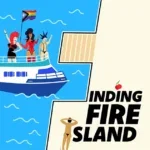
 Jess Rothschild is a podcaster and journalist, one of the founding writers at Autostraddle, and her latest project is a documentary podcast called Finding Fire Island, about the history of Fire Island, Cherry Grove, and the Pines.
Her prior work includes The Cult of Body and Soul, about SoulCycle, and I love BOTH of these productions. Jess has been writing online longer than I have, and we talk about internet history, the process of making a podcast documentary, and what it’s like to have all your neighbors tell their most juicy, gossipy stories to you. For work.
Finding Fire Island is a unique historical record, and I hope you’ll listen or watch.
Please be advised that you can’t talk about gay history in the US without talking about the AIDS epidemic and the loss of so many people, so this episode is a little poignant at times.
❤ Read the transcript ❤
↓ Press Play
This podcast player may not work on Chrome and a different browser is suggested. More ways to listen →
Here are the books we discuss in this podcast:

Make sure to disable your ad blocker to see all the books.
You can find Jess Rothschild on Instagram @JessXNYC.
Links ahoy!
- Finding Fire Island
- The Cult of Body and Soul
- Hulu – Black Twitter: A People’s History
- Hot Takes and Deep Dives – Jess’s podcast
- Caitlin Whyte – Jess’s Sound Designer
- Them
- Autostraddle
- Dads & Daddies
If you like the podcast, you can subscribe to our feed, or find us at Apple Podcasts, Spotify, or wherever you listen to your favorite shows!
❤ Thanks to our sponsors:
❤ More ways to sponsor:
Sponsor us through Patreon! (What is Patreon?)

What did you think of today's episode? Got ideas? Suggestions? You can talk to us on the blog entries for the podcast or talk to us on Facebook if that's where you hang out online. You can email us at sbjpodcast@gmail.com or you can call and leave us a message at our Google voice number: 201-371-3272. Please don't forget to give us a name and where you're calling from so we can work your message into an upcoming podcast.
Thanks for listening!
Podcast Sponsor

Picture this.
You left your hometown with a broken heart, a big dream, and every intention of never looking back. Then life starts lifeing. It laughs at your plans and sends you home.
That’s where A Hard Habit to Break begins.
Architect Rachel Johnson returns to the tiny mountain town of Service, West Virginia, for one reason: her father’s wedding. Two weeks. That’s all she has to survive. There’s just one tiny complication. The man she never quite got over still lives next door.
Firefighter Noah Calvary has spent years convincing himself that first loves belong in the past. Then Rachel pulls into town with a successful career, a designer wardrobe, and because the universe has an excellent sense of humor, another man.
Awkward?
Absolutely.
Over?
Not even close. In fact, they get roped into serving on the town’s redevelopment committee…together.
What follows is a delicious collision of professional rivalry, meddling family, small-town gossip, old memories, new secrets, and enough sparkling banter to make you grin when no one’s looking. Beneath every laugh is a question: what if the life you were chasing cost you the love you were meant to keep?
If you adore second chances, crackling chemistry, laugh-out-loud moments, swoony MMCs who know exactly when to stand their ground (and when to let a remarkable woman soar) it is the romance you’ve been waiting for.
Because sometimes the hardest habit to break isn’t going home. It’s pretending you stopped loving the person who always felt like home.
A Hard Habit to Break by Siera London is a story about choosing love without losing yourself, finding hope where you least expect it, and discovering that happily ever after deserves a second chance.
Come back to Service, West Virginia. Noah and Rachel are waiting for you.
Transcript
❤ Click to view the transcript ❤
[intro]
Sarah Wendell: Hello and welcome to episode number 734 of Smart Podcast, Trashy Books. I’m Sarah Wendell. My guest this week is Jess Rothschild. Jess is a podcaster and journalist, one of the founding writers at Autostraddle, and her latest project is a documentary podcast called Finding Fire Island about the history of Fire Island, Cherry Grove, and the Pines. Jess has been writing online longer than I have, and we talk about internet history, the process of making a podcast documentary, and what it’s like to have all your neighbors tell you their most juicy, gossipy stories for work. Finding Fire Island is both a unique historical record and a really entertaining show, and I hope you will find it to listen, or watch! It’s on YouTube.
Please advised, though, that we cannot talk about the history of gay people in America without talking about the AIDS epidemic and the loss of so many people, so this episode gets a little poignant at times.
I will have links to the books and, of course, all of the shows that we talk about in this episode, and you can find them in the show notes or at smartbitchestrashybooks.com/podcast under episode 734.
I have a compliment this week, which is my favorite thing!
To Ava: Ava, you have the ability to magnetize a room so that everyone notices you, and your energy always makes people feel safe, welcome, and secure. You could have been a cult leader! But you chose to use your powers for good. Good job.
If you would like a cult – if you’d like a cult of your very own, you could have one, or you can have a compliment of your very own – [laughs] – if you want to join our podcast Patreon! (Y’all, I am leaving that in.) Our podcast Patreon supports the show, helps me keep going each and every week, and supports a handcrafted transcript from garlicknitter. Howdy, garlicknitter! [Hello! – gk] In addition, our Patreon community are some of the most wonderful humans, and you get to hang out with them in a Discord and participate in fun activities like our end-of-the-year shows where everyone tells me their wishes and their favorite books of the year, and also our Valentine’s Day exchange. We do a lot of cool stuff. So have a look at patreon.com/SmartBitches.
Support for this episode comes from A Hard Habit to Break, a new book from Siera London. Picture this: you left your hometown with a broken heart, a big dream, and every intention of never looking back. Then life starts life-ing. It laughs at your plans and sends you home. That’s where A Hard Habit to Break begins.
Architect Rachel Johnson returns to the tiny mountain town of Service, West Virginia, for one reason: her father’s wedding. Two weeks; that is all she has to survive. There is just one tiny complication: the man she never quite got over still lives next door. Firefighter Noah Calvary has spent years convincing himself that first loves belong in the past. Then Rachel pulls into town with a successful career, a designer wardrobe, and because the universe has an excellent sense of humor, another man. Awkward? Absolutely. Over? Not even close. In fact, they get roped into serving on the town’s redevelopment committee together.
What follows is a delicious collision of professional rivalry, meddling family, small-town gossip, old memories, new secrets, and enough sparkling banter to make you grin when no one’s looking. Beneath every laugh is a question: what if the life you were chasing cost you the love you were meant to keep? If you adore second chances, crackling chemistry, laugh-out-loud moments, swoony MMCs who know exactly when to stand their ground and when to let a remarkable woman soar, it is the romance you’ve been waiting for. Because sometimes the hardest habit to break isn’t going home. It’s pretending you stopped loving the person who always felt like home.
A Hard Habit to Break by Siera London is a story about choosing love without losing yourself, finding hope where you least expect it, and discovering that happily ever after deserves a second chance. Come back to Service, West Virginia. Noah and Rachel are waiting for you. You can find A Hard Habit to Break at all major retailers. There are links in the show notes, and there will be a link at smartbitchestrashybooks.com. Thank you to Siera London for supporting this episode.
All right, are you ready to find out about Fire Island? ‘Cause there’s a lot to learn, and it’s wonderful. I’m very excited to share this episode with you, and I was very excited when Jess agreed to an interview. So let’s do this: on with the podcast.
[music]
Jess Rothschild: My name is Jess Rothschild. You can find me on Instagram, @jessxnyc. And, you know, I’ve been an interviewer and a, a journalist; I started as a writer. But most recently I’ve been doing a docu-podcast series on the history of Fire Island, Cherry Grove and the Pines. And I also made a documentary on the cult of SoulCycle. And, yeah! And I do, I do a weekly show that people may know me from, Hot Takes & Deep Dives, where I in-, where I interview a lot of people formative to my queer identity growing up. You know, people like Rosie O’Donnell and Sandra Bernhard, a lot of people who, you know, dancers and choreographers and background singers who have worked with Madonna. A lot of that world I try to really integrate into my work!
Sarah: Okay. So everyone who is listening to the show and got this episode and were like, Jess Rothschild, that’s interesting! ‘Cause I usually talk about romance, romance-adjacent –
Jess: Mm!
Sarah: – but, but within romance fiction, there are a lot of issues about women, queer women. So, like, I –
Jess: Mm!
Sarah: And it’s my show; I can interview whoever I want. And I’m –
Jess: Yeah!
Sarah: – absolutely sure that when you were saying docuseries, Finding Fire Island, and then the cult of SoulCycle, half the audience went, Oh, of course! That’s why Sarah’s talking to this person: this is all of –
Jess: Ahhh!
Sarah: – Sarah’s favorite things! [Laughs]
Jess: Awesome.
Sarah: So thank you for making all of my favorite things! I appreciate it.
Jess: Amazing.
Sarah: Now, I did not know this, and I was doing my research: you were one of the founding writers at Autostraddle?
Jess: Yeah! I was!
Sarah: I love Autostraddle! I’ve been supporting them for ages and ages.
Jess: Oh my God, yeah! I started out as a writer there, and truly I don’t think – I think what I’m doing now is really like the, the mature version of what I was doing over at Autostraddle? Like, I started out doing a lot of celebrity interviews there –
Sarah: Mm-hmm.
Jess: – a lot of – or call them, like, celesbian interviews there – like, covering what – I don’t know if you remember when, did, did you, were you around when Jill Bennett and Cathy DeBuono were, like, the stars of AfterEllen?
Sarah: Yes!
Jess: Okay, so, like –
Sarah: Yes.
Jess: – I, I interviewed them when they abruptly left AfterEllen, and, like, I was obsessed with getting the story as to, like, why they left, and I somehow, like, charmed my way into their good graces, and I interviewed – I had never done an interview before? That was literally the first interview I ever did, and at the time it, like, I guess it broke, like, the lesbian internet. You know, like the annals of, like, L Chat and, like, the deep dark web of, like, lesbian stuff online. But that, that’s literally, like, my origin story.
Sarah: And that was seismic. Like, when they left AfterEllen, it was like all of these people in all of the different internet circles that I travel in were just like –
Jess: Yeah.
Sarah: – What just happened?
Jess: Yeah.
Sarah: What is going on here?
Jess: Yeah. I was obsessed, and I was – and I followed all those people who, like, who had – and a lot of those were people based in LA, and I was always based in New York –
Sarah: Mm-hmm.
Jess: – but Autostraddle was based in New York. The –
Sarah: Mm-hmm!
Jess: – the co-founders of Autostraddle, Reese and her girlfriend at the time – this was a hundred years ago – Reese and Alex, we all lived in New York, and I became friendly with them, and you know, that site was born out of The L Word ending in 2009 –
Sarah: Yeah.
Jess: – and Reese had a very popular blog, and that’s where the name Autostraddle came from, and, like, it, ultimately that word actually means nothing? And she created Autostraddle as a way to, like, further the community and, you know, now we can write about, like, pop culture and, you know, that, but that’s really the infancy of Autostraddle.
Sarah: And it, and it, it was the, at the time when blogging was one of the major forms of entertainment media.
Jess: Yeah.
Sarah: I mean, any media –
Jess: Yeah!
Sarah: – pretty much.
Jess: And also, and also web series. Like, the reason that Jill and Cathy exploded, and other people, like if you think about, like, Liz Feldman, who’s now, like, an incredibly successful TV writer and TV creator –
Sarah: Mm-hmm.
Jess: – she created Dead to Me and so many other shows – she started with her own, like, little talk show in her kitchen on, on AfterEllen!
Sarah: Yep.
Jess: And so it was these web series – and it’s funny; I’m about to work on a project – it’s not my project, but I’m taking part on it – that’s actually going to document that time in our history where it was about AfterEllen and what was going on. Yeah. ‘Cause it all kind of culminated in something, something hilarious and interesting, and there’s a documentary that’s going to be made about that, and I was asked to interview for it? So –
Sarah: That’s so cool.
Jess: Yeah.
Sarah: That is so cool.
Jess: Yeah. But it’s –
Sarah: Oh my gosh.
Jess: What a time to be alive. I mean, truly.
Sarah: And it’s, it’s important! One of the aspects of Finding Fire Island that I love is that you’re recording history that, for a lot of these people, seems to have just been legends and stories they would tell every summer with their new friends. And with, I, I think there’s a lot of room for documentary examinations of the, the old internet, before it became –
Jess: Yes.
Sarah: – super corporate. Like, I’m a book blogger. I started my site in 2005, and I’m still here. And I’m, I’m currently working on episode 728 of my podcast. Like, I’ve been doing this for a long time.
Jess: What year, what year did you start your podcast?
Sarah: 2009. And then I took –
Jess: Wow!
Sarah: Yeah, and then I took over editing and producing and all of that. I, I borrowed Podcasting for Dummies from the library in 2010 and was like, Okay, I’m going to do this myself, and then I restarted the show in 2011, so it’s been me since 2011.
Jess: I am so impressed by that.
Sarah: Oh, thank you!
Jess: ‘Cause, because, I’ll tell, I’ll tell you why. I’m a podcast listener? Like, podcasting is actually my favorite medium. I would rather listen to something than watch something.
Sarah: Me too, a hundred percent.
Jess: And, and, you know, I grew up on Howard Stern, and I was just, you know, when Rosie O’Donnell had her Sirius show, I would listen every day. And it was just –
Sarah: Ah! That was a good show.
Jess: – it’s a way to like, because you can listen while you’re at work, like, especially –
Sarah: Yes.
Jess: – in those days when I was working in a cubicle, that really was a way – and especially if you think back to Howard Stern, his most loyal fans were people who were, like, truck drivers.
Sarah: Yep.
Jess: Why? Because you can listen while you’re working or driving, and so –
Sarah: Yes.
Jess: What drives me cra-, what drive – my number one pet peeve are podcasters who say, Yeah, I don’t listen to podcasts.
Sarah: I don’t get that either. We – sometimes in romance you’ll have somebody breeze in and be like, I’ve written a romance. I’ve never read one, but I’m sure it’s great –
Jess: Mmm.
Sarah: – and the entire community just looks and goes, No, no, no, no –
Jess: Right.
Sarah: – that’s not going to work. You, if you don’t know about something and you don’t experience it, how are you going to create it effectively? Like, I don’t understand that.
Jess: Well, it’s like, yeah, Here, I, I wrote a book. I’ve never read a book.
Sarah: Oh yeah! Yeah. I don’t –
Jess: But, like –
Sarah: Whatever.
Jess: – Well, then why are you even interested? Well, then clearly it’s like, okay, somebody came to them and was like, This is a good money-making opportunity.
Sarah: That’s exactly it. Like, Oh –
Jess: Yeah.
Sarah: – podcasts are where the money is. I, I friggin’ wish, y’all.
Jess: Yeah.
Sarah: I wish? [Laughs] I missed that heyday.
But I, I’m just fascinated by the idea of documenting just the oral history of things like the internet. Because that –
Jess: I love it, yeah.
Sarah: – internet is gone! It’s, it’s, it’s not coming back.
Jess: Mm-hmm.
Sarah: It is a changed entity, and it used to be, like you said, it used to be where people were blogging and writing and talking about similar things, but all of a sudden, into this very white, streamlined mainstream media, you suddenly had so many voices that you never heard of before. Like, I look at old days of Twitter? One of my favorite documentaries is Black Twitter, because it captures the history of Black Twitter.
Jess: Wait. You know, I’ve never watched that.
Sarah: Oh my God, it would blow your mind. It’s amazing.
Jess: Oh my God, I’ve got to watch that.
Sarah: Oh, it’s –
Jess: Thank you for bringing that up.
Sarah: You’re so welcome! The Black Twitter documentary is on Hulu, and it is three parts.
Jess: Okay, great! Ooh.
Sarah: And it is the – like, there’s a round table with the people who are in some of the most famous picture memes? But one of the things that they discuss in the, in the Black Twitter documentary is how this was a way for so many different Black communities to talk to each other, but to talk to each other in public in a way that they don’t usually do in front of everyone else.
Jess: Yeah.
Sarah: And I look at how much I learned from Black Twitter, from queer Twitter! Like –
Jess: Yeah.
Sarah: – I used to have to Google every time I used the word cis to make sure I was using it right, ‘cause I had never –
Jess: Right.
Sarah: – encountered that word before.
Jess: Right.
Sarah: We learned so much collectively, especially through sites like Autostraddle. So I feel like I’m talking to, like, a foundational member of Internet History, so thank you.
Jess: Oh my God, that’s crazy.
Sarah: Like, I’m thrilled!
Is, is Rosie O’Donnell as nice as she seems?
Jess: I mean, I loved her! Like, I –
Sarah: Oh, great.
Jess: – I interviewed her one time, and it was amazing? Like, I thought she was so generous…like, I really was not, I didn’t have the work that I have now. Like, that was kind of a big break for me on Hot Takes & Deep Dives?
Sarah: Yeah.
Jess: And that, getting that interview allowed me –
Sarah: Absolutely.
Jess: – to interview, that opened the door to Sandra Bernhard, Isaac Mizrahi, you know, insert Roxane Gay, insert all these people. But getting that interview –
Sarah: Always.
Jess: – was – it, it did change my career, in a sense.
Sarah: Yeah!
Jess: Yeah.
Sarah: I mean, it’s like getting your first piece of big media. Like –
Jess: Yeah, yeah.
Sarah: – Oh, Good Morning America is talking to you? Well, the Today Show is going to want to talk to you.
Jess: Yes, exactly.
Sarah: NPR is going to talk to you? Oh, we, then, you know, the New Yorker might want to talk to you. And they all have –
Jess: Exactly.
Sarah: – a little circle that they fill.
Jess: Yeah.
Sarah: So the reason I wanted to talk to you first and foremost, before I did a deep dive into everything and was like, oh my gosh, this is so great: you’re like my own streaming channel now. Congratulations on season two of Finding Fire Island.
Jess: Thank you.
Sarah: I have been transfixed by this podcast. I have just loved it so much. I’ve been listening to it nonstop.
Jess: Have you ever been to Fire Island?
Sarah: I have never been. You have no, you have no idea how deeply I want to go now. Like, I want to go so badly.
Jess: Wow.
Sarah: Yeah. How did this project start? What, what led you into this? ‘Cause I know you said in the podcast that you’ve been going to Fire Island for ages.
Jess: Yeah.
Sarah: What made you turn around and go, I want to capture all of this in, in audio?
Jess: So in, in – it’s so funny how everything really is, like, linear in my career. Like, everything, every step, like, sort of wouldn’t have happened without the one that came before it.
Sarah: Always.
Jess: Like, for example, Autostraddle as a writer led me eventually to fall into podcasting with Hot Takes & Deep Dives, which I still do today. Well, even in my interview with Rosie, I do ask her, I would always ask, like, the, the famous New Yorkers, specifically the, like, New York comedians like Sandra Bernhard, Margaret Cho, whenever I would interview them, I would always say, Do you go to Fire Island, or do you go to Provincetown? And I would –
Sarah: Mm-hmm.
Jess: – always know. Like, I always knew Margaret Cho was a Provincetown person, and I knew certain people had performed on Fire Island. Like, I saw Sandra Bernhard perform in the Pines, and she’s performed in both communities. Margaret Cho has been performing in Cherry Grove forever. And so they would light up when I would ask them, because who’s asking them about performing on Fire Island? It’s such –
Sarah: No.
Jess: The question is very uniquely me, especially five, six years ago before –
Sarah: Yeah.
Jess: – I even did the docuseries; like, people weren’t talking about Fire Island really for fun. It really is niche –
Sarah: Yes.
Jess: – and people would light up, and, and I was able to get, learn about these people in a completely different way and, like, go deeper in the interview, and suddenly, suddenly they, they would really, like, relax into it and –
Sarah: Yeah.
Jess: – it really would just be like gossiping with friends. And so suddenly I had a collection of all these inter-, you know, all, talking to all these great people about Fire Island, and then I, over time – like I said, I’d been going for almost twenty years, and over time, I really started to fall in love with the history of the place, but I couldn’t find, like, a single, like, definitive documentary. Things are out of print; there isn’t a lot of distribution about Fire Island stuff. And eventually I was introduced to some of the older members of the community. Like, there’s, there’s a guy, a, a drag performer who’s still there, Bob Rose Levine; Rose is his drag name. He’s been in –
Sarah: Right.
Jess: – Cherry Grove since 1955. And I saw Rose Levine perform at the Community House like six years ago, and I was like, I can’t believe – I’m like, What’s his story?
Sarah: Right?
Jess: And so I would get little bits of the story, but then there’s another performer, Pansy, and, like, Pansy started the Invasion of the Pines, which is this, like, historical event. And there are so many of these characters, like actual characters, that I was like, well, I have this, you know, I know I can interview people. Like, well, I’ve never made, I’m not a filmmaker, and I, I’ve never made a documentary, obviously, but it was really like fake it till you make it.
Sarah: Yep!
Jess: And I was like, well, the one thing I know how to do is audio.
Sarah: Yep!
Jess: And I was, and my, I remember telling my friend that I’m going to do this. He’s like, Who’s going to edit that? And I’m like, I guess me?
Sarah: Me! Yeah!
Jess: And he was like, You’re not going to be able to edit that. I’m like, Well, maybe not, but let me cross the br-, let me get all the interviews done?
Sarah: Yeah.
Jess: When, and then I can figure it out when I get to that point. And so I’m, this is about the creation of the fir-, the original Finding Fire Island, which came out three years ago. And I, it was true. He, my friend was exactly right. And he basically said, You’re going to get to a point where you, you know, you’re going to have all this audio. And so I did the majority of the interviews and – in, in a very quick succession. I was able to get them all done in about two months?
Sarah: Wow.
Jess: And I very quickly was like, Okay, I, this all has to be sound-designed. I knew it had to be very elevated?
Sarah: Mm-hmm.
Jess: And so I was, I interviewed a few sound designers for the job. Like, I was told, Oh, this is a thirty-thousand-dollar project.
Sarah: Ah!
Jess: And I was like, Okay, goodbye. Like, obviously I was self-funding this, this original project, and, and then finally I found my sound designer, who is the girl who has done all of my projects. She did the original Finding Fire Island. She did Cult of Body and Soul, which is the SoulCycle documentary. And she’s now, you know, she is with me to the end. Like, I love that we have such a great working relationship. And what was great about her – her name is Caitlin Whyte, and what was great about her was she had never done this either. She had, was just like a podcast editor, but she was very hungry for, like –
Sarah: Mm-hmm.
Jess: – to take on a new challenge?
Sarah: Yep.
Jess: And so here are two people who are very hungry and thirsty to, like, take on a new challenge, and so I was able to afford her because she was doing it for the first time as well. And together, you know, I gave her a lot of direction and we really worked together on the sound, but she’s the one making all the magic happen with, like, sound-wise.
Sarah: So, can you tell –
Jess: Yeah, I’m sorry if that was, like, a long-winded answer.
Sarah: No, not at all! I’m fascinated.
Jess: Yeah.
Sarah: I actually want to ask you, for someone who’s listening and doesn’t know what that is, what does a sound designer do? Like, I have a podcast with me in the intro. I raise the music bed; I lower it; I take it out for the interview; I bring it back. Like, I have a, a, like, a, a style for my show –
Jess: Right.
Sarah: – but I don’t have sound design. What is sound design?
Jess: So when you listen to Finding Fire Island –
Sarah: Mm-hmm.
Jess: – the whole thing is soundscaped. So you’ll hear, well, there’s music; there’s music throughout the entire thing, and there’re so many songs that are played. You’re listening to like, there’s probably ten, ten songs per episode –
Sarah: Mm-hmm.
Jess: – like different segments of songs that are played. And they’re all royalty-free –
Sarah: Yeah.
Jess: – obvi-, obviously. But, but I’ll be like, this has to sound, you know, dis-, the sound is disco, ‘80s disco, ‘90s disco.
Sarah: [Disco sound effects] Yeah.
Jess: The sound is, you know, eventually, in this season, I’m like, Okay, I want to move into more like Pet Shop Boys. It’s got to sound like ‘80s Pet Shop Boys. There’s a band I love called Bronski Beat. They have a song called “Smalltown Boy,” which is very identifiable with the HIV and AIDS epidemic. It’s sort, the song is about the AIDS epidemic in a way? It’s an amazing song. Everybody should listen to “Smalltown Boy” by Bronski Beat, and I fell in love with their album from the ‘80s called Age of Consent. And halfway through, halfway through season two, I was like, I want you to listen to this, and I gave her like six songs. I’m like, I want to transit-, I want you to balance disco with this new, like, Pet Shop Boys, Bronski beat sound.
So the point is, that sound design, what she’s doing with the music is all sound design. It would take me, it would never be out if I were doing all of that.
Sarah: [Laughs]
Jess: The sour-, it’s sourcing of music; it’s placing music –
Sarah: Yeah.
Jess: – it’s then giving it to me and be, giving, I’m giving tons of notes of like, Swap this out. She does a lot of sound effects.
Sarah: I noticed there’s, there’s waves; there’s wind; there’s like a, like an ice cream truck at one point –
Jess: Yup.
Sarah: – or something tinkly. Like, yeah, and the sound of boats and the sound of water. Yeah, I’ve noticed that part a lot.
Jess: All of that is sound design.
Sarah: That’s very cool.
Jess: Yeah.
Sarah: That is very cool.
Jess: So that’s stuff that I’m not an expert in! It’s like there are certain things that I can do myself, but I’m paying a sound designer to do – like, it’s not –
Sarah: Yeah.
Jess: – it’s worth it to me to just outsource certain things. Like all the videos, all the videos that – ‘cause you can watch this all on YouTube –
Sarah: Yeah.
Jess: – this second season. And so that’s an example where I have, I work with a video editor, and then we, I give her very strong direction. So, like, that’s an example; like, I’m a rudimentary video editor. My time is not best spent on the videos, but she gives them back to me, and then I kind of go back, and then fifty percent of what you’re watching is actually my work. I’ve put my fingerprints all over the video, landing certain comedy beats. So it’s really like a blend of –
Sarah: Mm-hmm.
Jess: But, but for an expert – I don’t know if that makes sense. Like –
Sarah: No, it totally makes sense –
Jess: Yeah.
Sarah: – because there are so many tools now. Like, do you want to start a podcast? Do you want to do graphic design? Here’s all of this software that already exists.
Jess: Right.
Sarah: But some of it is a very easy learning curve? And some of it is like, the time that I would spend learning how to do this, I am much better off finding and paying someone who already knows so that I don’t have to take all of this time trying to figure out how to do this thing and then have it come, like, finish and be kind of lower quality –
Jess: Right.
Sarah: – ‘cause I don’t know what I’m doing. Like, I totally understand that.
Jess: Right, yeah.
Sarah: Now, I wanted to ask you, actually, about the YouTube, because there’s the audio podcast, which you can find wherever you get your shows, and then there’s the YouTube with movie clips, there’s archival footage, there’s photos, and there’s voiceover. What is the product-, the production process for –
Jess: So we’ve –
Sarah: – for each one? Like, do you do the audio and then add the video, or are you thinking about both as you, as you assemble them?
Jess: So the audio is done – I mean, what you’re listening to is the exact same episode –
Sarah: Yes, yes.
Jess: – okay. I’m not even thinking about video when I’m, like –
Sarah: Right.
Jess: – doing the interviews and creating the, the episode with my sound designer.
Sarah: Right –
Jess: That is –
Sarah: – ’cause there’s no to-camera talking.
Jess: No, ‘cause I’m not a film-, like, because I don’t have the budget. It would never come out if I were –
Sarah: [Laughs]
Jess: I mean, but the truth is my next, the next thing I work on, I want to be, like, I need to get a crew and, like, I’m at the point now, I’ve done this three times, where, like, I’m ready for the next, I want to move into TV and film? But for now, the way, the way we do it is, so, we finish the audio episode, it is locked and done.
Sarah: Mm.
Jess: And then I, like I said, basically I, I work with my video editor where I give her very strong direction.
Sarah: Right.
Jess: I give her – I’ve been, I’ve been granted access – I, I’ve been so lucky to work with the Cherry Grove Archives collection, as well as the Pines Historical Society? The Pines Historical Society commissioned this second season, which is why it’s, it’s very much, they wanted to tell the untold stories of the Fire Island Pines? Whereas the first season, it’s very Cherry Grove-heavy because there’s just more, a bit more – it’s easier to, when you think of Fire Island history, you’re really thinking of Cherry Grove history.
Sarah: Cherry Grove, yeah.
Jess: And so I thought, okay, like, how fabulous. Like, let me take another crack at this and, like, go down a road that I didn’t have time for in the first season with, with so much –
Sarah: Mm-hmm.
Jess: – deeper stuff with the Pines, like the history of the Pines Pantry, the oldest grocery store, you know, the one and only grocery store there.
Sarah: I love that episode. That, I just wa- – I think that’s the most recent one that just came out, right? The, is it the Pines Pantry?
Jess: Yeah – today a brand-new one came out.
Sarah: Oh, hooray for me!
Jess: Yeah. So there’s one –
Sarah: Hooray for my –
Jess: – there’s one more, yeah.
Sarah: Hooray for the rest of my day.
Jess: Yeah.
Sarah: I loved that episode because it was one of the examples of how this one building has, has at one point seen most of the people on Fire Island, because it’s the only place –
Jess: Mmm!
Sarah: – that you can get all of those things. Like, this, I was thinking, like, this one store has probably had ninety to a hundred percent of the people who have been on Fire Island walking through it at one point. Everyone has walked through the, that store.
Jess: You’re exactly right.
Sarah: That’s wild.
Jess: You are exactly right. Yeah!
Sarah: That’s really incredible. Like, just thinking about –
Jess: Yeah.
Sarah: – even just the floor, like, how many footsteps you’re walking on, literally.
Jess: Wow.
Sarah: Everyone who’s been to the Pines has walked in this, in the, it has, it’s the same. Like, that’s incredible.
Jess: Yeah!
Sarah: So you have all of this audio.
Jess: Yeah.
Sarah: How do you figure out the story of each chapter? Do you know that before, or do you listen and then sort of group topics together?
Jess: So when I do the interviews, I do have a list of themes. I know the themes that are going to be covered throughout the season. For example, the HIV and AIDS epidemic is –
Sarah: Yeah.
Jess: – heavily covered in this, this new, this new episode that came out. How the Broadway community partnered with the Fire Island community to create special events. So, like, tho-, that’s an example of a theme. Another example of a theme would be share house culture, everything about share house culture.
So these are examples of themes. And so I have a, a big list of all those themes, and then potent- – this is at the beginning of the process is potentially where these themes might slot into episodes.
Sarah: Right.
Jess: Some of those remain, some of those change, like, over the building of the episodes. And then when I’m done with all the interviews – for, for the most part, ‘cause some interviews go a little, I realize that I need a little bit more content, and so I’ll go out and do new, additional interviews sort of at the eleventh hour?
Sarah: Mm-hmm.
Jess: I have a folder with all of the themes. So, like, nightlife culture: New York City and Fire Island nightlife culture, ‘70s to ‘90s, and I chunk out all of the audio. I begin to listen to everybody’s interview and, like, just literally drag and drop as if you’d be, like, playing with a Word document?
Sarah: This goes here; that goes there; this goes here – yeah.
Jess: And so now I have everything in folders, and then I begin to figure out episode one.
Sarah: Right. Now, I, I saw a clip of your interview on Dads and Daddies that basically –
Jess: Yeah.
Sarah: – you were making the docuseries that you wanted to see, which is also the origin story of pretty much everything I’ve ever done in my career. Like, I, I’m a book blogger who’s running a website for twenty-one years and running a podcast for a real long time, and –
Jess: Yeah.
Sarah: – I, I often ima-, imagine my career, I’m in the, I’m in a field with a scythe. I’m like, Oh, that looks interesting! I’ll just go over there and see what happens! Who’s going to stop me?
Jess: Yeah.
Sarah: Because I want to, these are the things that I want to see. I wrote a Hanukkah novella because I was mad that there weren’t any Hanukkah romances.
Jess: You have, oftentimes, you ha-, it’s very much be the thing, be the thing that you want to see in the world.
Sarah: Yes, absolutely.
Jess: Create – if the thing isn’t there that you want, create it!
Sarah: Yeah.
Jess: Yeah.
Sarah: Like, literally, who’s going to stop you?
Jess: Yeah!
Sarah: And I imagine that once you start an oral history project like this, everybody knows someone else that you should talk to. Is that –
Jess: Mm-hmm.
Sarah: – what happened? Like, did you just grow this incredible network of sources from talking to one person who turned into ten, who turned into twenty?
Jess: Yes.
Sarah: I love that –
Jess: Yes.
Sarah: – ‘cause you can tell in the finished product how these people sort of interrelate?
Jess: How they know each other! They’ll reference each other.
Sarah: They all know each other. Yes!
Jess: They’ll reference each other, which is, it, which also speaks to the small-town vibe –
Sarah: Yes!
Jess: – that we’re –
Sarah: Yes, it says a lot.
Jess: Yeah.
Sarah: Like, like Bob said, blah-blah-blah-blah-blah-blah. Yeah, it –
Jess: Yeah.
Sarah: – I love that part.
Jess: Yeah.
Sarah: Which interviews or information surprised you? I will tell you, I was driving out on some very windy roads, listening to part of season two, and I hear this voice, and I, and I’m, I’m from Pittsburgh, and I’ve heard this voice before. I’m like, Is that Billy Porter? There’s –
Jess: There you go.
Sarah: And I’m, and then I hear you say Billy Porter, and I was like, Please drive the car correctly, Sarah! Don’t – like, I was, like, my inner thirteen-year-old was not chill. To, like, I was so excited –
Jess: Yeah.
Sarah: – for you that you got – [laughs] – you got to talk to –
Jess: He’s in, he’s in the brand new episode, the Broadway episode that’s out today as well.
Sarah: Yay! Awesome!
What, what interviews and, and information surprised you?
Jess: What really surprised me was, in speaking to all these really long times Pine, longtime Pines people specifically, is how it really is a product of the gay imagination and how the way when we say create the thing you want to see in the world?
Sarah: Mm-hmm.
Jess: It really is a canvas in a way that other gay destinations like Provincetown or Puerto Vallarta, those are commercially driven destinations.
Sarah: Yeah.
Jess: Fire Island, specifically the Fire Island Pines – the Cherry Grove as well, but specifically the Pines, because it’s bigger and there are more, there are more artists there, and there’s a younger demographic – you can create an event. You can create, like, there’s a trans woman who, in the first episode, she created the Doll Invasion, which is a spin on the original invasion of the Pines, because when she was transitioning, she did, never felt like she fit in with the gay male community. And she was like, What if we brought all these trans people from Manhattan and Brooklyn and Queens to the island, and I could, like, design it; I could bring in all my, you know, the, the woman who, who created it, she works for, actually, a sister website of Autostraddle called Them, which is –
Sarah: Mm-hmm.
Jess: – owned by Condé Nast.
Sarah: Yes.
Jess: So she has a lot of connections. She’s like, Well, what if I bring in famous chefs and, like, all, all these party promoters? So it’s very much create the thing you want to see, and seeing that play out and how that has played out since the ‘70s.
Sarah: Yeah.
Jess: Like, that’s a modern example, but the idea of creating these parties in the way that you want has been going on since the ‘70s. And I think that may be my biggest takeaway, and it reinforced my love of Fire Island the most.
Sarah: One thing that blew my mind was that – so I’m, I’m old enough to remember, I’m fifty-one, so I’m old enough to remember the AIDS crisis.
Jess: Mm-hmm.
Sarah: I was a child when it was happening, and a teenager –
Jess: Mm-hmm.
Sarah: – but I remember a lot of it. And I was, I had never connected the idea that the hypertrophied masculine physique and steroid use of so many gay men started with AIDS and wasting sickness, and that doctors would just hand out steroids like, Yeah, you, you, you need to bulk up. You need to be, you need to visually look different. And that led to so many influences. And you can look at that now with looksmaxxing and all of these young people who are trying to transform into this idealized, you know, masculine form. And I, like, connecting that back to –
Jess: Mm-hmm.
Sarah: – the AIDS crisis is mind-blowing. Like, truly blew my mind with that piece of information.
Jess: The origin, it truly is, it’s because it was, it was very, you could see it. When somebody was sick –
Sarah: Yes.
Jess: – you could see it because they, they would lose so much weight, and they would be very gaunt. And so that was a signal that they were weak or that they were sick, and so guys that weren’t would – or even guys that were, but were able, were then on the cocktail, AZT, as time went on, the drugs became more available –
Sarah: Mm-hmm.
Jess: – they started doing steroids to, to combat that stereotype so that –
Sarah: Yeah.
Jess: – they could look like, No, I’m healthy!
Sarah: Yes.
Jess: I’m strong.
Sarah: I can bench press a truck!
Jess: Well, just so that, to, to, to take away that stigma of, like, I’m –
Sarah: Yes.
Jess: It’s basically saying, Hey, I’m not sick.
Sarah: I’m not sick. I’m okay.
Jess: Yeah.
Sarah: One of my favorite through lines of your show is the idea of safekeeping and care. There’s a lot of safekeeping and care –
Jess: Mm-hmm.
Sarah: – in the community, not just of the island itself, because it’s a barrier island and they tend to shift a bit with a storm –
Jess: Right.
Sarah: – but also the cultural sanctuary that is Fire Island and the, the safety of looking out for other people during the AIDS epidemic and every summer, and there really seems to be aware-, an awareness, certainly in the documentary and in the community of people, that the community continues because of that community. That Fire Island exists as a community because the people who are in it value it and want it to continue. How do you see the documentary adding to that sort of duty of care in the community? Where do you see the documentary fitting into that culture?
Jess: Wow, that’s a really great question. I think, I think potentially it really has the power to motivate somebody to want to be a firefighter –
Sarah: Yes, very true.
Jess: – on the island?
Sarah: Mm-hmm.
Jess: I think people who, maybe it seemed like an abstract idea, I think listening to the stories as to, like, why people chose to become a fire-, a volunteer firefighter, either in Cherry Grove or the Pines – so many women are fire-, fire-, women are firefighters in the Grove – I think that’s a potential, a potential gain of the doc.
And I think also the i-, just the idea of storytelling and preserving the stories, like, it makes me, it is the thrill of my life that these stories will be here forever –
Sarah: Yeah.
Jess: – and that they will always be on podcast platform; they will always be on YouTube. The visuals will always be there. You know, there was all this archival material, but it was never packaged.
Sarah: No.
Jess: It was just, like, out there, and I love that I’ve been able to curate. I think curation is the most underappreciated skill, like, like, just curation –
Sarah: Absolutely.
Jess: – in general.
Sarah: Absolutely.
Jess: It must be done. And, and even editing is, like, maybe, like, the most underrated skill, even in podcasting or, or really anything. Like, things are great – if you love something, if you love a book, if you love a song, if you love a podcast, if you love a movie, it is because it had a great editor.
Sarah: That’s true.
Jess: Somebody was curating exactly what you see. And the things that you don’t like is because the editor just let everything hit the page –
Sarah: Yep.
Jess: – and it lost the story.
Sarah: Yes. That is, that is an actual problem in romance right now, because –
Jess: Really.
Sarah: – not only is romance making a lot of money, but queer romance, especially inspired by Heated Rivalry, which was a romance novel –
Jess: Mm.
Sarah: – I want to say was published in 2019? Like, it’s been around –
Jess: Yeah.
Sarah: – for a little while? That has led a lot of people to say, Oh, I can make money in romance –
Jess: Mm-hmm.
Sarah: – but I don’t want to pay an editor. And so we have books that are just, they don’t have a plot, they don’t really go anywhere, they’re just tropes strung together. It’s like this book was written as a marketing idea and not as a story, and that is something that I think affects a lot of, of creative, creative industries.
Jess: How would, how would, how would a book not have an editor?
Sarah: You just self-publish it! Finish the book –
Jess: Ohhh!
Sarah: – pop that bad boy on Kindle and – or, or, or, what is it called? Kindle Unlimited or self-pub- –
Jess: But how does it then, how does it then find an audience even?
Sarah: Well, part of the problem – I don’t know if it’s a problem, but part of the transition that’s happening in romance is that we’ve moved from talking about the craft of romance more to the marketing of romance. And so a lot of authors begin building their audience during the writing process? And there’s a lot of people who find their writing careers right now on BookTok because they’ve been talking about romance novels. Well, now I have an idea to write one. And the people who’ve been following them for curation and recommendations –
Jess: Right.
Sarah: – are now invested in their career, so they can release a book and get a certain thousand number of reads or purchases or whatever it is that their goal is. They build the audience as part of writing the book. So you, you’re thinking –
Jess: Yes.
Sarah: – always in terms of marketing and less in terms of craft.
Jess: You know what’s so interesting?
Sarah: Hmm.
Jess: So, a friend of mine, he wants to write – he’s a, a gay dad – he wants to – I’ll, I’ll just tell you who it is. So you know Dads and Daddies?
Sarah: Yes! Yeah, yeah.
Jess: The, there’s the podcast? So the origin story of that podcast is that Brian, who is a father of two, he wanted to write a gay parenting book.
Sarah: Ooh!
Jess: Okay? And the person who he spoke to said, You need to find an audience first. He’s like, Figure out how to find an audience. Who are you going to sell this book to?
Sarah: Mm-hmm.
Jess: And so that’s why he created the podcast. And now they have a huge audience!
Sarah: Yep! Yep! That’s –
Jess: And even, and I was even saying to Judson, Judson – I’m friends with both those guys – and I was, I was talking about this very thing with Judson, who’s in Finding Fire Island, and I was like, You know, I actually think it should be dad, Dads and Daddies should be the book –
Sarah: Yeah.
Jess: – and it should be your section giving, like, gay dating advice, and then his section should be parenting, ‘cause that’s the podcast.
Sarah: Yeah.
Jess: And I think everybody will win. ‘Cause I don’t think the listeners of the podcast care. I don’t care about gay parenting? Like, I’m not a gay parent, and I’m never going to be. I don’t care. But I will read that book because I would want to read your section –
Sarah: Yes, absolutely.
Jess: – about the date…And so he was like, That’s a really good idea. I’m like, And the title of the book is Dads and Daddies.
Sarah: Oh, a hundred percent! And then boom, you –
Jess: Yeah.
Sarah: – you built this audience –
Jess: Yeah!
Sarah: – out of something that you were passionate…
Jess: But isn’t that, that’s exactly what you’re speaking to.
Sarah: Such a parallel.
Jess: Yeah.
Sarah: And it’s interesting that you say that, because I know in the, in the episode about the, the pantry, Ben Rimalower says that as he’s been coming to Fire Island, the twinks have become daddies, and the dads have become grandpas, and that –
Jess: [Laughs]
Sarah: First of all, I love that line so much? Like, I had to rewind it and listen again ‘cause it was just so charming. And also so –
Jess: Yeah.
Sarah: – poignant, because there is a huge generation of men that are missing, that are, that are gone –
Jess: Yeah.
Sarah: – because of AIDS. And so, like, that, that actually made me feel, like, really teary because, like, yes, the people who didn’t think they would survive, they’re now grandparents. That’s amazing.
Jess: Yeah.
Sarah: And that history is so poignant, because everything that you do when you talk about Fire Island is, is going to acknowledge the AIDS epidemic and queer history through this specific place. Is there a place on Fire Island that feels like it has the most history for you?
Jess: I think most people might actually say the Meat Rack, which is –
Sarah: Oh, interesting!
Jess: – which is historically the, the cruising area. The Meat Rack is like the literal connective tissue between Cherry Grove and the Pines. And they’re sister communities. Like people –
Sarah: Right.
Jess: – are constantly back and forth.
Sarah: And it’s like a path through the dunes, right?
Jess: That’s literally what the Meat Rack is. It’s a path through the dunes, like, that runs parallel to the beach. And historically that is where closeted men who were living in the Pines would hoo-, would meet men. This was like in the ages, this is in like the ‘70s and the ‘80s before there were apps.
Sarah: Right. When it was dangerous to be gay and arrested. Yeah.
Jess: Before there were, before there were apps, even to, like, meet, meet people, it was like a – like, it’s like the Rambles in Central Park –
Sarah: Mm-hmm.
Jess: – or like the Dick Dock in Provincetown, and just a place for, like, anonymous sex. And a lot of people, when they were dying of AIDS, had their ashes spread in the Meat Rack. And so –
Sarah: Wow.
Jess: – and, and you can look up photos, and there are like, roses were placed in the ocean, roses were placed in the Meat Rack, memorials were held in the Meat Rack, because it was this, like, sacred ground where so – that’s the place where there are more footsteps than anything.
Sarah: Oh, for sure. Wow.
Jess: And so that’s the place I would say. I think most people would have that answer. I’d be curious for other people’s answers. Maybe the Community House in Cherry Grove, ‘cause it’s –
Sarah: Hmm.
Jess: – the most historic building?
Sarah: Mm-hmm.
Jess: It’s been there since the ‘40s, and performances have been going on there since the ‘40s in Cherry Grove. That’s why so many people from the New York City theater community, the Broadway community even wound up on Fire Island was –
Sarah: Mm-hmm.
Jess: – because there was this theater where you could be gay and be out on, like, Broadway?
Sarah: Yeah.
Jess: At the time?
Sarah: Wow.
Jess: So I think one of, one of those two answers.
Sarah: That’s fascinating. One of the things I love about the documentary is how some of the chapters are centered around the history of a place, but it’s a place that everybody sort of knows the, the name of, like The Blue Whale, the Pantry.
Jess: Right.
Sarah: Like –
Jess: Right, right, right.
Sarah: – everyone knows the name of this place. Here’s how it came to be, and here’s, here’s what happened to transform it. And I, I love that there’s this element to it – and the same with the SoulCycle – it’s very dishy! Like, it’s, it’s very, very dishy. It’s like –
Jess: Thank you. That’s my –
Sarah: – literally –
Jess: – that’s my style. [Laughs]
Sarah: It is literally the tea! Like –
Jess: Tell me, wait, talk more about that.
Sarah: What, how is –
Jess: Why, why do you, why do you get that –
Sarah: Why do I get that –
Jess: I love that you’re saying that –
Sarah: Oh, it…
Jess: – because I want it to feel that way, but why – tell me more about your exper-, like, why –
Sarah: Okay.
Jess: – does it feel?
Sarah: It feels that way because, one, you are a member of that community. So it’s not like you’re an external person going, Oh, this looks cool!
Jess: Mm.
Sarah: Like, oh! Romance is making money; I’m, I’ll write a romance and not engage with the community. Like, no, you are part of Fire Island, and you care about the place as much as the people you’re talking to. So you already have like a much warmer and engaged conversation with people.
Jess: Mmm!
Sarah: Even when we don’t hear your voice –
Jess: Mm-hmm.
Sarah: – the – ‘cause, you know, podcasting is so intimate. So intimate. Like, I’ve met people who listen to my show and they’re like, Oh my gosh, you do not look at all like what I expected you to look –
Jess: Mm.
Sarah: – but they know my voice so well. And if you think about biologically, how we listen to podcasts, they’re literally in our skull. We have little buds in our ears, and people’s voices are next to our brains. Like, they are inside our heads, literally. And that is very intimate, because voice is very intimate. And so when you have first, the, the first level of intimacy, that someone is listening to you very close –
Jess: Mmm.
Sarah: – and then you add the second level of intimacy, which is all of these people know you as a member of the community, and all of your love and your collective regard for this place come through, like, this is, this is going to be such a tourism draw to Fire I- – like, I want to go now. Like, I’m sitting here going, I kind of think I want to go here. It sounds incredible. But that affection makes it seem even more engaging.
Then you get to the, okay, so this guy was like a total transphobe, wouldn’t let people in, so we’re like, You know what? We’re going to come with thousands of trans people, and what are you going to do now, pal? You’re going to serve us a drink. Like, there’s this sort of –
Jess: Right.
Sarah: – here’s the tea about why this happened? And so many things on Fire Island have come out of loss, of grief. Something burned down –
Jess: Right.
Sarah: – people have died, people are dying. The episode on the phrase, was it Men die and women buy, was that what it was?
Jess: Mm-hmm. Yes.
Sarah: The, the idea that yes, that was part of a cultural development of women having income and being able to buy their own properties? Also the loss of people who were dying and had to sell them, or families that were like, I want nothing to do with it; here, you can have it for a dollar? Because so many of these very dishy and gossipy stories come from a very visceral human emotion – grief, loss, fear, terror, affection, love, sex. I mean, one of the things I talk about all the time with romance is that romance traffics directly in empathy. Romance novels want you to feel. They want you to feel attraction and limerence –
Jess: Hmm.
Sarah: – and fascination! And some of them actually want you to be turned on. Like, they would like to –
Jess: Yeah.
Sarah: – sexually arouse you; that is part of the goal. And that is, that is the thing that, much like a lot of queer culture, romance has to defend itself against constantly: Oh, it’s just smut, it’s just porn –
Jess: Right.
Sarah: – it’s just porn for women. It’s like, actually, no! It’s intimacy and a whole lot of consent is a big thing in romance.
Jess: Right.
Sarah: So you have these truly essential human emotions: fear, loss, arousal, the, the freedom of being who you are when you can’t be that person anywhere else? That adds this layer of, all right, I’m going to tell you the real story of what happened here, because if I don’t, no one will know. And all, not only have you lost this large part of the community, but these people are aging! Like, I mean, didn’t you say that, that Rose is in his nineties?
Jess: Ninety-three.
Sarah: Yeah! Like, damn!
Jess: I, I think you’re right. I think there is a sense because a lot – there’s a huge range in ages –
Sarah: Mm-hmm.
Jess: – in the interview subjects.
Sarah: Yeah.
Jess: Many people are – you know, Rose is in his nineties, is ninety-three. There are a few people who are in their eighties, a few people who are in their seventies.
Sarah: Yeah!
Jess: And of course younger people, you know, I’m, I’m in my early forties; of course there’re my contemporary, people of my generation.
Sarah: Mm-hmm.
Jess: But I think when you talk to the older people, or even people in their sixties, people have been on Fire Island for a hundred years, and no one has ever asked them to, like, tell the story? There’s an element of, like, yeah, I’m going to let it all hang out. Like –
Sarah: Yeah!
Jess: – this is my chance – you know, not – there are no documentaries about Fire Island! And I think it, it gives them, I think a lot of people, once you reach that age, once you reach your sixties and seventies, I think a lot of people start thinking about their legacy? And I think people want to tell their stories, and so, for that reason, they can be very open about sexual experiences they’ve had. They, they don’t care! They’ve lost any inhibitions that they may have had –
Sarah: Right.
Jess: – when they were thirty or forty to, to tell those stories, and now they see the importance. It’s, it’s important, in a way, for them to tell and share their history. Somebody had told me that listening to the series is like being at a cocktail part-, like overhearing conversations at a cocktail party.
Sarah: Yes. Podcasts are permission –
Jess: Yeah.
Sarah: – to eavesdrop. That’s –
Jess: Yeah.
Sarah: – that’s why, one of the reasons why people love them so much. If it’s, if it’s not a monologue – and even then it is – it’s eavesdropping. You are eavesdropping on someone else’s conversation. Like, when I am –
Jess: Yeah.
Sarah: – when I’m recording and I’m thinking about, like, you know, half of my mind is making sure the sound is good and making sure I can hear you and you can hear me, but I’m also thinking of the people who are going to be listening? And –
Jess: Yeah.
Sarah: – what are they going to want to, what, what are the questions that they’re going to be mad that, if I don’t follow up on? Like, wait, could you go back and ask about that? Wait, wait, wait, I want to know more about that.
I love the idea that you, you get to sort of eavesdrop on a conversation about something that you might not have known anything about. Like, I didn’t know diddly about Fire Island, except I knew, I knew about it ‘cause I’d been working and living in the New York area for so long, and I had a lot of friends who were queer and loved going there.
But the idea that you’re eavesdropping on a cocktail party is exactly what this is. It’s very dishy, and it’s also so matter-of-fact?
Jess: Mm.
Sarah: And I –
Jess: Hmm.
Sarah: – I think that one of the things that is so resonant about truly being who you are and owning your identity and owning who you are in the world and just not giving a fuck –
Jess: Mm-hmm.
Sarah: – is also being able –
Jess: Mm-hmm!
Sarah: – to say, I had some sex in some trees! I had sex –
Jess: Mm-hmm!
Sarah: – under that dock. I mean, I had this, this, this time over here. And –
Jess: Mm-hmm.
Sarah: – who cares? This is, these are not stories that you’re going to hear anywhere else –
Jess: Right.
Sarah: – except in that community. And so, much like –
Jess: Yeah.
Sarah: – I was saying earlier with Black Twitter being Black communities talking to each other in front of everyone else who wouldn’t normally hear those conversations, the, this is the same! It’s people having conversations that they would not necessarily have, you know, in Midtown –
Jess: Yeah.
Sarah: – in, in the middle of, like, a restaurant or at, like, you know – no one’s going, no one’s like, I’m going to give a TED Talk –
Jess: Right. [Laughs]
Sarah: – about all the times I had sex in the Meat Rack. Like, that, that, I mean, you could; it would be great. But that’s not the, the style of this project. This project is, This is our place, and these are our stories? So it adds this sort of confiding. That’s what it, that’s the word I’m looking for. All of these –
Jess: Ah, I love that.
Sarah: – people are confiding their history in you and trusting you with it. And then you are taking it and editing it and shaping it into something that now Fire Island can confide in all of us who are listening: Here’s what really happened and here’s why we are how we are today. Like, that’s huge. That, that, that takes a lot of trust, and that, that trust is visible and audible in the project. So I hope that answers –
Jess: I, I love, I love that. I mean, that’s like the nicest thing I could hear.
Sarah: Oh, I’m so glad!
Jess: Yeah.
Sarah: I, I just I love it so much. I’m so excited I get to listen to more of it.
What is, what is it that you love most about Fire Island? What is it that, that it, what, how does it call to you personally?
Jess: You know, for me, listen, New York is a small town.
Sarah: Oh, it really is.
Jess: And –
Sarah: People do not know that –
Jess: – New York is a –
Sarah: – [laughs] – but it so is!
Jess: New York is a small town. It’s crazy how small it is. And Fire Island is the best of that small town. That’s why I love it. It’s all of my favorite people, all of my closest people in New York. This is where we go. Like, I’m –
Sarah: Yeah.
Jess: – tomorrow I’m going, and Ben Rimalower who’s in the series is one of my closest friends. He has his share week starting tomorrow. So I’m going to be with all of, these are, you know, all of our mutual friends. They’re going to be there, and, and, you know, there, there’s a show that’s going on in Cherry Grove. Jay Jurden is a comedian, and he’s in a lot of episodes of this series.
Sarah: Yeah!
Jess: He’s performing standup in Cherry Grove tomorrow night. I’ve got tickets; I texted him. I’m like, Babe, I’m going to be there. My friend Brendan is going to Cherry Grove. His boss, he works for GLAAD, and his old boss has a house in Cherry Grove for the summer. He’s going tomorrow to Cherry Grove for the first time.
Sarah: [Gasps]
Jess: He’s forty!
Sarah: Oh!
Jess: He’s going – and so, anyway, like, that’s an example how, of how it’s, it’s, it’s the summertime – I guess this is what straight people have in the Hamptons, but, like, there’s no community in the Hamptons.
Sarah: Mm-hmm.
Jess: There’s no –
Sarah: There’s a lot of performance, but there’s not a lot of community.
Jess: Right, that’s…
Sarah: Different kind of performance, though.
Jess: That’s hilarious. Well, there’s actual performance.
Sarah: Yeah.
Jess: You’re going to see Patti LuPone in the Pines – I’m sorry, you’re, in Cherry Grove. You’re going to see Bernadette Peters; she was there a few years ago. John Cameron Mitchell performs. Anthony Rapp and Adam Pascal, who were the originators in Rent, the stars of the original Broadway cast of Rent, they’re performing together in Cherry Grove this summer. And so – Margaret Cho is performing. Like, it really is a distilled-down version of New York City where you can just – well, you can walk everywhere in New York City, but you can walk, you know, it’s just like a little mic-, even further microcosm. So that’s my favorite.
Sarah: It’s almost like a, a, a community in New York picks up and goes on vacation together –
Jess: Literally.
Sarah: – every year.
Jess: Literally!
Sarah: And it, and –
Jess: It’s the gate, yeah. Mm-hmm.
Sarah: And, and it’s so close. Like, people don’t realize –
Jess: Yes.
Sarah: – how it seems like it’s far away when you’re there, but it’s so close to, to, to New York.
Jess: It’s another wor-, it is anoth-, it is a gay fantasia, and it is another world. You truly can’t believe it. There’s water on both sides of you?
Sarah: Mm-hmm.
Jess: The ocean is on one side, and the bay is on the other.
Sarah: Yep.
Jess: You have to take a ferry. Your listeners should know you have to take a ferry to get there. You are very, very removed from cars. There’s no cars; it’s all boardwalk. There’re boats. Like, it’s amazing!
Sarah: That’s one of the aspects about Fire Island that fascinates me, ‘cause I’ve been looking since then: where are the communities in the United States that don’t have cars? What places exist in the US? That, like, there’s Mackinac, there’s Fire Island, there’s a couple places in Virginia, North Carolina, there’s one in Florida, but there are very, very, very few places that are like, we don’t have cars in this entire town.
Jess: Fire, for, for New Yorkers, Fire Island’s the place.
Sarah: Yeah.
Now, I noticed when I was doing my research that you are a certified specialist in user experience, and your, a lot of your work history is apps and websites and –
Jess: Yeah.
Sarah: – figuring out how to get a new person arriving at a, at a website or a location –
Jess: Yeah.
Sarah: – to move through the process that that business wants them to move through.
Jess: Yeah.
Sarah: How does that work translate into making a documentary series?
Jess: It’s exactly the same. I mean, I think it’s exactly the same. It’s just understanding user behaver, behavior and listener behavior –
Sarah: Mm-hmm.
Jess: – and anticipating needs.
Sarah: Yes.
Jess: And it’s only informed all of my entertainment work. Like, it’s embedded inside of me because I’ve, I’ve built, my whole career has been in tech as my day job, and I’ve been able to leave my day job at, at the start of the, just this year. And ‘cause I was commit- –
Sarah: Congrats!
Jess: Thank you – ‘cause I was commissioned to do the second season of Fire Island and, like, there are other things in the works, but –
Sarah: That’s a big jump, though! Congratulations!
Jess: Yeah, thank you!
Sarah: Woohoo!
Jess: I’m thrill-, I’m thrilled. But –
Sarah: Level up!
Jess: But it’s the same thing! It’s just, it’s having a sense of taste and a sense of, like, attunement that somebody else is on the other side –
Sarah: Mm-hmm.
Jess: – of what you’re creating, and how –
Sarah: Yeah.
Jess: – how do I want to make this the best possible experience for that person?
Sarah: So then you’re, you’re looking at the why for every piece that you edit –
Jess: Yeah.
Sarah: – together. Why is this here? Why am I telling – oh, well, because this part of –
Jess: Yeah.
Sarah: – the story connects to this, and I want the people who are listening to absorb this. It’s the, the exegesis of the project.
Jess: Yes.
Sarah: What do you want people to walk away knowing about?
Jess: Yes. And it’s also, it’s also very fast-paced? The, every episode, you know, deals with a bunch of different themes and, like, we move the story along?
Sarah: Mm-hmm.
Jess: Like, my goal is that the listener is, or the viewer is never bored for a single second.
Sarah: And, and the, the sort of gossipy –
Jess: Yes.
Sarah: – sharing, confiding stories, like, Okay, well, I’ll tell you. And it’s like –
Jess: It’s –
Sarah: And, and I –
Jess: Yeah.
Sarah: – you, so many people say, Okay, well, I’ll tell you. And I’m like –
Jess: Yeah.
Sarah: – this person is no longer thinking about everyone else that they don’t know who might listen. They are telling a story to their friend.
Jess: So, so many people have told me, like, I don’t ever remember saying that.
Sarah: [Laughs]
Jess: Like, I don’t, they’re like, I don’t remember – I can’t believe I said that.
Sarah: Oh my God. Oh my God!
Jess: Yeah, yeah.
Sarah: Has anyone contacted you and said, Hey, I said this thing about this? Please, please don’t air that; I shouldn’t have said that. Has anyone, like –
Jess: No.
Sarah: – pulled back anything they said?
Jess: No.
Sarah: What an amazing position of trust to, to create something so beautiful out of. Like, wait a…
Jess: I know.
Sarah: I, I just, I have to give you so much credit for that, ‘cause that is –
Jess: Oh, thank you!
Sarah: – that is hard, to use a position of trust you have within a community and within people in, in individual relationships to be like, I want to bring your story to a larger audience for this purpose –
Jess: Yeah.
Sarah: – that we’re working on together. That’s, that’s an, that’s a lot of trust, and –
Jess: Sometimes –
Sarah: – and it shows.
Jess: Thank you. Sometimes what I’ll do is I’ll go back to the person and be like, Hey, I’m working with this audio, and I’ll ask a bunch of follow-up. Like, I’ll be like, Listen, I’m writing my narration around it? I want to make sure this is exactly accurate?
Sarah: Mm-hmm.
Jess: And so I’ll ask specific questions so that I can fill out my narration.
Sarah: Right.
Jess: So they know that I’m, that I’m, like, digging with the material and I’m like –
Sarah: Yeah.
Jess: – I just want to, like, check this with you. Like –
Sarah: Yeah.
Jess: – this is exactly what happened, right? Like, if, if it’s something where like –
Sarah: It’s like fact-checking.
Jess: Yeah.
Sarah: Yeah.
Jess: So, like, I do that a lot to make sure everything is accurate.
Sarah: That makes sense. That makes a lot of sense. And it, and it, and it shows, because not only are people, you know, sharing things with you, but they’re, they know they’re part of this story? And there’s this, almost this sense of delight. Like, people, there’s a noise that some people have made when you start off by asking, When did you first come to Fire Island? Like – [gasps] – Oh! No one’s asked me that before. Oh, I’m so delighted! Like, there’s this sort of intake of air like, Oh, thank you for asking me about this thing that no one has asked about, but is so important to who I am, and is part of the person that I am today.
Jess: Yeah.
Sarah: I love that part –
Jess: Yeah!
Sarah: – so, so, so much.
So I am ostensibly a books podcast. I do talk about books –
Jess: Yes.
Sarah: – and I always ask –
Jess: Yes!
Sarah: – my guests, What books are you reading right now that you might want to tell people about? And if you don’t have a book, but there is some media that you want to tell everybody about, we love all the things. We love everything.
Jess: So this is going to, this may be very random? Well, or, this may be very random, or you may be like, Yes, that sounds exactly right. So –
Sarah: [Laughs]
Jess: – I’m a huge Madonna fan.
Sarah: Oh my God, hard same, yes.
Jess: Okay. And so obviously Confessions II is out. It’s a very exciting time to be a, a Madonna fan. I would say that about every couple of years I reread, or really I listen to the audiobook of her brother. So there’s a song on the new album called “Fragile” that is about her brother who, Christopher Ciccone worked with her very close. He, he directed the Blond Ambition Tour; he directed the Girlie Show. He was her original dresser. Like, he, this guy was, like, her early performances at Danceteria. This is her gay brother, and he sadly died of cancer last year, and that song is about their relationship. Well, they had a very fractured relationship toward the – well, when she married Guy Ritchie – because he wrote a tell-all about – it’s called Life with My Sister Madonna, and here’s what I will tell you: if you like this ‘cause it’s dishy, about Fire Island, for any of your listeners who’s, like, interested in Madonna you must listen or read Christopher Ciccone’s memoir, Life with My Sister Madonna. It is the dishiest celebrity tell-all, period.
Sarah: Ooh!
Jess: The end.
Sarah: I’m very curious!
Jess: And especially now that there’s this song about him, this, like, tribute to him.
Sarah: Yeah.
Jess: I would say that that may be a random answer, but…
Sarah: No, that’s a great answer, and I have a feeling many library holds have just been placed when this episode comes out. A lot of libraries are like, Why is this in circulation? What’s going on? We need to buy more copies!
Jess: That’s so funny.
Sarah: Oh my. And I think there’s a very real, like, trend in, Okay, I’m going to tell you what actually happened; I’m going to spill the tea finally, because – you know, I, so many of us, of this generation, we’re reaching a point where even hormonally we don’t give a fuck. I love –
Jess: Right.
Sarah: – this trend because, like you said, there’s so much performance and artifice. And this is, this is what actually happened. The, the nitty and the gritty, we get to get all the details.
Where can people find you if you wish to be found?
Jess: Yeah! So on Instagram, all my stuff is @jessxnyc. And yeah, I would just go there. And then Finding Fire Island, you can watch everything on YouTube. If you just google Finding Fire Island, everything –
Sarah: Yeah.
Jess: – will pop up.
Sarah: And the, and the, and the SoulCycle documentary, which, if you remember the heyday of SoulCycle, is some –
Jess: Oh yeah.
Sarah: – Wow, that really was a cult.
Jess: Yeah. Yeah.
Sarah: That was a cult of –
Jess: …time of my goddamn life.
Sarah: Thank you so much for doing this interview?
Jess: Thank you! This was a, you’re an incredible interviewer. Thank you.
Sarah: Oh, thank you! That’s so nice of you to say!
[outro]
Sarah: And that brings us to the end of this week’s episode. Thank you tremendously to Jess Rothschild for hanging out with me, and for Finding Fire Island, which has kept me company over much of the summer, and I have enjoyed it so very much.
I will have links to where you can listen and find the show, both in audio and on YouTube, and I will have links to all the other shows that we talk about as well.
I end each week with a terrible joke. This week’s joke is really bad. [Laughs] And it’s from left-distribution on Reddit. Thank you, left-distribution on Reddit.
Did you know that bees are actually allergic to pollen?
It’s true! Bees are indeed allergic to pollen!
They develop hives.
[Laughs] So bad! As a person whose immune system absolutely loves a good hive outbreak, that made me very happy.
On behalf of everyone here, we wish you the very best of reading. Have a wonderful weekend, and we will see you back here next week. And in the words of my favorite retired podcast Friendshipping, thank you for listening. You’re welcome for talking!
[end of music]
This podcast transcript was handcrafted with meticulous skill by Garlic Knitter. Many thanks.
Remember to subscribe to our podcast feed, find us on Apple Podcasts or wherever you listen to your favorite shows.


Thank you, Sarah and Jess, for sharing your vibrant conversation!