
Kat Mayo and Rudi Bremer are the team behind the BookThingo podcast, an Australian podcast about romance fiction. As you might imagine, I’m a fan – and I’ve known Rudi and Kat for a long time. Our conversation meanders all over the place, and we discuss:
- Podcasting, the process, and learning how to get the show done
- What podcasting and the podcasting community is like in Australia
- Kat’s recent trip to Manila and her episodes with the #RomanceClass authors
- Reading books that reflect the experience of living between two cultures
- Representing and discussing nuance in Indigenous Australian writing – and the overwhelming Whiteness of Rural Australian romance
We also take a deep dive into kinship rules in different cultures and communities, and how the concept could provide conflict and setting for an entire raft of romance novels. And of course, we have recommendations.
Stay tuned after the show for a special audiobook sample of The Friend Zone by Abby Jimenez, brought to you by our sponsor, Hachette Audio! Thanks, y’all!
❤ Read the transcript ❤
↓ Press Play
This podcast player may not work on Chrome and a different browser is suggested. More ways to listen →
Here are the books we discuss in this podcast:


Make sure to disable your ad blocker to see all the books.
So Many Links!
You can find Kat Mayo and Rudi Bremer and the Bookthingo Podcast at Bookthingo.com.au. You can find Kat on Twitter @BookThingo, and you can find Rudi Bremer at @rudi_bee.
If Rudi’s name sounds familiar, it may be because she designed the most excellent romance novel shoes, which I have seen in person, and they are glorious.
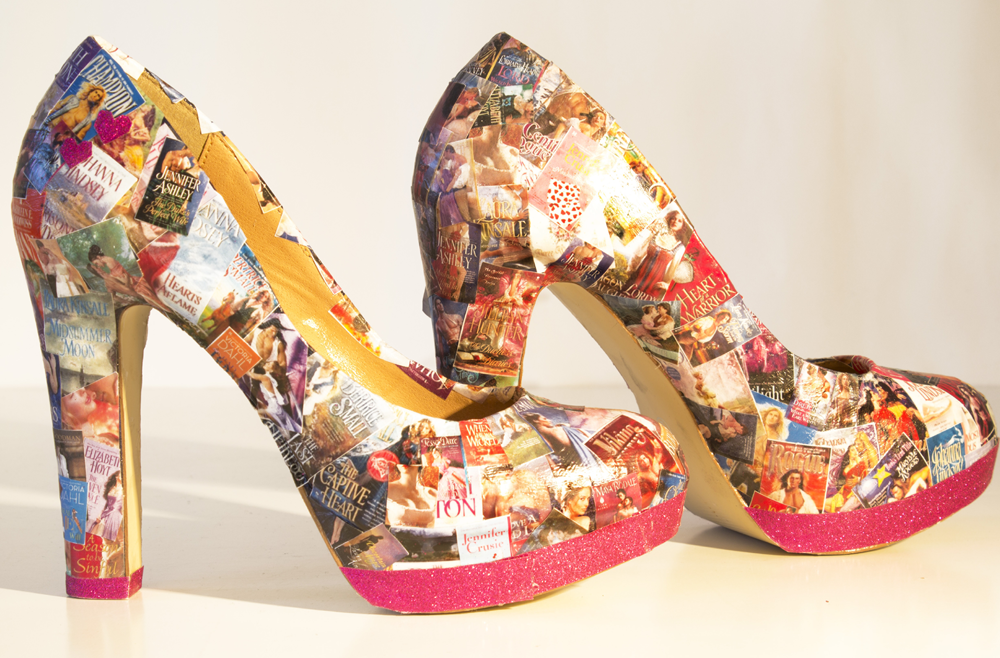
Rudi is Gamilaroi, which is also at times written as Kamilaroi. She also mentioned the Wiradjuri.
We discussed Kinship systems, and how kinship works in some Aboriginal communities. Need some links?
- Common Ground.org.au has information about Kinship Systems
- The Central Land Council also has an exploration of Kinship Systems.
You might have noticed Rudi uses “blackfella,” a term particular to Aboriginal English. More about the term, and appropriate Indigenous terminology in Australia can be found on this PDF on Appropriate Terminology, Indigenous Australian Peoples.
We also mentioned a ton of podcasts:
Kat was also a guest on the podcast before: Episode 104. Another Interview with Kat Mayo.
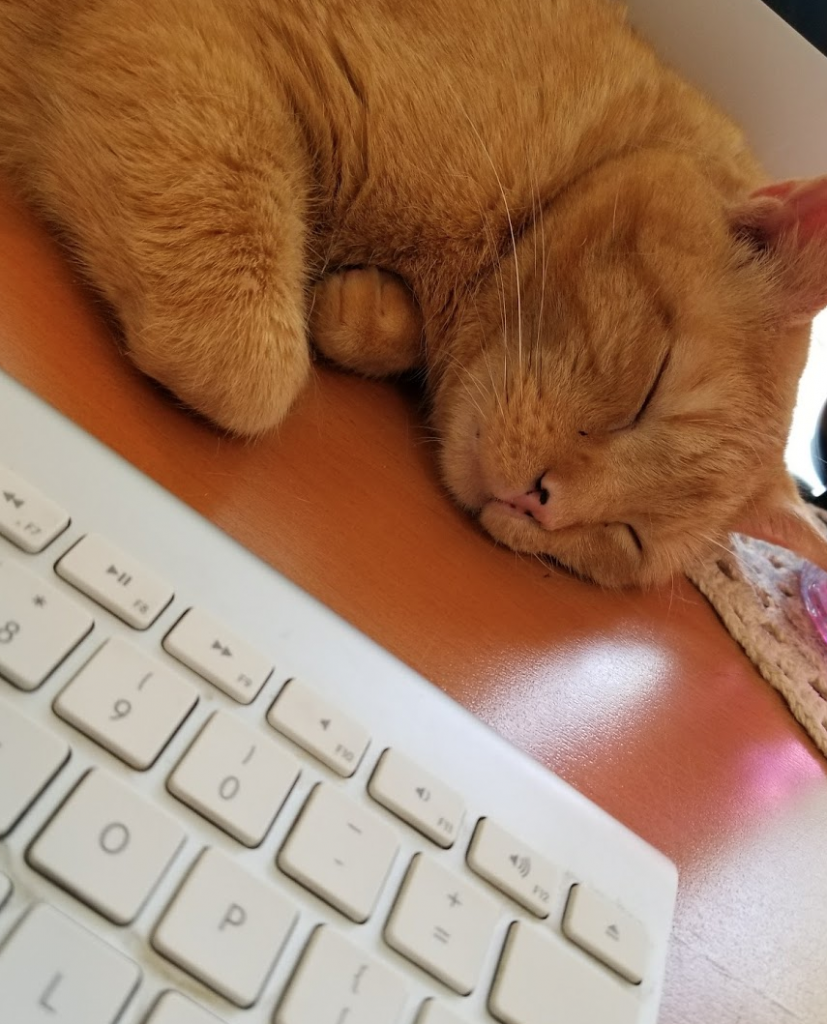
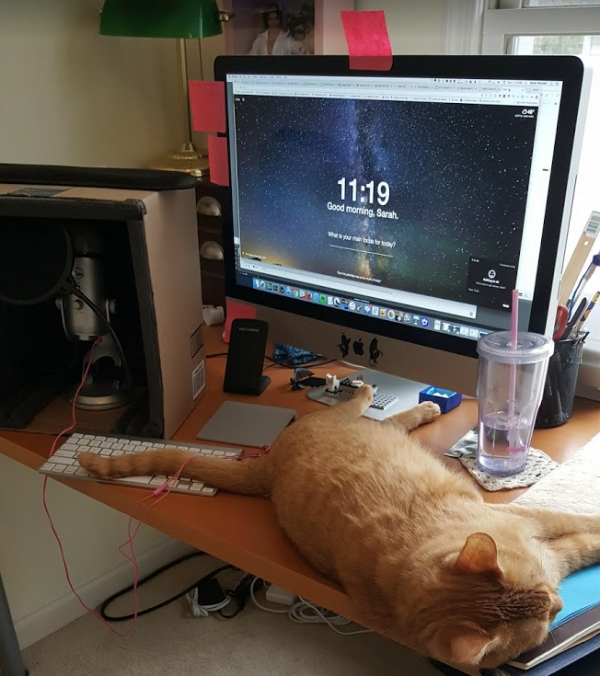
And finally, this episode is dedicated to the memory of Orville, Feline Executive Sound Engineer Extraordinare. I’ll miss you, buddy. See you again someday.
If you like the podcast, you can subscribe to our feed, or find us at Apple Podcasts, Spotify, or wherever you listen to your favorite shows!
❤ Thanks to our sponsors:
❤ More ways to sponsor:
Sponsor us through Patreon! (What is Patreon?)

What did you think of today's episode? Got ideas? Suggestions? You can talk to us on the blog entries for the podcast or talk to us on Facebook if that's where you hang out online. You can email us at sbjpodcast@gmail.com or you can call and leave us a message at our Google voice number: 201-371-3272. Please don't forget to give us a name and where you're calling from so we can work your message into an upcoming podcast.
Thanks for listening!
This Episode's Music
Our music in each episode is provided by Sassy Outwater, who is most excellent.
This podcast features a song by Three Mile Stone titled “Snug in the Blanket.” You can find out more about Three Mile Stone at their website or on iTunes.
Podcast Sponsor

Today’s podcast is sponsored by The Friend Zone by Abby Jimenez, and brought to life by the brilliant dual narration of Teddy Hamilton and Erin Mallon. If you like Penny Reid, Helen Hoang, slow-burn romances, rom-coms, or even just stories where the hero and heroine actually *like* each other (scandalous, we know), *this* is the audiobook for you.
After years of debilitating periods and fibroids, Kristen has decided that a hysterectomy is the only way to improve her quality of life, but when Josh shares his dream of having a big family, Kristen is convinced that she has no other choice but to keep him in the “friend zone.”
The Friend Zone is the perfect summer romance that also honors women’s health challenges and the wide-ranging emotions (and pain) that comes along with them, while reminding us that regardless of what society expects from women, all of us deserve love.
The Friend Zone by Abby Jimenez is available wherever audiobooks are sold. Find out more at authorabbyjiminez.com, and get your “aural” romance fix from www.hachetteaudio.com!
Transcript
❤ Click to view the transcript ❤
[music]
Sarah Wendell: Hello there, and welcome to episode number 355 of Smart Podcast, Trashy Books. I am Sarah Wendell, and this episode features Kat Mayo and Rudi Bremer. Now, both Kat and I share a birthday this week, so first of all, Happy Birthday, Kat! And second, we’re going to party all about romance and romance podcasting in Australia. Kat and Rudi are the team behind the Book Thingo podcast, which is an Australian podcast about romance fiction, and I’ve known both of them for several years. Our conversation goes everywhere. We talk about podcasting, how to get a show done, what podcasting and the podcasting community is like in Australia. We also talk about Kat’s trip to Manila to meet and interview different #romanceclass authors, and we talk about representing and discussing nuance in indigenous Australian writing. We also take a deep dive into kinship rules and how many amazing romance series could be written in different kinship communities.
Now, I have a couple of notes about content: If you’re not sure what we mean by kinship relationships, I have links in the show notes to explain what it is that we’re talking about, and of course I’ll have links to their podcast, because obviously you’re going to want to listen to it, right? Right, obviously.
Now, given that it is Kat’s birthday week and my birthday week, everybody gets a present. This podcast episode is being brought to you by The Friend Zone by Abby Jimenez, and it is brought to life by the brilliant dual narration of Teddy Hamilton and Erin Mallon, and if you stay tuned to the end of the episode, we have a special sample of the audiobook so you can get a taste of what the book is like. If you like Penny Reid, Helen Hoang, slow-burn romances, rom-coms, or just stories where the hero and heroine actually like each other – scandalous, we know! – this is the audiobook for you. After years of debilitating periods and fibroids, Kristen has decided that a hysterectomy is the only way to improve her quality of life, but when Josh shares his dream of having a big family, Kristen is convinced that she has no other choice but to put him in the friend zone. The Friend Zone is the perfect summer romance that also honors women’s health challenges and the wide-ranging emotions and pain that come along with them, while reminding us that regardless of what society expects from women, all of us deserve love. The Friend Zone by Abby Jimenez is available wherever audiobooks are sold. You can find out more at authorabbyjimenez.com and get your aural romance fix from hachetteaudio.com.
And I want you to know that I practiced how I was going to say “aural” like six times. I almost thought that, like, you know, a full-on Brooklyn, like “aw-rul” would be good, but we went with that one, so that’s A-U-R-AL, aw-rul. [Laughs]
If you have supported the show with a pledge of any amount to our podcast Patreon, thank you very, very much. You are keeping the show going; you are helping me transcribe every episode so that every episode is accessible. If you would like to join our Patreon community, we do lots of nifty stuff. Have a look at patreon.com/SmartBitches. Monthly pledges start at one dollar a month, and if what we do has value and you pledge a dollar or any amount, we are deeply appreciative. Thank you very, very much.
And I have a compliment to Brandy B.: You have made people laugh so hard that years later they still remember the absolute delight that you caused. So don’t stop cracking people up.
At the end of this episode, as I mentioned, I will have a sample, an audiobook sample of The Friend Zone by Abby Jimenez. I will also have information about the music you are listening, and of course in the show notes I will have links to everything that we talk about, and holy smokes, I am looking at my show notes: we talked about a lot of things.
So we should get started with the talking-about of things, right? Obviously. All right, let’s do this podcast. On with Rudi Bremer and Kat Mayo from Book Thingo.
[music]
Kat Mayo: I’m Kat Mayo. I am a blogger and podcaster at bookthingo.com.au, which is a website that focuses on – well, we started focusing on romance fiction for Australian readers, but I think romance is so international now that it’s more like Australian concerns about international romance books.
Rudi Bremer: Interesting.
[Laughter]
Rudi: That’s new for me!
Kat: Thanks, Rudi, for the support!
[More laughter]
Rudi: I’m Rudi –
Sarah: Is that what we’re doing?
Kat: Mm-hmm!
Rudi: I’m Rudi Bremer. I’m the producer of Book Thingo, so I do kind of the technical side of things. I am a Gamilaroi woman, and I, my day job is in radio broadcast.
Sarah: Can you please explain for the many Americans who will not understand what being – is it Gamilaraay?
Rudi: Gamilaroi. So close! Gamilaraay is the language. [Laughs]
Sarah: I’m – dude! I’m so impressed with myself right now!
Rudi: So, accidental, kind of – Yeah! [Laughs]
Sarah: So, what is Gamilaroi?
Rudi: So, Gamilaroi is one of many Aboriginal nations here in Australia. We’re one of the larger; I think we’re the second-largest in New South Wales, which is southeast of Australia. So my – it gets really kind of weird if you don’t geographically understand Australia. Like, my, my people are northeast New South Wales, which is southeast of the entire country, so I don’t know –
Sarah: Right.
Rudi: – if that helps? [Laughs]
Sarah: Well, it’s, it’s interesting when you look at a map of Australia, because you have Queensland, New South Wales, and then you have, you know, all these states with names in it.
Kat: Victoria.
Sarah: Victoria, right –
Kat: Yeah.
Sarah: – and then it’s like, all right, we’re, we’re really bored. What do we call the rest of it? How about Western Australia? Northern Australia?
Rudi: [Laughs] Oh yeah, we –
Sarah: That works! All right, cool!
Kat: So creative.
Sarah: Like, someone got bored and was like, screw these names. Let’s go West, North, done!
Rudi: I mean, even, like, clearly, there’s a bit of laziness as far as the way that the states are divided, ‘cause that’s some very straight lines going on. Like, those aren’t – weirdly, that’s not the way that our nations actually divided up country? Like, we didn’t sort of get a ruler out and go, like, point A to point B. Like, we follow –
Sarah: What?!
Rudi: I know, weird! We follow geographical, so when I talk about being, like, new, a New South Wales nation, I mean it’s not technically true. We, we move up into Queensland as well, but my family are pretty solidly New South Wales.
Sarah: So what led you guys into podcasting? One of the things I want to do is start talking to other podcasters, because for a really long time there weren’t that many podcasts in romance, and you guys have been doing this for a really long time. What led you into doing podcasts?
Kat: So originally I was thinking of doing video blogs? So Sarah, you were in our very first episode, and I think you recall –
Sarah: Yes!
Kat: – we recorded that on video? And then I was like –
Sarah: I do! I wore lipstick!
[Laughter]
Kat: Well –
Sarah: Which I never do.
Kat: – the thing is, I, I took it from, like, such a bad angle, I think I had, had half the table in, in the, in the view, and then, like, sort of looking up our nostrils. Like, it was just so weird, and I just thought, I’m pretty sure I don’t have the talent or the eye for video, and also the post-production was just so much work, so I thought, oh, maybe podcasts would be better, but it wasn’t until – [laughs] – I mentioned it to Rudi maybe like two or three years later? And she’s like, I could help you with that, and I, and I was like, yes, please, because I’ve had this audio, this file now for years, and I still haven’t managed to edit it and get it out.
Rudi: Yeah, Kat had recorded five episodes, or I think it was three, three interviews that she wanted to, were going to be broken down into part one/part two? So there was –
Sarah: Right.
Rudi: – five episodes total, and she’d done nothing with them –
Kat: [Laughs]
Rudi: – other than write really diligent edit notes, like this needs to come out, and she –
Kat: I don’t remember that.
Rudi: Oh my God. No, ‘cause I, I distinctly remember, we, we didn’t know each other very well at that point, and it just was kind of, we were at the ARRA awards night –
Kat: The Australian Romance Readers awards night –
Kat and Rudi: – yeah.
Rudi: And so we were sitting on the same table because we’ve got a lot of mutual friends, and somewhere between a few drinks –
Kat: [Laughs]
Rudi: – we had got talking about podcasting, and I was doing quite a technical job with not a lot of creative outlet, but I had done a lot of community radio at that point, so I was like, look, I’m so bored. I just, like, give it to me and I will play with it, and then I got sent the audio and then also these really diligent notes that I just sort of looked at and was like – I had to, I had to edit the audio backwards to a –
Sarah: Oh gosh!
Rudi: – like, to be able to make her notes make sense, ‘cause as soon as I made a cut –
Kat: Yeah.
Rudi: – the time code didn’t match anymore, and so then I couldn’t find the things she’s talking about, and I was trying to be really polite, ‘cause we didn’t know each other too well, and that –
Kat: But actually, in hindsight, those notes were for me, if I had to do the editing, but most of that is just pretty natural to Rudi because she’s been doing it so long, and she’s, even at that point, you were doing, doing community radio. She would have already known to cut most of the stuff that I had in the notes.
Rudi: Well, yeah. So there was, there, I don’t quite remember where it is in, like, the production of the show, but there is a point at which I kind of was like –
[Laughter]
Rudi: – love, Kat, you don’t need to send these to me. Like, how ‘bout I do cuts, you listen to it, and if you don’t like it, then you tell me what else to take out.
Kat: That’s how our friendship deepened. [Laughs] But honestly, like, I don’t actually remember many things, so even if I send her a whole bunch of notes, I wouldn’t remember what I said to her, what, what I sent to her, and so if she came back to me with only half of those things done, I probably wouldn’t even notice.
Rudi: [Laughs] I actually am too scared to, like, go back to the first few episodes, ‘cause I’m not sure that I would – I, I feel like I would want to re-edit them, and I don’t think that I should, but it’s, it’s an impulse. Like, I always want to fix – yeah.
Sarah: I don’t want to go back to my first early episodes –
[Laughter]
Sarah: – in part because I know there’s one where someone recommended some audio thing for me to use to do, like, a final polish of the –
Rudi: Yeah.
Sarah: – the terrible edit I’d done, and it ended up making it sound like we were running around the microphone in circles, so the voice would go –
Rudi: Oh!
Sarah: – from the right around the front to the left, and then –
Rudi: Oh wow, yeah!
Sarah: – behind you, and then around. [Laughs] I was like, I don’t even know how I did that, so I don’t know how to fix it!
Rudi: But there’s so many –
Sarah: I just had to let it go!
[Laughter]
Rudi: There’s so many things that people will say, like, oh, just run it through this system, and so Kat and I have had some –
Kat: Yes, so we went through this as well. [Laughs]
Rudi: – some very interesting conversations where she’s like, I, I heard that if you use this it’ll, like, you know – I can’t remember what –
Kat: Like, in good –
Rudi: – oh, it’ll denoise! That’s what we were – we kept –
Kat: Or level the volume or something?
Rudi: Something like that, and I, I think the first time I let her do it I listened back, and I was like, it hurts my ears, and if you do this again, as God is my witness, I will quit.
[Laughter]
Rudi: So we haven’t done it; it’s all done by me.
Kat: To be fair, I was trying to lighten Rudi’s workload, because if we could find a tool to do this, then she wouldn’t have to, you know –
Rudi: Like, manually sit there and level –
Kat: Fiddle around with it, yeah.
Rudi: – level everything. [Laughs]
Kat: But no, it didn’t work, and actually, I’m a, I’m a member of a podcast group in Facebook, and somebody asked about this tool, and basically, my comment was, well, I used it once, and my audio producer threatened to quit if I ever used it again.
Rudi: It took all the bass out! Which is like, that’s where you get the really lovely kind of tones of people’s voices. Like, in those low levels, that’s when people are comfortable? Like, you drop your voice when you’re comfortable. So to take it out, it makes it quite unpleasant to listen to. That’s a little bit of –
Sarah: Oh, that’s really –
Rudi: – technical know-how for you!
Sarah: That’s really, really interesting! Wow. So it helps, basically, if you’re going to start a podcast, to hook up with a friend who’s done radio.
Kat: Yes.
Rudi: [Laughs]
Sarah: Should have done that.
Kat: Absolutely, because honestly, to my ears, it was no different whatsoever. I was like, oh, okay.
[Laughter]
Sarah: Well, considering that I have learned everything that I’ve done by figuring it out on my own, I’m, I’m really going to have to go find myself some radio friends. Like, I, I have failed in this department.
Rudi: Nonono, but, like, I mean, I figured out most of what I’m doing through trial and ever, error as well. Like, it’s, ‘cause community radio is an interesting space to play? The stakes are quite low, the –
Sarah: Yep.
Rudi: – because there’s not a huge audience listening, and they are quite aware of the fact that, like, the people that are working in this radio station are volunteers, so they’re not being paid.
Sarah: Right.
Rudi: They’re probably learning in some capacity, whether it’s that they’re learning how to present or whether they’re learning how to edit or, like, whatever, so, like, there’s a little bit more sort of forgiveness happening, but at the same time, like, your, your kind of, your peers who are helping you, like, learn something new, they’ve also learned to, either through experimentation or, like, yeah, or mistakes. I, I –
Sarah: Oh, yes, I’ve learned a lot from that.
Rudi: – my biggest learning from mistakes! [Laughs]
Sarah: Ohhh gosh, yes. I have learned so many terrible things, what not to do, from having screwed up.
Rudi: Yeah!
Sarah: Or having done edits in a place where the files weren’t properly backed up, so I had to start over.
Rudi: Ohhh.
Sarah: That’s the worst.
Rudi: Yeah. Oh, I feel you. Actually, I don’t know if you’ve ever done it before, but, like, getting a good way through a really good interview and realizing you’ve not recorded? Like –
Sarah: Yes!
Rudi: And then having to –
Sarah: I’ve –
Rudi: – try and recapture that.
Sarah: Oh yes.
Kat: Like, that’s happened a few times.
Rudi: It’s the worst. [Laughs]
Sarah: And I’ve also had it happen where, for whatever reason, and I’ve never figured out what I did wrong, my side did not record, but the other person’s did?
Kat: Oh no!
Sarah: So there would be these long blocks of silence where I was running my fool mouth, and then they would say something brilliant.
[Laughter]
Sarah: So I would have to go back, like, right after I recorded it, because if I didn’t do it right then, there was no way I was going to remember, and then I would have to, like, like you said, edit backwards? I’d have to listen to what they said and be like, what the hell did I ask them to get them to say that?
Rudi: Oh –
Sarah: And I’d have to re-record my portion! Oh!
Rudi: With, like, the same kind of energy and inflection and –
Sarah: Yeah!
Rudi: – like, general – yeah. Oh, I’ve done a few sneaky ones of those before. For, like –
Sarah: And I can’t sound like I’m like, what did I say? I think I asked you about this, maybe? I don’t know. Like, I have to sound –
Rudi: Do you ever –
Sarah: – like I’m actually in that conversation!
Rudi: Do you ever script those moments?
Sarah: I script my intro and my outro, because otherwise, there was – [laughs] – one time recently I was trying to do my intro, and I hit record, and I couldn’t remember the name of my own show.
[Laughter]
Sarah: I sat there like, hi, this is Sarah Wendell and my – what is the name of my podcast? ‘Cause I was, I was going to work off-script that – no. Mm-mm. No, I cannot do that. I –
Kat: That’s really interesting, because I, I thought you were making it up as you went, and actually did at one point probably try to do this? I’m pretty sure I didn’t send the audio to Rudi, because it was just so terrible, and I vowed never to do that again. [Laughs]
Rudi: Shall I remind you –
Sarah: I generally –
[Laughter]
Rudi: I was going to remind Kat of one interaction that we had where I sent her a message and said, can you please learn how to use contractions?
Sarah: Oh my God!
[Laughter]
Rudi: So you can speak like a normal person? ‘Cause I’m a very supportive producer, and I give very kind critiques?
Sarah: Oh –
Rudi: Yeah.
Kat: But sometimes I don’t get it, so she has to be really blunt! [Laughs]
Rudi: So learn to speak like a normal human and use contractions, and she wrote back to me, I do not know what you mean. It was like, you –
[Laughter]
Sarah: No, my intro and my outro I usually script. I work with bullet points for, like, what is it we talked about? I’ll go back and write those, but for the most part I have major points that I’m working off of in a, in a sort of a bulleted, casual list, so the actual stringing it in one whole sentence is somewhat extemporaneous, but I can’t do that without the reminders of what I’m trying to say. It’s the same thing –
Rudi: Yeah.
Sarah: – if I’m giving a speech or if I’m moderating: I need to have the notes in front of me; otherwise, I’ll be like, so, why are we here?
[Laughter]
Sarah: What, what year is it? What is my name? I don’t know? [Laughs]
Rudi: I do this thing where I will write out – if I’m giving a speech in particular – I will write the entire speech out verbatim, and then once I actually get there, I don’t ever look at my notes, because in my head I’ve, it’s like I’ve done the act of writing it, and now I don’t need it, ‘cause I know that it’s there in my brain?
Sarah: Wow.
Rudi: But yeah.
Sarah: My brain, my brain does not have that strength. I will write everything out and then bullet-point it and then practice it and then go back and look at the original draft and be like, yeah, I managed to remember almost everything I said in the first place! Good job, brain.
Rudi: When I’m, when I’m doing recordings though, like if I actually am sitting in front of a microphone, pretty much. Other than, like, you know, if we’re sort of having an actual conversation kind of style, everything is scripted, like, and I will do multiple takes, and so Kat has had to do her intros in front of me sometimes, and I’ll be like, mm-mm. Again.
[Laughter]
Kat: That’s always the most, it’s the most interesting when there are three of us and Gabby’s just watching us and I just feel so judged!
Sarah: [Laughs]
Kat: Just like, this is too much pressure!
[Laughter]
Sarah: I am really lucky that on the days that I edit it, it’s just, like, my cats –
Rudi: Yeah!
Sarah: – and they just unilaterally think I suck, so it’s fine. So what have you – aside from the mistakes that you’ve learned, I’m curious about what podcasting is like as a community in Australia, ‘cause in the, in the US, there’re so many white dude podcasts, and I’ve seen the joke so many times, that a group of white dudes is called a podcast?
Rudi: That’s my favorite joke!
[Laughter]
Sarah: And I have had moments where, like, some guy that I meet like at my kid’s music lessons or whatever will be like, oh yeah, I just started a podcast! I’m like, oh, that’s cool! I have one too! He’s like, yeah, I talk about Game of Thrones and football, and I have like seven episodes! He’s like, how many do you have? Three hundred and twenty-eight.
[Laughter]
Sarah: And he just sort of blinks at me like, that’s a thing you can do? Yeah. Is podcasting as white and male in Australia at it seems to be so much in the US?
Rudi: I think I have a somewhat skewed view of it, partly because I’m working in radio as a day job, so my, my circle of people, podcasters and –
Sarah: Is actually going to be different, of course.
Rudi: Yeah, like, but I also, I, I gravitate towards people of colour and, and particularly women of colour who are making podcasts, and I sort of have forgotten about the fact that men make podcasts, except for the fact that I do have a rule that I don’t tell guys, that I, this is a thing that I do when I’m, like, getting to know them, ‘cause I’m, I don’t actually want to hear about their boring podcast idea that is just, like, there was one boy who tried to tell me about this idea he had that was going to be, you know, he works in hospitality, so he’s going to do like a, like an etiquette podcast for –
Sarah: Oh God.
Rudi: – you know – like, and at, and at first I was like, okay, I can see, like, how you could make this kind of cute and, and cool, and then it was, I was like, so what kind of, what kind of etiquette? Like, what kind of stories? And it was stuff like, if you read the newspaper, like, fold it and put it back? And I’m like, that’s not – mm-mm.
[Laughter]
Rudi: I’m not listening to fifteen episodes of that, no.
Kat: So for me, I think my view of Australian podcasting as a community is that it’s quite, it’s quite dominated by broadcast, so a lot of the most popular podcasts that are Australian-produced are really produced by either radio or, you know, print media with a sort of a podcast show like a, an extension or a, like a special series, and it’s interesting because we have a podcast, it’s almost a convention every year, but it’s –
Sarah: Ooh!
Kat: – actually run by the, the, the ABC, which is our public broadcaster, and so when – and, and they do try to select sort of independent podcasters from, from overseas, but a lot of the, like, tips of the trade, a lot of the perspective is still from broadcasting, so that makes it a little bit difficult for the smaller, niche podcasts to really get as much value out of it than you would in something, you know, like, the US runs a lot of independent podcast conventions and events and, and networking events, so I think in Australia the indie scene for podcasting is still quite small, quite disparate, I would say. We haven’t all found each other yet and, and have, and have had a chance to see what everyone’s doing.
Rudi: Well yeah, ‘cause, like, I was thinking about this the other day: Hannah McGregor from Oh, Witch, Please and Secret Feminist Agenda was kind of talking about how, like, podcasts are the – what did she say? She’s like, they’re the only medium left that hearkens back to the original promise of the internet, in that kind of anyone can do it, and there’s no, there’s not many barriers; monetary concerns aren’t necessarily a barrier. And then I, I started to think about that, ‘cause my first instinct is to be like, yeah! Podcasts are the best! And then I was like, but. You’ve got to be able to afford the equipment. You’ve got to have the technical know-how to, like, actually, you know, do it? Get it up online somewhere. And then podcasts start with – this is, like, industry-speak now, but – podcasts start with an audience of zero. You can put something out there and have no one listen?
Kat: Yeah.
Rudi: And the way that you find your audience is to kind of actually get in touch with people and say, hey, this is a thing that I’m doing that you might like. This idea that it’s the great equalizer – like, yes, but no? And I think that that’s why, particularly in Australia, there’s an overwhelming number of, of industry people who are successful as podcasters.
Kat: That discoverability factor.
Rudi: Like, yeah!
Kat: I think that’s pretty true. I mean, I – you know, and, and especially when you narrow it down to books. By the time you narrow it down –
Rudi: Yeah.
Kat: – to romance books, you’ve got like maybe two or three that either are focused on romance or that are friendly enough to romance that they would have romance authors as guests or, or talk about romance books, but even if you expand it out to just books, there’s not that many, and I think their audiences don’t really, I don’t know that, that our audiences all overlap, because we don’t really talk about each other’s podcasts because we don’t really know about each other’s podcasts. Like, I’m still discovering a lot of book-related podcasts that are hosted by Australian hosts.
Sarah: Kat! You have done a few episodes with the #romanceclass writers in Manila –
Kat: Yes?
Sarah: – which, by the way, speaking of listening to things that are in your field: those were so cool! Was so cool! I did an interview with Mina V. Esguerra which was really fun, ‘cause that’s a twelve-hour difference, so I, I was –
Rudi: Mmm.
Sarah: – like, it’s eight at night here, and eight in the morning there, and she’s like, my daughter just went down for a nap, so let’s do this!
[Laughter]
Sarah: Yes! Time difference and nap time! So you did a bunch of episodes with the #romanceclass in Manila. What was the response like to those episodes? Did you have a good time?
Kat: I had an excellent time, and they’re such a generous community, and I should actually, I want to shout it back to you, because actually I discovered – so Mina had been on my radar for a little while because every time I ask friends or, you know, people on Facebook who are Filipino if they would recommend a romance author who was writing – sorry, an author, a Filipino author who was writing romance, and Mina’s name had come up a few times, but I, I sort of didn’t really get a sense that there was a – I wasn’t sure if it was like romance-romance or like other people’s idea of romance. So it wasn’t until Alyssa Cole was on your podcast and she started talking about –
Sarah: Mm-hmm.
Kat: – the #romanceclass community that I thought, well, I really should get on this! Like –
[Laughter]
Kat: – I haven’t been doing my job properly! And then sort of it snowballed from that, and when I told Mina that I was going to the Philippines and asked her if, you know, she was interested in having some of the authors interviewed, she was very excited, and she, they were very generous with their time, to the point where I think the second time I visited we were able to get the, some of their actors who do the live readings to record some extracts for the podcast, which was –
Sarah: Fun!
Kat: – quite – yes. But it, it also, it was really funny. It was really fun, ‘cause I really wanted to understand the feeling of the audience as they were listening to some of these live readings, because when you watch them on YouTube, sometimes you’re like, there’s a lot of excitement in this room, and, like – but once you’re there in person and you’re listening to someone reading out some of the more, not necessarily sexual, but intimate scenes in a, in a romance novel, you do get that sense of, ooh! [Laughs] Feeling a bit odd!
Sarah: Right.
Kat: It’s a bit thrilling!
[Laughter]
Kat: But I think, you know, that, that the #romanceclass community does such an excellent job of uplifting their authors, both their existing stable of authors and the new ones sort of emerging from the community, and I think they’re really, any time that they can, they, they have the potential to bring those books in front of a new audience or a new set of readers, they’re always really happy to help. I think they’re doing so well, so I’m really, I’m really excited for what new works are going to come out of that community.
Sarah: Do you have any recommendations that you, like, tell people about?
Kat: Yes, but I keep recommending the same books, and I feel like I need to read more so that, like, I don’t feel like I’m – so Iris After the Incident is my number one recommendation; that’s by Mina V. Esguerra. That recommendation has not failed me; not a single person that I’ve recommended it to has come back and said, mm, that, I didn’t like that book. Everybody has raved about that book. But, but I think she’s also one of the most, I want to say mature, but – [laughs] – I don’t mean that she’s old, but that she’s been writing for quite a while, so I think her style is now quite mature, and she has a very good understanding of the romance community and the way that we portray heroes and heroines, so she does some very deliberate things in her books that I find really fascinating.
Six de los Reyes writes about heroes and heroines – mostly heroines – that are in, in, in science, doing scientific research, so anyone who has a science background I think will find her books really fascinating. And then Carla de Guzman writes about heroines who are plus-size.
So I think those three are pretty solid writers, and, and I love Prep and Prejudice by Miren B. Flores, and I wish she would write a little bit more, because I think she’s only got a few books under her belt, but that one I really loved.
Sarah: Have you read Mina V. Esguerra’s Kiss and Cry?
Rudi: No, not yet! It’s, I’ve, I’ve got it.
Sarah: Okay.
Rudi: It’s on my TBR, but I haven’t – have you?
Kat: This is, this is ice skating?
Rudi: Yeah.
Sarah: It’s so good!
Kat: So the thing with Mina’s books is, I have them on reserve for when I, like, need something that I just know is going to make me happy, so I, I, I don’t –
Sarah: So they’re like your comfort reads.
Kat: Yeah, so I don’t want to use up all my comfort reads in one time, so –
[Laughter]
Kat: – so she’s on my queue – like, I’ve got a lot, I’ve bought a lot of her books, but I haven’t read them, because I’m reserving them for when I just really need something that I know is going to work.
Sarah: Well, I will tell you the thing I love about Kiss and Cry is that it is very hyper-focused on the couple that the, they met and had a very brief attraction, and now it’s ten years later. She was a world champion figure skater for the Philippines, and he played for the Filipino national team all over the place, but his family moved, emigrated to America, so he has to keep quitting jobs in the US to go back to the Philippines to play hockey, and then he’ll go back and find another job teaching, and then he’ll quit and go back to the Philippines, and that, there’s this wonderful tension between the characters, between being diaspora or in home and, are you staying or are you going? And do you belong here, do you not belong here, because you’ve been over there for so long, and she’s like, this is all temporary, and I’m here to just, you know, stick it to my parents who told me I couldn’t, you know, date you because I had to be focused on my skating career. Well, now my skating career’s done, and you’re here, so let’s do this great, you know, temporary – it’s all temporary. It’s not real; it’s not temporary. [Whispers] It’s totally real.
[Laughter]
Sarah: So there’s this, this true and false tension of their relationship, like is this just a temporary thing ‘cause he’s about to go back to the States, and then there’s also this, where do I belong? Do I belong here, do I belong there, or do I just belong with you, and then it doesn’t matter? And there are some, like, lines in there where I’m like, okay, doo-di-doo-di-doo, and then, BAM! Right in the feels!
Kat: [Laughs] Well, I, I really love that – I, I’ve seen some of the commentary around this, because I haven’t read it myself, but I’ve seen some of the reviews that have come out, and I think one of the effects of having authors of colour a bit more – sorry, I, I just want to word this carefully – so one of the great things about the fact that authors of colour are being lifted up in terms of discoverability and people talking about their books –
Sarah: Mm-hmm.
Kat: – is that we’re starting to see these conversations in romance through their books about people who aren’t just culturally affixed in one place? So –
Sarah: Mm-hmm.
Kat: – because romance, for a long time, has reflected Western culture pretty much exclusively, now that we’re see- – and, and we’ve sort of, we also now have books that are reflecting non-Western cultures, but I think books who reflect book and that struggle of, you know, so I’m, I’m first/second. I can’t, I can never really tell, but, like, I was born in the Philippines, but I grew up here, so that whole world of finding your place in one culture or another, sitting between two cultures and some of the implications that has, that, on, on how you build relationships, that’s been missing in romance for a while, and I, it’s something that I didn’t even realize was missing until I started reading books that I could then go, oh my gosh! This actually really was like stuff that I’ve experienced, and it’s not – it’s really strange, ‘cause you don’t realize there’s a gap until you read the gap, and then you’re like, yeah, that has been missing.
Rudi: Because you compensate for it in other ways. I mean, I have yet to read a romance novel that has an Aboriginal main character that I particularly enjoy? I know that there are some out there. I have to admit that if it’s not written by an Aboriginal author, I’m probably not going to read it, ‘cause I just don’t know that – I don’t know how to say this without being, like, an absolute arsehole, but, like, I, I –
Sarah: There’s, there’s a fluency missing.
[Laughter]
Rudi: Like, I, I don’t know that Australian rom-, the Australian romance scene is quite ready to write an Aboriginal main character in the way that I need them to.
Sarah: How ‘bout I write one for you?
Rudi: Oh my God.
Sarah: I’ll just write one for you. It’ll be the most, it will be the most terrible, inaccurate, worst thing you’ve ever seen, and I won’t do too much research, and you’ll just be like, oh my God, why did you do this? And I’ll be like, ‘cause I wanted to cause a diplomatic incident; that’s why.
Rudi: [Laughs]
Sarah: Like, speaking of things I am not qualified to do – no, I completely understand. There’s a lack of fluency and understanding of cultural nuance that is missing when you are from the outside looking in on a, on a cultural situation. It’s not –
Kat or Rudi: Yeah.
Sarah: – easy to be like, okay, check this box, checks this box, check this box, okay, we’re good. Like, I struggle with that just trying to write Jews in America. Do you have any idea how much Jews disagree with each other about things?
Rudi: Mmm.
[Laughter]
Sarah: Like, I was at synagogue today, and we had a discussion, and it was like, we could have gone on for like three hours, and we were talking about one thing. So, like, even, even representing Jewish experience in America I’m like, wow! Underqualified on so many levels!
Rudi: There’s kind of, when you’re marginalized, like your, your culture, your group, your, you know, whoever –
Sarah: Mm-hmm.
Rudi: – are kind of treated as this homogenized kind of, you know, thing, and that all of you must believe in this particular, you know – I don’t know, it, like, I was about to get really political, but like niche politics?
Sarah: You can if you wish!
Rudi: No, no! Well, I mean, I don’t know that it translates, ‘cause it’s like – [laughs] – you know –
Sarah: Listen, I think we’ve – isn’t the NRA now running around Australia like –
Rudi: Oh my God!
Kat: Oh my gosh!
Rudi: It is, it’s hectic. I also –
Sarah: [Laughs]
Rudi: I also have to be really careful because, like, technically I shouldn’t be airing opinions like this? I mean, I don’t think –
Sarah: ‘Cause you’re technically a –
Rudi: Technically, it’s –
Sarah: – newsperson.
Rudi: – not my job? Yeah. Just sort of as a side note, there’s, there’s kind of discussion in Australia about constitutional recognition. So recognizing that Aboriginal – well, Indigenous people, ‘cause Indigenous in Australia refers to Aboriginal people and Torres Strait Islander people, ‘cause we actually have two different groups of Indigenous people.
Sarah: The Torres Strait and, and –
Rudi: Yeah, so –
Sarah: – they’re the ones who speak, is it Meriam Mir, the language?
Rudi: That’s one of. There’s a few languages?
Sarah: Yeah.
Rudi: Oh my God, look at you!
[Laughter]
Rudi: There’s Kalaw Lagaw Ya –
Sarah: Super Clueless American.
Rudi: – Kalau Kawau Ya, and Meriam Mir are, like, the main – I think there’s, I think maybe Erub is also –
Sarah: Right.
Rudi: I think –
Sarah: But they’re not considered Aboriginal.
Rudi: No. So they’re, they’re a different indigenous group entirely.
Sarah: Oh my!
Rudi: So the islands of the Torres Strait sit between the tip of Australia and Papua New Guinea, and kind of culturally speaking, they are actually kind of little bit more Melanesian, as opposed to, like, mainland Aboriginal people. Like, there’s, there is a difference, and there’s a reason that they call themselves Torres Strait, and don’t, don’t want to be called Aboriginal. So with that technical-ness –
Sarah: That gets complicated!
Rudi: [Laughs] So there, there, in and of itself, you know, ‘cause people will say Indigenous, and they probably, for the most part, I would say that when people say Indigenous, they actually are only meaning Aboriginal, which is why I get a little bit kind of tetchy about this, like, if you mean Aboriginal, say Aboriginal. If you mean Indigenous, if you mean Aboriginal and Torres Strait, say Indigenous. If you mean Torres Strait, Torres Strait Islander, like, call them that. This is such a weird tangent, but, like –
Sarah: [Laughs]
Rudi: – this is, and this, but this is the thing: like, I, I don’t see that nuance in the same way that, like, if you mean a Murri person, which is a type of Aboriginal, like, then that’s who you mean. If I, like, if I’m going to identify myself, I’m going to be a Gamilaroi woman. Like, ‘cause –
Sarah: Right.
Rudi: Like, there, there’s a difference between being a Gamilaroi person who is, you know, east coast – well, inland, but – and being, like, Bunuba, which is over in Western Australia. Like, we’ve got very different experiences of colonization. We’ve got very different –
Sarah: Right.
Rudi: – histories. Culturally, we’re quite different, and it’s, it’s important to recognize and respect the nuance of that, and that’s what doesn’t happen, as far as I can tell, with Aboriginal main characters or Aboriginal characters in romance novels when I’ve encountered them. Kind of what you end up doing as, you know, the fifteen-, sixteen-year-old who’s, like, decided that they love romance, and it’s absolutely their genre and they’ve found their home, is you start looking for yourself in, within kind of the genre in totally different ways, and so you let –
Sarah: Yes.
Rudi: – those, like –
Kat: Sure, I wanted to be a redhead with violet eyes for a very long time.
Rudi: [Laughs]
Sarah: Doesn’t everyone?
Kat: It’s just the ideal. Long, flowing Titian hair and violet eyes.
Sarah: It’s always red with purple eyes, always.
[Laughter]
Rudi: Always.
Sarah: I’ve yet to meet an actual person with color combination that wasn’t, like, in some way enhanced by outside efforts?
Kat: But, look, honestly, so in #romanceclass on Twitter we’ve had a few of these threads where we talk about, even within the author’s, even within own voices, sometimes those internalized stereotypes come out? So I have read –
Sarah: Yep.
Kat: – books written by own voices where, you know, the heroine will have, or the hero will have, I don’t know, green eyes or hazel eyes, and when you look at what you would need in your genetic tree to get to that point where you get that eye color, sometimes it’s really, it’s possible, but it’s really convoluted, and also you’re then questioning, and you’re like, why is it that this particular eye color is a thing that we’ve chosen for the hero or heroine when ninety percent of people just have, like, beautiful brown eyes? Like, what’s wrong with that? And, and Rudi have sort of occasionally joked that, you know, we wish we had a #romanceclass for Australia, because there’s so much –
Rudi: That’s not a joke! I want one!
Kat: Well, you know, sort of in, in, in, while we’re conversing about, like, ideal sort of books. Because, you know, Australia, it’s very, like, the local fiction is very non-diverse. There’s a lot of, you know, rural fiction, and rural fiction with romantic elements has been really popular for a while now, but you would struggle to find a non-white character in any of those, and it’s not like non-white people don’t live in rural communities. They do, but they’re just not represented in these books.
Rudi: Oh my God. Like, if you actually go to rural Australia, like, those are predominantly Aboriginal, like, towns. It’s not reflected in rural romance that is written by Australians. It just, it blows my mind. And ‘cause I, I mean, you know, not that I hadn’t spent time in rural areas before, ‘cause my mom is a country girl; she’s like, she moved to the city and married my dad, and, and he’s very solidly a coastal kind of person, so he – he’s white, bless his heart – but –
[Laughter]
Rudi: I thought I’d, I thought I’d call that out.
Sarah: He’s white, bless his heart. Oh my gosh! I follow you on Instagram, and you’re in the country like all the time.
Rudi: Yeah! Oh well, I actually, I live, I live near the Royal National Park, so it’s, it’s bushland that’s right next to the ocean, and –
Sarah: Envy.
Rudi: – my, so my, my, my hometown is, like, right there. My parents still live there. So, like, my mum, you know, raised her family around the beach and the bush, and then when we actually go back to where she would call home, it’s so, like, flat and dry and hot, and it’s cotton chipping country, and, like, I had this really bizarrely romanticized idea of what that would mean, like, ‘cause she had these stories of when she was a teenager and she would go and, like, chip cotton, and I thought that I would go and do that at some point. Like, I look back now and I’m just like, fuck, as if! I was way too precious. There was no way I was going to work in a field, like!
[Laughter]
Rudi: Like, I, I spent one summer helping my dad build a deck, and it was the most brutal experience that he and I have ever had together. Like, because I had to, I don’t know, ‘cause I had to, like, lift beams and carry them around and, like, take measure – it was a whole thing. But, like –
[More laughter]
Rudi: But, yeah, so –
Sarah: A whole thing!
Rudi: So I, I’m, I’ve spent a lot of time in rural areas in Australia because, you know, it’s where my, it’s where my family are; it’s where my mum’s family is. For work reasons, I moved to a rural town for a while. It’s incredibly racially diverse. It’s incredibly – there’s a, there’s a lot of blackfellas out there. They’re just not making it onto the pages of our rom-, of our rural romance novels. And I find that to be –
Kat: Like, they’re not even secondary characters –
Rudi: Nope.
Kat: – or characters in passing? You don’t see them in the books –
Rudi: And –
Kat: – which I find really strange.
Rudi: Well, no. It amazed me – I don’t read a lot of rural romance, but part of it is because it starts to make me think, oh, I know those people in those towns who don’t engage with Aboriginal people, and, like, we call those racists, so –
[Laughter]
Rudi: – it makes me wonder what that – like, what is that saying about your character that they aren’t engaged with anybody but white people in their town? Like –
Sarah: It’s a way of codifying white supremacy without saying it outright.
Rudi: Yeah! Like, I mean, I’m, I’m very sure that the authors who are writing these don’t mean to do that, and they don’t mean to imply that, but as a person of color who is reading that, I can’t help but draw a con-, like, draw sort of parallels to what I know, and that’s what I know.
Sarah: Yeah. Of course!
Kat: There was a call for applications for a fellowship for Indigenous writers, and I think it’s a collaboration between Flinders University and Harlequin, but Rudi will correct me with facts if I’m wrong.
Rudi: I will when I find it.
Kat: And I think they’re targeting writers of genre and commercial fiction, is that right?
Sarah: Mm-hmm.
Kat: Yep. Yep. Which I guess is small steps, but you know, it, it’s ev-, it’s everything, right? So I, I, I read contemporary Australian romance, and I’m like, there are no Asians, really. [Laughs] And, and when I go to work, like, I look around work and I’m like, it’s not all white people. I walk –
Sarah: Right.
Kat: – down the street in Sydney, if it’s set in Sydney, and I’m like, it’s not all white people. I go to the shops; I go to the bar; you know, it’s not, it’s not a monoculture, and, and that’s not represented in those books, and I feel like, you know, part of it is that we are, it’s a follow-on from the tradition of romance that was predominantly white that, that authors sort of haven’t really questioned? I mean, I love that we’re in a time where we are questioning some of these assumptions about who gets to be, who gets the starring role in these novels, and I just wish that in Australia we, we had writers groups that maybe looked at that a little bit more closely and, and nurtured the emerging writers that are doing that work?
I have just finished reading a book called No Limits by Ellie Marney, and so this book had gotten a lot of talk on Twitter, and, and, and people whose reading tastes I trust and kind of align with mine have raved about this. I’ve just kind of put it off ‘cause (A) for some reason, from the cover, I thought it was some sort of mixed martial arts, like, book, but it’s actual rural Young Adult suspense fiction with romantic elements, and in Australia, we don’t have New Adult? Anything that would be considered New Adult in the, in the US is just Young Adult here.
Sarah: Oh, that’s interesting –
Kat: Yeah.
Sarah: – ‘cause those are not the same thing often.
Kat: Yeah, we don’t, we don’t have, like, no-sex requirements for our Young Adult. It’s okay to have a little bit of sexytimes on the page, whereas I think in, in the US, YA is a little bit less explicit or less, like – anyway. Anyway, that’s – [laughs] – a totally different topic. Anyway, so I finished reading No Limits by Ellie Marney; so a few things stood out to me: (A) it was written quite well. (B) It, it made the, the rural setting a lot more nuanced than what I would normally read. So it, it deals with domestic violence. So the hero is in a, in, his dad is a, is a violent person, and it really looks at how the community reacts to that, and the fact that, because it’s a small town, everyone knows it’s happening, and everyone knows how to help, but they actually don’t know how to help without making things worse for him, so they kind of help as much as they can, and then everybody just sort of feel low-key guilty because they couldn’t do any more, because doing any more might then cause him more harm. The other thing that, that really interested me about it is that the heroine is a daughter of an Australian, a white Australian doctor, and her mother is North Indian, so she’s got one side of her family which is, has a different culture to what you would normally see in a rural, in any rural fiction, actually, in Australia but, you know, especially in romance, and, and, but not in a way that makes it the focus? In a way that makes it part of her life and a logical part of her internal monologue, ‘cause it’s first person alternating, and it’s just kind of so seamless, but, you know, because it’s so unusual to see it, you look, like, the whole time I’m reading I’m just, like, nervous that, like, the author will write something that I’m just going to be like, this is, like, terrible, but it, but she never does, and so that was really great. But you just feel this tension as a reader the whole way through. Like, please don’t stuff it up, ‘cause I’m really liking this book; please don’t stuff it up, ‘cause I’m really liking this book.
[Laughter]
Kat: And I’m not, and I’m not from India, so potentially there might be issues that I didn’t pick up, but I, you know, I think it was, for example, if, if it had been a Filipino heroine, then I would be just like please, please get it right! And the other thing also is that sometimes you’re just so happy that you are represented in the book that you, I will give a lot of leeway for a character who is Filipino, even if I don’t fully agree or understand the, the, the way the author has written them. Just the fact that there’s a Filipino on the page, I’m like, yes, this is already, like, you know, a victory for us.
Rudi: [Laughs] I think I used to do that for, like, American books that had an Australian?
Kat: Yes.
Rudi: I’d be like –
Sarah: [Laughs]
Rudi: – yes!
Kat: Those Emma Darcy books, right?
Rudi: Jennifer Crusie, Don’t Look Down! I was like, yes! The Australian! He’s a bad dude, but he’s there!
Kat: Yeah.
Rudi: Also a white dude; didn’t matter.
[Laughter]
Rudi: I was really excited!
Kat: But you know, we miss out on so much as well. Like, Rudi and I and a friend of ours, Vassiliki, who’s Greek, we went out for dinner one time, and we started talking about kinship relationships, and the kinship relationships for Filipinos, for Greeks, and for Aboriginal people are different. They’re really different, and you could construct an entire romance series just based on these kinship rules. Like, Rudi and Vassiliki’s kinship rules are just, like, so much more complex than mine. Like, I thought we were a little bit, you know, we, we have some extended family issues that we, we would, we would have to work through, but theirs is like level up, like two levels up from ours.
Rudi: [Laughs] I mean, I work from a really flattened sort of general version, but even that, I have noticed –
Kat: A flattened, general version!
Rudi: – even that, I’ve noticed, is, like, deeply complex to other people, and I, I’ve had conversations with friends where I’ve just, like, we’ve not quite understood why I will refer to myself as an aunt, and they’re like, but your brother doesn’t have kids, and I’m like, no, I know, but my cousins do, and then they’re kind of going, but how can you be – like, that’s not, that’s not how it works, and like, that might not be how it works for you, but it’s how it works for me. Like, I’ve got nieces and nephews for sure.
Sarah: I understand the concept of kinship rules, ‘cause I’ve, I understand it, but could you explain it to someone who may be listening who doesn’t understand exactly what that means?
Rudi: So my, my general flattened version is that, it’s the way that your family is organized, which dictates the way that you treat each other?
Sarah: Right.
Rudi: The responsibilities and the roles that you take on within the family? So your mother’s sisters are also your mother, and same way, your father’s brothers are your father. So your father’s sisters are your aunts, and your mother’s brothers are your uncles. That’s how it should be. We, like, I don’t even, I don’t do that, really. I just do like my mum’s siblings are my aunts and uncles. Their kids are my cousins; my cousins’ kids are my nieces and nephews, because, like, my cousins are kind of my siblings.
Kat: That’s how it works for us too.
Sarah: Right.
Rudi: And then in the same way that my, my mum’s cousins are my aunts and uncles –
Kat: Yep.
Rudi: – their kids are also my cousins/siblings. Like –
Kat: Yeah, occasionally I’ll go to Wikipedia to figure out what the official, like, first/second cousin, once/twice removed is, but whenever I mention it to Filipinos –
Rudi: It’s just, yeah.
Kat: – they’re just like, that doesn’t – whatever.
Rudi: Then you’ve also kind of got to bring age into it, because, like, I’m, you know, I’m right smack in the middle of my nan’s grandkids, and there’s fifty-three of us, I think? I, yep, I’m going to go with that, and if there’s more, then like, soz, bubs!
[Laughter]
Rudi: But, so I’m right in the middle, which means that I’ve got cousins who’ve got kids that are my age-ish, I’ve got cousins who are actual babies, and then I’ve got cousins who are having babies. So I kind of adjust who I will give that, like, honorific of auntie and uncle and who I would expect auntie and uncle from –
Sarah: Right.
Rudi: – based on, like, where they fit kind of within the scope of our, our generation? Like, how much older am I than them, and how much older are they than, than me?
Sarah: Right.
Rudi: And then there are a few people that, like, I probably am breaking rules by being, like, really casual about, and I, I will use, like, their, like, baby nickname, and then people the same age as me will be calling them Uncle or Aunt, and I’m like, that’s cute, but, like, no. [Laughs] They’re still, like, we’re still on the same level; me and, me and this one are still the same level, ‘cause, like, it just is how it is.
Kat: But then it, it gets even more interesting and complicated when you start talking about, well, who is allowed to marry whom? So I think it, I think out of the three of us, the Filipino rules were actually the least complicated.
[Laughter]
Kat: Because when Vasiliki and Rudi started explaining theirs, I was just like, this is so complex! So complex.
Rudi: I just have a rule that if he’s, like, if someone’s a Murri or a Koori, like, they’re off-limits. Like, it just isn’t worth it.
[Laughter]
Rudi: ‘Cause we’re, I don’t, I don’t want to find out, and it happens, and it’s a big joke amongst, like, our community that you’ll be, like, you’ll be dating somebody, and then you’ll kind of do the family tree. Like, you’ve got to do the family tree early; you really do. And, like –
Sarah: Like Iceland.
Rudi: – it’s – oh, it really is.
Kat: [Laughs]
Rudi: Because, like, like, we’re, like, three percent of the population? Like, that’s not a lot of options, really.
Kat: You don’t want to come to the family party and everyone’s like, you two should not be dating!
Rudi: Well, I have –
Sarah: [Laughs]
Rudi: – I have a friend, and she, you know, she, she grew up kind of being like, you know, I’m not going to marry any, like, I’m not marrying up with any blackfellas. Like, none of this, ‘cause I’m not going to turn around and find out that we’re related. I’m just going to, I’m going to find myself a white boy and thus, that’ll be it. Right, and that’s – anyway, she’s, you know, so she’s with her partner, and they’ve got a few kids, and fast forward a few years, and he’s, someone in his family, a grandparent had passed away, and they started, like, going through the stuff in the attic, and he finds that, that not only is he actually Aboriginal, but he’s the same nation as her, and then they were like –
Sarah: No!
Rudi: – they were like, yep, stop digging now. Like, this is –
[Laughter]
Sarah: Just don’t look. Everything is fine, guys.
Rudi: Like, they’re like, we’re not – mm-mm.
Kat: Ignorance is bliss.
Rudi: Exactly. Ignorance is bliss; this is, this is where we stop that. [Laughs]
Sarah: Ohhh no.
Rudi: So yeah, that’s always – I feel like every family has that.
Kat: Yeah?
Sarah: Yeah. So you have the kinship rules that sort of unify your family into much closer relations without this whole first, first removed, second removed.
Rudi: Yeah.
Sarah: But at the same time, if you’re creating a romance structure out of that group, it can be quite a challenge.
Rudi: Pick someone from the opposite side of the country. Like, just save yourself some heartache. [Laughs]
Sarah: So how far west into Western Australia are you? So, like, twelve hours? I’m sorry, that’s not enough.
Rudi: Other side of – yeah. Like, are you on the other side of the desert? That’s fine then.
Sarah: Can you see the Indian Ocean? Okay, maybe we can – maybe. Maybe we can talk. Have you met a quokka? Maybe we can.
Rudi: [Laughs] So yeah.
Kat: But it’s all these –
Sarah: So –
Kat: – little subtleties of culture, you know. So, Philippines –
Sarah: Oh yeah.
Kat: – we still have princesses there, so you could do a princess romance featuring a heroine in the diaspora. Like, there’s just so many combinations that can pull together things that romance, the romance community loves and put it into this context where actually even those old tropes still work, because culturally, they still, these elements still exist.
Rudi: Feuding families?
Kat: Yes!
Rudi: Oh my God, like, you put that –
Kat: Marriage of convenience, arranged marriage.
Rudi: I, I’ve got a friend, Sarah, who I am pretty sure listens to your show – so hey, Sarah! Sarah is from –
Sarah: Hey.
Rudi: – the, she’s from Wiradjuri, which is a warring nation with Gamilaroi, and I have occasionally –
[Laughter]
Rudi: – I’ve occasionally tried to, like, convince her to date my brother and have them be like a Romeo and Juliet –
[More laughter]
Rudi: – but ending happily.
Kat: Yeah, yeah.
Rudi: [Laughs] But, like, warring, warring nations united by love? And every time, every time I say it she’s just like, mm-hmm. Yeah. But, like, yeah, we’ve got, we’ve got scope, we’ve got –
Kat: Huge scope! There’s so many stories that are untold.
Sarah: The possibility of princesses in the diaspora alone! I mean, that could be, like, a whole series!
Kat: Yeah. But also, when we talk diaspora, we tend to talk about second generation? So people who’ve grown up in the new culture, and there are very few stories of people who – and I think one of the, one of the really great reviews I read about Kiss and Cry – going back to Kiss and Cry by Mina Esguerra – was by, I think her name’s Aarya? And she talked about how those elements of being within one place but also without, in and out –
Sarah: Yeah.
Kat: – of, of several places just really spoke to her and, and made her think about her own experiences, and I think, I mean, I think that’s almost completely missing from romance fiction.
Sarah: Yeah, there is one moment where the hero, everyone’s talking about his temporary relationship with this, with this woman, because she never was permitted to have any relationships, and he thinks to himself, everyone’s talking about it, but I haven’t heard anyone talk about it, so that means all the text chains that are happening don’t have me in them because I’m really not part of this group. And I was like, what a really subtle detail to communicate that feeling of, I’m on your team, and I’m here.
Kat or Rudi: Yeah.
Sarah: I’m, this is where I was born, this is where I’m from, but I’m not part of this community as much as I think.
Kat: Absolutely, and I think that hero even goes home pretty frequently, whereas –
Sarah: Yes.
Kat: – so my experience is, I came here when I was just, just about to start high school and didn’t go back for about twenty, twenty years? So you get stuck in a time warp where your idea of what your, your home, your original home –
Sarah: Yeah.
Kat: – and the original culture that you came from doesn’t actually reflect the current time, and so I’ve had to do a lot of adjustment and rethinking about how I relate to the Philippines, and actually, some of that work I’ve done through #romanceclass books, ‘cause I’ll read it, and I’ll go, oh, okay, I didn’t realize people do that now! [Laughs] But when you think about it, you’re just like, why wouldn’t they do that now? Like, you know what I mean? Because you’re, like, my parents’ way that they remember Philippine culture is also stuck in a time warp. The communities we live in, we all more or less came at about the same time, so we’re all in our little bubble of what being a good Filipino means, and it’s not until you reconnect with Filipinos who are there now and you’re just like, actually, this is not right. This is not what we think it is.
Rudi: I think one of the most damaging things about sort of white culture being sort of the dominant culture is that it encourages us to think that any, any other group isn’t actually evolving? Like, it’s, there’s this sense that to be Aboriginal is to be traditional, which I’m sure is kind of the same for you of, like, to be Filipino is to be stuck in the, what, 1980s version of the –
Kat: Well, it’s so funny because when I was reading Iris After the Incident, one of the things that stuck out with me was that the heroine had an option to leave, I think, and, and live in the US, and she preferred not to take that option, and when I left Philippines, the option to leave would have been the most attractive option. (A) We had just come out of martial law, so, you know, most people were, were, had been trying to leave for a while, but that whole, like, revelation that actually there are people who prefer to stay because they have full lives – all their friends are there; they don’t want to give that up. Absolutely.
Rudi: Yeah, I mean, just the idea that sort of people, people in groups and, and culture can evolve and, and be influenced, like, have the outside influence impact what, what it means to be part of that group? Like, it’s really easy – yeah, so, like, it’s really easy to think that if you’re, if you’re going to come to Australia and, and meet an Aboriginal, that they’re going to be, God, I don’t even know, like –
Sarah: For an American, I think that, for, for, at least for Americans who are of my age and cultural experience, it might be that video with that really tall, bald guy who was singing about beds burning.
Rudi: Oh my God, yes! [Laughs] Kat’s giving me a look, and it’s like, oh, bless your heart. Midnight Oil, Peter Garrett.
Sarah: Thank you! Oh my –
Kat: Oh, Peter Garrett, yes, all right.
Rudi: Went on to become a politician.
Sarah: That came over and, and there was all of this, like, very well-meaning, earnest DJs explaining what this song was about to, like, us in the ‘80s who didn’t know anything. So, yeah, the –
Rudi: Yeah, right? Like –
Sarah: – the, the broader understanding is, is quite different.
Rudi: And I think it, like, kind of, from what I remember of that film clip, like, it’s, it’s out in, like, really arid country; it’s really flat. Everyone, like, the Aboriginal people featured in it are quite dark-skinned, and, I mean, like, Australia, well, like, Aboriginal people have kind of – there’s a whole thing about color that I really don’t think translates into America, and I think that we can get into a little bit of difficulty when predominant, I’m going to say predominantly when Americans see discussions that are happening within sort of groups of Aboriginal people online who are talking about, like, who are self-identifying as blackfellas who have fair skin, and, like, I mean literally, if you don’t know any better, probably do pass for white. Like, I am one of those people where, like, if you know what an Aboriginal person from my area looks like, I don’t pass for white. If you don’t know –
Sarah: Oh, I remember when I met you, you told me you were Aboriginal; I was like, wait, what?
Rudi: And you were like, hmm! Yeah, exact-, like, when I am around blackfellas and I, you know, sometimes I get self-conscious and I feel the need to kind of say, I am actually, like, I am actually one of you; like, I’m part of this, and they give me this look like, and have often said, obviously. That was like –
[Laughter]
Sarah: Duh!
Rudi: Like, I, ‘cause I, I’ve gone through this kind of different thing of not noticing that I don’t look Aboriginal to people who aren’t, so as a kid –
Sarah: Right.
Rudi: – I, I, you know, I got told so often that I look just like my mum at her age that I was pretty sure that I looked just like my mum at her age, and she is quite dark-skinned, and then going to high school and realizing that when I would say that I was Aboriginal, people were like, mm, okay, sure thing, and not believe me. So then I started to be like, oh, maybe I, maybe I don’t look Aboriginal, and then being told by Aboriginal people when I, when I get self-conscious and I say these things, they’re like, mm, but you do though.
[Laughter]
Rudi: Like, like, I, I knew that as a kid, but people have undone me over the years! All this is to kind of get to the point that even if we, even if we have fair skin, we still use the term black, and we still use the terms, like, we still use words like blackfella. To kind of differentiate, often we will drop the C from those words because we do mean it in a very specific sense. Like, we’re not talking, like, we’re not trying to kind of co-opt anybody else’s space? This is, this is the term that was kind of put on us. We’ve worked to reclaim it, and we’re not going to, we’re not going to cede that ground any time soon, but it, it definitely has caused difficulties for people in, like, individual kind of moments where someone has seen it and gone like, mm, but nobody, nobody who’s talking right now is actually black. It’s like – to you.
Sarah: Ohhh. That’s a very strange phenomenon to have to define yourself –
Rudi: Yeah. [Laughs]
Sarah: – and then argue with someone else about the definition of you.
Rudi: Yeah, and I mean, ‘cause it’s, it sits within a very particular kind of understanding of Australian colonialism and what happened here? Yeah, it’s a whole thing.
Sarah: It is a whole thing, isn’t it? It’s an exhausting whole thing.
Rudi: We, we definitely were going to talk about romance novels.
Kat: And podcasts.
[Laughter]
Sarah: Well actually, my next question for you is actually, I would like to know what books you’re reading that you want to tell everybody about. That is my question: I want to know, tell me about all the books that you’ve liked that you want to tell the whole world about. Well, not the whole world; not that many people but yeah.
Rudi: No, but, like, okay, well. Because earlier I was talking about, like, you know, when you can’t find yourself, you look for other ways to find yourself. Really recently I read Ghost by Robin Covington, who’s a First Nations author in America.
Sarah: Mm-hmm?
Rudi: And Ghost is a novella. It’s m/m, and it’s about a First Nations comic, a graphic artist, graphic novel artist – God, I’m a dork. Like, I know, I’m not into that, but – so he’s a graphic novel artist, and he does this, like, incredible indie graphic novel I think online and is kind of looking to get sort of picked up by a publishing house, but he’s, like, deeply introverted for reasons, and, and then there’s a guy who is, like, keen to kind of actually sign him to his publishing house, but they have a past. They had a one-night stand, and feelings were hurt, and it’s just, yeah. So they’re, they’re sort of re-meeting at this point where they both kind of want something from each other, and it’s just, it was really lovely to read. Like, it was really affirming to read.
Sarah: Aw!
Rudi: So Ghost by Robin, Robin Covington.
Sarah: It is the nicest feeling to listen to people talk about books that, like, hit them in a very specific way. Like, it’s the nicest thing to listen to, so thank you!
Rudi: Yeah, you’re welcome!
Kat: So I just finished, as I mentioned, No Limits by Ellie Marney, and previous to that I had just finished reading Alyssa Cole’s Off the Grid series. So the final book of that was called Mixed Signals, and I think that was my favorite of the series. Alyssa Cole is one of those authors where, like, I just have to be really careful when I read her books, ‘cause if I don’t have the right opinion of her books, Rudi will disown me as her friend. [Laughs] So –
Rudi: The right opinion is if you don’t love them with your whole heart and yell about them in the most glorious way, that’s the right opinion.
[Laughter]
Kat: But, so Mixed Signals was, I would say, sort of probably not my favorite, but Alyssa Cole does a lot of work in that book trying to upend very convenient shortcuts and stereotypes that we typically see in romance fiction, so she has to do a lot of explaining in a really, in a way that sort of fits into the story, which I found really fascinating, and so when I finished that book, I actually found myself thinking about the characters throughout the week after, which I think, even if I didn’t maybe fully engage with the story all of the time, I think having those lingering moments where you think about the characters and what they might be doing now, I think that’s, that’s also something that, that says that the book spoke to me in a way that I, that was really quite meaningful. And then –
Sarah: Yeah.
Kat: – at the moment, one of my super-favorite authors, Melina Marchetta, is releasing a new book next week. So in prep- –
Sarah: You have a new Melina Marchetta book? I’m so happy for you!
Kat: Okay, no!
[Laughter]
Kat: ‘Cause –
Sarah: Oh no.
Kat: – I’m not important enough to get, like, an advance copy, but in prepar- – and actually, I’ve been stalking the bookshop to see if they’ve gotten the box early, just in case, but no, they have not – but in preparation, I am, I have just downloaded the audiobooks for Saving Francesca and The Piper’s Son. So my plan is to absorb those stories before I get to the book, which hopefully comes out on Tuesday or Wednesday.
Rudi: I also just, like, we’re doing a podcast about podcasts, so I’m going to throw in one podcast recommendation.
Sarah: I would love it if you did! Thank you, yes, please.
Rudi: Girl in Space is my current obsession. It’s only, there’s only twelve episodes. It’s, it’s an audio drama made by a Canadian writer, and she actually, she plays the lead character. It’s so beautifully made. Like, I, I don’t normally listen to things at normal speed; I speed them up. This one, I decided to actually set it to a regular speed and listen to, like, everything, ‘cause it’s so thoughtfully sound designed, but it’s also so well written, and I, I think they’re currently in production for season two, so, like, there is a cliffhanger. Like, when you get to the end of the twelfth episode you’re, you are going to kind of sit there and be like, why did I start now?
[Laughter]
Rudi: But I spent, I spent about three days listening to that podcast, and I called my brother, who was thoroughly uninterested, and told him about how much I love it and that I’d abandoned TV and books and everything for it, and he’s just like, yeah right. Not going to listen.
[Laughter]
Rudi: ‘Cause he’s very supportive like that. But, like, it just, it’s one of those ones that I, I would love, like, other people to be listening to it so that I can talk to them about it and, like, tell me who your ship is and – ‘cause I, yeah. And, and if you happen to also be into, like, Jurassic Park, like, there’s a little bit of a Jurassic Park element to it. It’s just, it’s really cool. I’ve not explained what it’s about at all. [Laughs] So it’s about, it’s about a girl who is alone on a spaceship carrying out this resear-, this sort of research program, and she’s keeping an audio log. And she’s just kind of, you know, she’s, she’s thoroughly alone and clearly has been for a long time, and that’s kind of where you start, and all of a sudden there’s, there’s a blip on, on her radar. So, like, after spending all of this time completely isolated, just, like, not expecting to see or interact with anybody, all of a sudden there’s something coming, and that’s, yeah, that’s sort of where you, where you come in with the first episode. And it’s just, it’s so much fun. Just listen! Just give it, give it a try!
Kat: My podcast rec –
Sarah: Brilliant!
Kat: – is a little bit more shallow than Rudi’s!
[Laughter]
Rudi: No, you listen to mine. Mine, mine is like if you, if you want something, like you want a story but you can’t, you’re not in the mood to read or like, or like you want something that’s a little bit kind of more, more built than an audiobook, like, give Girl in Space a try. But go on; all right, what’s yours?
Kat: [Laughs] Mine’s called Dick Flicks, and I’ll read you the tagline: “The podcast where queer ladies pick apart dude movies for blood sport.” So I’ve just discovered this podcast. I have just finished the episode that talks about the gayness of Top Gun, and it’s so –
Sarah: I wish I could just explain my facial expression –
Kat: – so funny.
Sarah: – to you right now. Oh my God.
[Laughter]
Kat: And I do, it’s, it’s a conversational podcast, so people who love listening to, like, the Smart Bitches podcast, I think it’s, it’s a, they would be quite familiar with this sort of format. And it’s just, you just want to, like, you just want to be in the conversation with the host. You just, like – but also, like, their opinions are so much better than mine, so it’s just, it’s so funny, and it’s a really great way to spend thirty minutes in, commuting to and from work and not having to think too much about anything. But yes, I need to rewatch Top Gun after that.
Sarah: Ohhh, I’m subscribing right now.
[music]
Sarah: And that brings us to the end of this episode. This was a long one, and it’s about to get even more awesome! I want to thank Kat and Rudi for hanging out with me and for talking. Recording with folks who are in Australia and New Zealand is always fun with time zones because I’m bad at math, so thank you to them for (a) putting up with my bad math and (b) making time with such a time difference. I will have links to everything we talked about, and we talked about so many things, so if there was a term you didn’t quite catch or a concept you didn’t quite gather, I, I got links. I got lots of links, so do not stress. And I have links to their podcast, because of course you’re going to want to listen, right? Right, of course!
Now, a reminder: today’s podcast is brought to you by The Friend Zone by Abby Jimenez and is brought to you and brought to life by the brilliant dual narration of Teddy Hamilton and Erin Mallon, and at the end of this episode, I will have a special sample of the audiobook for you to listen to. If you like Penny Reid, Helen Hoang, slow-burn romances, rom-coms, and stories where the hero and heroine actually like each other – scandalous, we know! – this is the audiobook for you. After years of debilitating periods and fibroids, Kristen has decided that a hysterectomy is the only way to improve her quality of life, but when Josh shares his dream of having a big family Kristen is convinced that she has no other choice but to keep him in the friend zone. The Friend Zone is the perfect summer romance that also honors women’s health challenges and the wide-ranging emotions and pain that come along with them, while reminding us that regardless of what society expects from women, all of us deserve love. The Friend Zone by Abby Jimenez is available wherever audiobooks are sold. Find out more at authorabbyjimenez.com and get your aural romance fix from hachetteaudio.com.
If you have supported our podcast Patreon with any amount, thank you. If what we do has value and you enjoy the show every week, pledges start at a dollar, and every pledge makes a deeply appreciated difference, keeps the show going, helps me make sure that every one has a transcript, and you get to be part of a pretty goofy, excellent community who does a lot of fun stuff, so have a look at patreon.com/SmartBitches.
The music you are listening to is provided by Sassy Outwater, and she just sent me a playlist of new music, so I am very excited. This track is called “Snug in the Blanket” by Three Mile Stone. You can find out more about them at threemilestonemusic.com, and you can find their album on iTunes.
Before I get to the terrible joke, I do have some sad news. Many of you who are longtime podcast listeners would know that Orville, one of my cats, is our executive sound engineer, mostly because he liked to jump on the desk and stretch out and kick the sound box while I was recording, or attempt to crawl into the sound box and eat the foam. Orville died very suddenly on Monday, and so this episode is dedicated to his memory. If you have lost a pet, I know how hard it is. It sucks! But it is worth it to have such lovely, helpful, sound-box-kicking, sound engineer cats in our lives.
I do not have a, a cat-related terrible joke, but I do have a terrible joke, because I always end with a terrible joke.
What do you call fake potatoes?
What do you call fake potatoes?
Imi-taters!
[Laughs] So bad, I love it so much!
Now, do not forget, at the end of the episode in just a few minutes, we have a special audiobook sample introduction to The Friend Zone by Abby Jimenez, brought to you by our friends at Hachette Audio. Thank you, friends at Hachette Audio!
In the meantime, on behalf of everyone here, we wish you the very best of reading. Have a wonderful weekend in whatever time zone you are in.
[cozy music]
[excerpt from The Friend Zone by Abby Jimenez]
This podcast transcript was handcrafted with meticulous skill by Garlic Knitter. Many thanks.
Remember to subscribe to our podcast feed, find us on Apple Podcasts or wherever you listen to your favorite shows.


I’m so sorry about Orville. He was a good kitty and clearly well loved. I lost my 14 year old lab this fall and it still hurts.
Thank you. I’m so sorry for your loss! It’s so difficult, isn’t it? My condolences.
@ SB Sarah– I’m so sorry to hear about your Orville. I always looked forward to his contributions to the podcast. He will be missed.
Aw…Orville has crossed the Rainbow Bridge? I will miss him and his bumps into the microphone. 🙂
I really enjoyed hearing from POC in Australia and all the nuances in race and culture there. I love the conversational detours!
Also, many sympathies for the loss of Orville. I’m so very sorry. It is such a tough loss to lose a pet.
My sympathies about Orville
Sarah, I’m so very sorry about Orville. He was one of my favorite parts of the podcast from the first time I heard mention of him.
I’m so sorry about Orville – he is a darling fluff of a cat <3.
(As a biracial Australian woman a lot resonated – mostly about white people telling me 'you can't be x you look white' and it's Really Painful Thing :/)
I’m so very sorry about Orville.
Really enjoyed this one. I met Rudi and Kat at RT Vegas. They were so kind. I especially appreciated Rudi’s comments (and Kat’s cosign) about finding yourself in romance. I also loved the commentary about rural Australia. I learned a few months ago that 30% of American cowboys were were black or Hispanic. Makes sense but man, erasure is real.
I’m listening to this now and I’m so glad that Sarah enjoyed Kiss and Cry by Mina V. Esguerra. I adore that book.
Great episode!
Re: what Kat says about the diaspora being stuck in time warp when they leave the country… it’s absolutely true in my experience. My parents are convinced that Chennai is still really conservative (re: dress/dating norms) because they grew up there in the 60s/70s. But it’s not true. People my age in India are definitely dating and having one-night stands and what not. Maybe not everywhere, but it’s not the same cultural norms as it was 50 years ago. My mom was shocked when we encountered teens wearing really short skirts and tank tops.
Anyway. Not saying that things still aren’t traditional/conservative in Chennai depending on what class/circumstances you occupy, but it’s not the same as the 1960s.
Thank you once again for providing a transcript of each podcast. My sympathies, Sarah, on the death of Orville.
In case anyone is looking for a good Australian podcast about sci-fi and fantasy pop culture (sometimes they talk about romance, too), I recommend Galactic Suburbia. It’s three smart Australian women talking about pop culture with a side dose of current events and feminist rage. It’s sort of like the episodes of the SBTB podcast when the “bitches” get together to talk.