Before we begin our rant:
TW: racism, sexism, classism, animal abuse, child abuse, bullying, gaslighting, domestic violence, rape (implied), kidnapping, alcoholism, gambling, death in childbirth, possible brother-sister incest, a LOT of cousins getting married
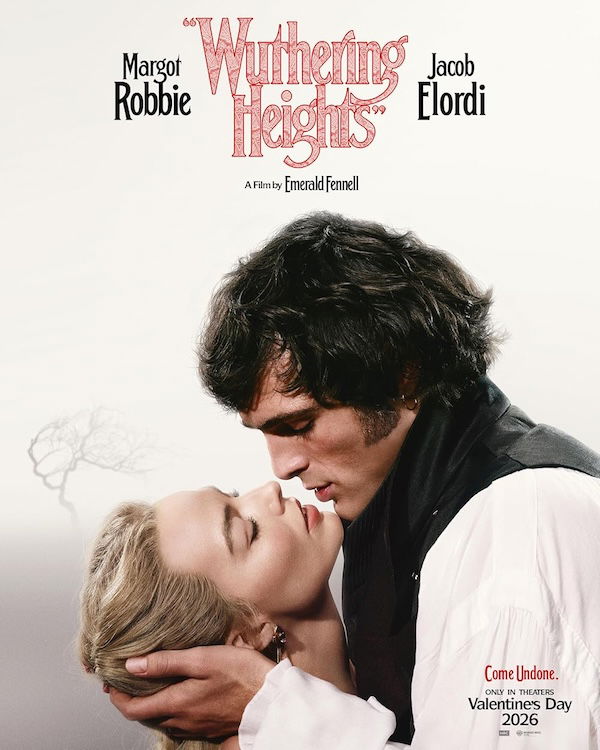
Unless you live under a rock, and if you do, for the love of God, please invite me to live there with you, you know all about Emerald Fennell’s “Wuthering Heights” which is referred to in the trailer as “The Greatest Love Story of All Time.”
I haven’t seen the movie yet so I’m not going to comment on it. What I do want to do is give you a teensy heads up in case you run off to read “The Greatest Love Story of All Time,” and also to talk about some of the things that matter in the novel that are frequently lost in adaptations of the novel. As I tried to sum up my points, I realized that none of them make any sense unless you know the full plot of the novel – so this is a long post. But if you want to cut to the chase, look for any time I write some version of “AND THIS MATTERS” for the highlights.
Wuthering Heights tells the story of a boy (Heathcliff) and girl (Cathy) who grow up poor, abused, and neglected, in a home in which alcoholism is rampant and women, children, and animals are routinely abused. It tells of how these two children are affected by the limitations placed on them regarding their race, their class, and their gender as they grow up, and how they embody and perpetuate the cycle of abuse. It also contains a love story – but not the one you are thinking about.
I’m going to attempt to summarize the events of the book. Bear with me since there are two Cathys, a family with the last name Linton, a character named Heathcliff, and a character named Linton Heathcliff.
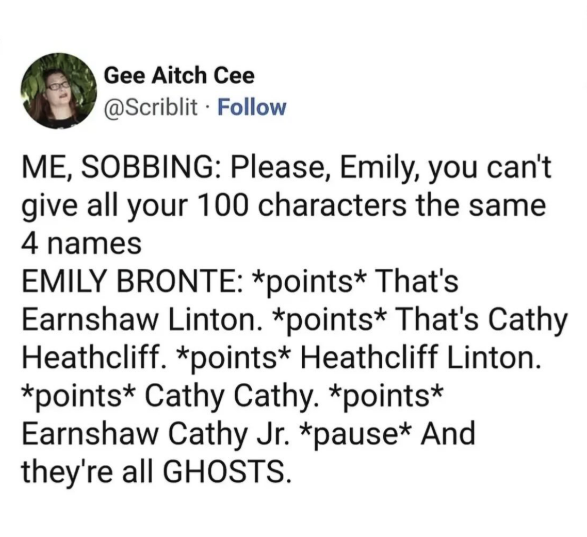
Just roll with it – and prepare for child abuse, abuse of animals, and domestic violence.
For a more accurate timeline of events, look at The Reader’s Guide to Wuthering Heights. Seriously, my retelling gets pretty messy because so many storylines overlap. I’m also oversimplifying or outright eliding some stuff, like the role of religion, the role of nature, and the characters of Nelly and Jacob and the unreliable narrator/nested flashbacks writing device.
The very first thing that happens in Wuthering Heights is that a lost traveller is attacked by dogs. He is brought into a house (Wuthering Heights) where the inhabitants of the house proceed to abuse animals and spit verbal abuse at each other. There is no beauty or softness in sight. This is a world in which cruelty is baked in, people, AND THAT MATTERS because all that Cathy and Heathcliff know how to do is endure cruelty and deal out cruelty to others.
We learn in an extended flashback that when Cathy Earnshaw was six and her brother Hindley was fourteen, their father, Mr. Earnshaw, came home from a business trip with a child in tow whom their father names Heathcliff – one name only.He does not give the child his last name AND THAT MATTERS because Heathcliff’s very existence as someone without a surname immediately marks him as placeless in society.
Heathcliff’s parentage is a mystery although many readers have assumed that Heathcliff is Mr. Earnshaw’s illegitimate son which makes much more sense then him collecting a random child off the street and also adds ‘incest’ to the list of trigger warnings. Mr. Earnshaw dotes upon Heathcliff and neglects Hindley, who beats Heathcliff, because hurt people hurt people. Heathcliff and Cathy are inseparable as children, even after Mr. Earnshaw dies and Hindley forces Heathcliff to work as a servant.
DIGRESSIVE RANT AHEAD: RACE MATTERS!
Allow me to digress – a lot. Heathcliff is referred to frequently and from the onset as having dark hair, skin, and eyes. He is from a port town which caters to the slave trade, so he might be African. He may also be, and is suspected to be by various characters in the novel, Spanish, Indian, Irish, Chinese, or Romani. Of course if he is Mr. Earnshaw’s biological son, then we add that into the genetic mix.
Heathcliff’s ethnicity is deliberately ambiguous. However, the one thing Heathcliff is not, is ‘White.’ His appearance visibly, immediately, and inescapably marks him as ‘other’. He can change his clothes and his income but he cannot change his skin, AND THIS MATTERS because Heathcliff is driven by a desire to prove his superiority over the people who have told him that he is not good enough. And by ‘people’ I mean every single person in his life, including Cathy. He can’t be seen as a respected member of society and he certainly isn’t seen as a suitable match for Cathy, not even by Cathy herself. Race is not the only factor here, but it is a factor, and one that Heathcliff can’t change.
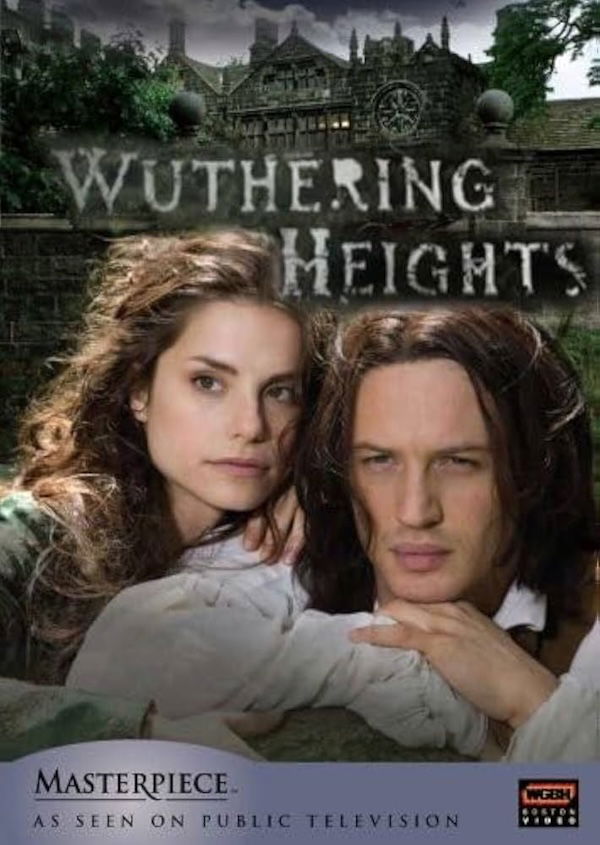
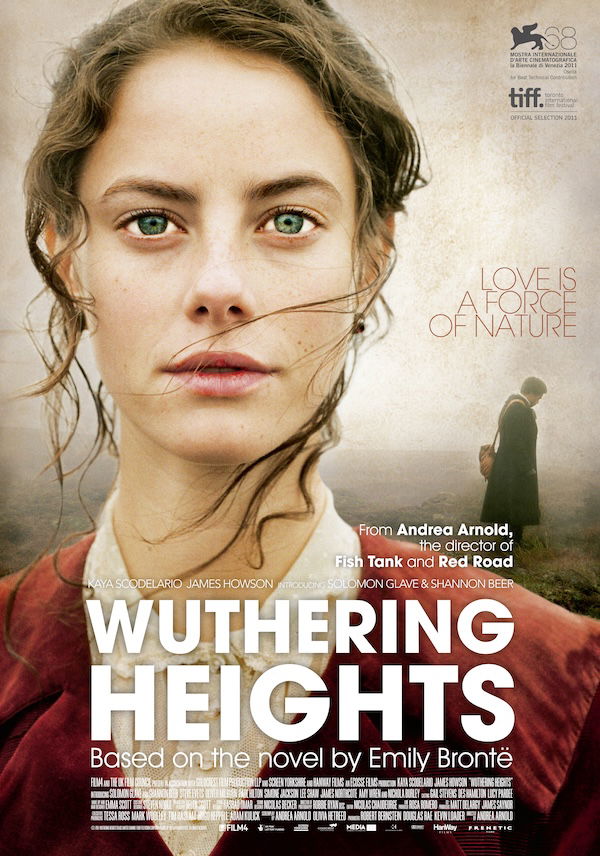
A note about systemic racism: When I read Wuthering Heights as a young teenager, I pictured Heathcliff as White, as, apparently, did Emerald Fennell when she read the book as a fourteen-year-old. This misreading, born of a culture that constantly seeks to erase Blackness by insisting on the White default, was reinforced by film adaptations in which Heathcliff has consistently been played by White actors, with the exception of the 2011 version in which he is played by James Howson, a Black actor.
This string of White Heathcliffs isn’t an accident, any more than it isn’t an accident that I read Heathcliff as looking, well, a lot like Jacob Eloridi, or Tom Hardy, or Laurence Olivier, or Ralph Fiennes, despite countless comments in the text to the contrary. The fact is, neither the Hays Code nor the culture of Britain or America would stand for an interracial couple in film.* AND THAT MATTERS because our culture’s insistence on a White Heathcliff is based in racism, just as the book version Heathcliff’s mistreatment is based (in part), on racism.
Emily Bronte deconstructs a great many damaging elements of Victorian culture in Wuthering Heights, including the racism. Surely a book that interrogates so many toxic elements of Victorian culture deserves a better reading than the one I gave it when I was twelve.
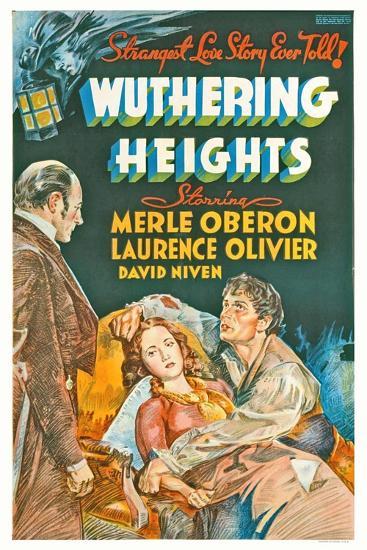
(*Trivia alert: Actually, we did get an interracial couple in the 1939 version of Wuthering Heights, because Merle Oberon, who played Cathy, had a White father and a Sri Lankan mother, but spent her career concealing her mixed-race heritage.)
A small taste of the excellent Merle Oberon:
Thus concludes my rant. Back to the story!
When Cathy is around twelve years old and Heathcliff is maybe thirteen, Cathy and Heathcliff spy on the home of the wealthy Linton family. They don’t have cable; they have to make their own fun, harr harr. The Linton’s guard dogs attack Cathy and she is brought into the house to recover while Heathcliff is forced to leave.
Years pass, and Heathcliff overhears Cathy saying that she could never marry Heathcliff due to his lower class status: cue Big Misunderstanding. He nopes off to make his fortune and Cathy, thinking that Heathcliff is gone forever and that marriage to Edgar Linton is her only chance at escaping her horrible home, gets married to Edgar Linton at the age of seventeen and suffers the fate of one who was born to be a pirate queen but instead is forced to do embroidery while smiling sweetly.
But wait! Heathcliff is back! And he has vowed revenge upon everybody! First he goes for Hindley. Hindley took time off from his busy schedule of torturing Heathcliff to get married, after which he returned to Wuthering Heights. His wife died in childbirth, leaving poor baby Hareton to the tender care of Hindley and Heathcliff, the world’s worst two dads.
In one moment that is not only horrifying but also kind of awfully funny, a drunken Hindley drops the baby off a bannister and Heathcliff catches the baby by pure instinct and then rages at himself for having done so.
Heathcliff basically turns Hindley into a gambling addict and an alcoholic and wins ownership of Wuthering Heights in a game of cards, and Hindley dies a drunk, possibly by accident, probably by murder. Got all that?
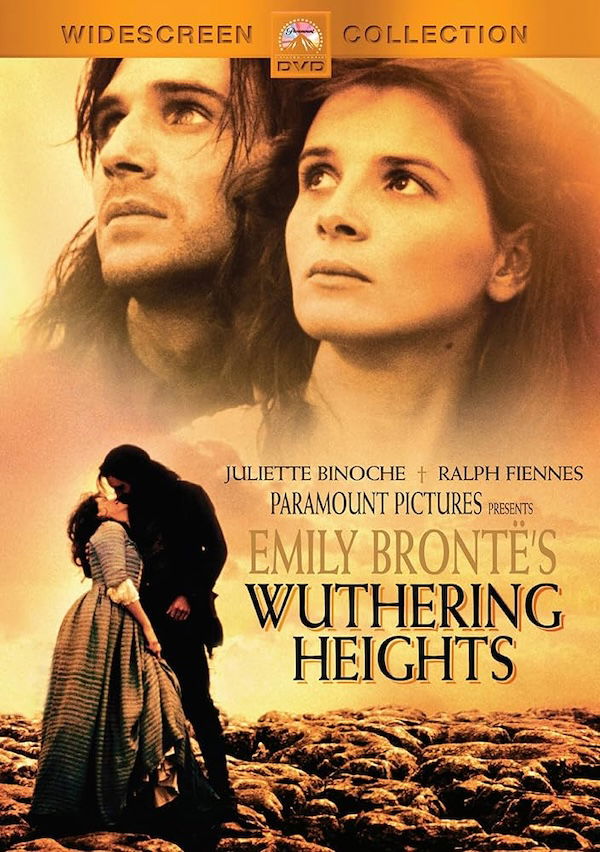
Next up: revenge on Edgar by destroying the life of Edgar’s sister, Isabella. Heathcliff convinces Isabella that he is a bad boy with a heart of gold who just needs the love of a good woman, and he then convinces her to elope with him, just to make Edgar furious and Cathy jealous. Heathcliff then proceeds to…
…beat Isabella, it’s implied that he rapes her, and then imprisons her while forcing her to labor as a servant until she escapes while heavily pregnant and hides with Edgar’s help.
She has a baby whom she names Linton Heathcliff.
Meanwhile Cathy gets pregnant with Edgar Linton’s child, has a fraught meet-up with Heathcliff, has the baby and dies of childbirth and that Victorian classic – brain fever.
Here’s where I remind our readers that at the time of her death, Cathy is eighteen, AND THIS MATTERS.
Do you know why, during her short “adult” life, Cathy acts like a teenage nightmare brat from hell? BECAUSE SHE IS ONE. Her home is as hellish as possible and she is literally a teenager! As is Heathcliff, who has lived some secret life that evidentially involved a lot of suffering and maybe some crime and loses the love of his life while he is nineteen or twenty years old! And Isabella, who does a romantic and foolish thing in falling for Heathcliff, is also eighteen! Their ages matter because they are never given time to mature, to have other experiences, to grow.
Most adaptations cast older actors and lose this entire layer, and I think it sucks a lot of tragedy out of the story even when the actors are extraordinary. Heathcliff’s emotional growth is frozen at the age at which he loses Cathy, and of course Cathy’s growth is frozen by death. The very most mature of teens struggle with things like communication, emotional regulation, and impulse control. Is it any wonder that these two teenagers can’t just marry each other and grow the fuck up, given not just their ages but also the mercurial and violent upbringing that they share?
Heathcliff responds to Cathy’s death in a very healthy and normal manner.
Heathcliff digs up Cathy’s corpse and makes out with it, he begs Cathy to haunt him, he dies, their ghosts haunt the moors.
This wraps up most adaptations. As in, they end here.
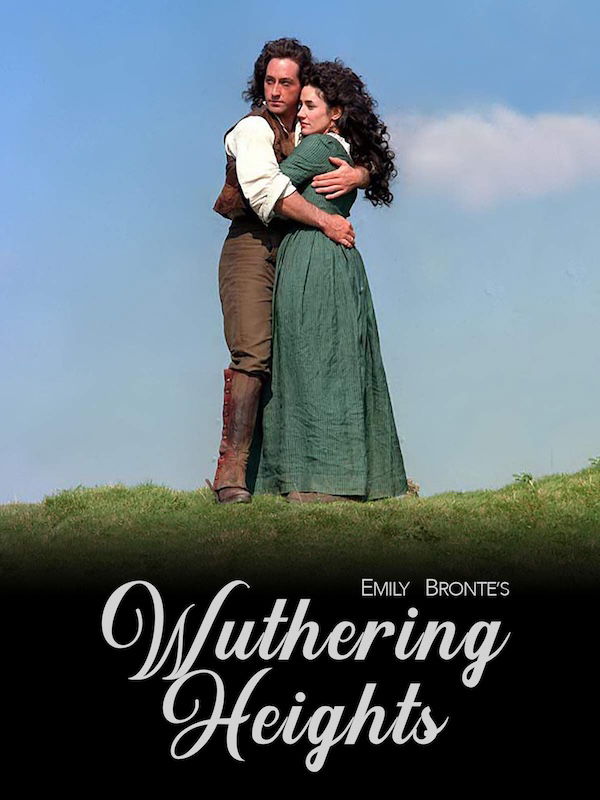
It has been so far a story about codependency and enmeshment and lust. But has it been a story about love? The Greatest Love Story Ever?
Hardly. Cathy and Heathcliff do not wish for the other to be happy, even at the cost of their own happiness. They do not bring out the best in each other. They do not sacrifice for each other’s good. They are obsessive, they are clueless (in the sense that they have no models of healthy interaction or coherent communication to draw from in their lives), and they are deeply, deeply selfish.
So while I would call it a powerful story, I personally wouldn’t call it a love story. I would call it a story about the generational trauma of abuse and alcoholism. I would call it a story about how being abused as children creates abusive adults. I would call it a story about how people who feel trapped – by race, by class, by gender, by geography, by untreated mental and physical illness – do self-destructive things in attempts to escape those traps. But I wouldn’t call it a love story.
But it isn’t over my friends! Adaptations may stop here, but the novel is only half over AND THAT MATTERS because it is in this half that the themes of the book really play out.
In the novel, Heathcliff does not die soon after Cathy does, because he has revenges to plot. He figures that the best way to continue to get back at Hindley, Edgar, and Cathy is to degrade and abuse their children as much as possible. It is Heathcliff’s deepest wish to turn all the children of his tormentors into the worst people they can possibly grow up to be.
Behold:
Heathcliff is now the head of Wuthering Heights where he terrorizes everybody. He’s still mad at himself for his failure to murder a baby, and the baby, Hareton Earnshaw (remember, the son of Hindley, Cathy 1.0’s brother?) is now a young man living like a servant under Heathcliff’s thrall. Hareton is taught to dress, work, and speak like a farmhand. He is not allowed to leave the estate or to learn to read.
Also sharing this happy home is Heathcliff’s son, Linton (Edgar’s nephew), who Heathcliff forced to live at Wuthering Heights when Linton was about twelve. He is always described as ‘sickly’ and under Heathcliff’s dubious care he becomes a petty, cruel whiner – in short, the worst version of himself.
When Linton and Cathy 2.0 (Edgar and Cathy’s daughter, who is also named Cathy) are fifteen and sixteen, respectively, Heathcliff convinces Cathy 2.0 to run away from home and marry Linton. Poor sickly Linton dies at the age of seventeen, with no doctor (forbidden by Heathcliff of course) and no company except for Cathy 2.0. Also please note that by withholding medical treatment Heathcliff essentially kills his own son just to spite his son’s mother, who is already dead.
Meanwhile Cathy 2.0 is effectively Heathcliff’s prisoner. Her imprisonment makes the formerly cheerful and kind girl bitter and furious, almost deranged with despair – the worst version of herself, as Heathcliff hoped.
When Cathy 2.0 first arrives at Wuthering Heights, she despises Hareton, and with good reason. Despite the abuse he receives, he is devoted to Heathcliff. Cathy 2.0 is essentially imprisoned at Wuthering Heights and Hareton does not offer to help her. He strikes her as dirty, illiterate, and complicit in her hellish life as a widow under Heathcliff’s control, and her assessment is initially correct.
However, over time, Hareton keeps extending small kindnesses towards Cathy 2.0, and over time, she begins to reciprocate. After she makes fun of Hareton for not being able to read, she realizes that she has hurt his feelings, repents, and offers to teach him. The next thing you know, they are wandering the moors and becoming real friends and falling in real love – they care about each other, they are kind to each other, they support one another in becoming better people. They are capable of change and healing.
Heathcliff is now, because of various deaths and marriages that he has orchestrated, the owner of both Wuthering Heights and the Linton estate, Thrushcross Grange. However, he finds himself increasingly tormented by Cathy 1.0’s ghost – so much so that he can’t even muster the energy to break up the happy couple.
Every time he tries to hit Cathy 2.0 or yell at her, he finds himself unable to move, or distracted. He feels the presence of Cathy 1.0 protecting her daughter from him. Finally he goes into Cathy 1.0’s room and starves himself to death. Cathy 2.0 and Hareton give up Wuthering Heights and get the heck outta there. The End.
For Heathcliff and Cathy 1.0, ‘love’ is selfish and ‘love’ is death.
For Hareton and Cathy 2.0, love is selfless and love is freedom and life.
So yes, there is a great love story in Wuthering Heights. AND THAT MATTERS because, if Emily Bronte wanted us to see Heathcliff and Cathy 1.0 as a great love story, why include its contrast? Cathy 2.0 and Hareton are a rebuttal to the claim that Cathy and Heathcliff are the greatest love story of all time – not just because they do horrible things but because they act without empathy, they are deeply selfish, and they cannot or will not change.
But even though Cathy 2.0 and Hareton have been abused, they are capable of growth, and they do act out of empathy, and they do want their lover to be happy. And that’s real love. It may not be “The Greatest Love Story Ever Told,” but it’s much better than Heathcliff and Cathy 1.0, no matter what the trailer says.
Thank you for this @SBCarrie. It has been a most excellent start to my Saturday. I’ve been giving some version of this rant about Heathcliff and Cathy for decades, concluded with “Have you ever actually READ THE BOOK?”. That it’s being released on Valentine’s Day as “The Greatest Love Story Ever Told” does nothing but grind my gears.
HAH! This review makes me feel better for hating this book when I read it as a teenager. My friends loved it, and I didn’t get it.
My mom always had romance “pocket books” around, so I was introduced to them at a young age. Wuthering Heights, Rebecca, and a bunch of other classic “romances” all seemed awful to me.
Wasn’t “Wuthering Heights” billed as “Bella and Edward’s Favorite Book” on a teen-oriented Twilight-era repackaging of the classic? (Anyone remember when they were doing classics aimed at teens, with flowers on black backgrounds a la “New Moon”? I remember for sure that “Pride and Prejudice” and “Wuthering Heights” were given this cover treatment.)
I think I had to read it – or part of it – at some point and I absolutely despised it. Every time I see it mentioned my kneejerk reaction is “Ewww”. I haven’t even seen that much about this movie but even still photos have me recoiling in disgust.
I read the book when I was 16, and was perflexed. This isn’t a romance, I thought. I did finish it, but haven’t reread it. I am confident I picked up a Johanna Lindey to read as a palate cleanser.
Thank you! I have never understood how this book can be considered a “romance”. During a late August rainy period as a teenager, I read Wuthering Heights, and absolutely hated it. Guess what was the first book our English class had to read when school started? Did not read it. Your explanations make so much more sense. I did like the two kids and was happy they were able to escape into a better life. Everyone else was godawful. Walking out of that place already made it better. I would consider it more a book of survival.
An addendum: Wuthering Heights was not marketed originally as a romance, nor was it received as one. As soon as I realized that it was not intended as a romance, I realized, that yes, it is one of the greatest books of all time – just not a romance!
This is perfection, and all of it true.
Our lovers are clearly brother and sister. Unless Heathcliff is the secret son of Rhaegar Targaryen, the ‘Last Dragon’ he is the illegitimate child of the patriarch whose mistress ran off or died of consumption or something. I mean, the wife knows it right away. It also isn’t as if Heathcliff is a particularly cute or amiable child. He is a little terror. So what would prompt a gentle farmer to bring home this little terror from a town that he visits regularly while his wife stays at home?. Yeah… I think we know where the odds are.
In reality, it would be almost bizarre if Heathcliff wasn’t an illegitimate son. That is what makes the Jon Snow reveal work. Everyone assumes he is the illegitimate son of Ned Stark because that is what you did when you had an out-of-wedlock child and mistress mom wasn’t around. I think this was much more of an unmentioned assumption in 1770s and 1780s when the book takes place.
This is a really great write-up. I have always loathed WH and have never understood the hype. I still don’t want to re-read it, but this reframing is super helpful.
It’s so frustrating that “involved a couple” and “written by a woman” must equal romance in the most conventional sense.
A brilliant explication! I am sharing! I have read Wuthering Heights several times. It is one of my favorite books and my mother’s favorite before me. She bequeathed to me her vintage copy with the Fritz Eichenberg woodcuts. I think I–and others no doubt–stop paying attention after Cathy 1.0 dies, but there is so much more that remains. Harry Truman said “The buck stops here,” but the buck of family trauma and abuse never stop until someone makes it stop. That is what is important in Brontë book and many readers (and certainly film viewers) miss it.
The only thing I like about WH is Kate Bush’s song. Everyone in it needs therapy, and intervention.
Ah, the 1943 Fritz Eichenberg woodcuts – these were in the copies of Jane Eyre and Wuthering Heights that I first read and I have them today! Core memory unlocked! You can see them here: https://blog.library.villanova.edu/2023/04/12/the-printed-image-wuthering-heights/
I didn’t know about Jane Eyre illustrations by Fritz Eichenberg! I am going to seek them out! Thank you again!
“Romantic Tragedy” is what we were taught in high school and college. Romantic Tragedy is not romance.
I read this book as a teenager and hated it, but nonetheless reread it at least two more times because I would hear the hype and think “maybe I was wrong!” Nope. This review completely reminded me why. And not just because it’s a romance, because it’s about horrible people with no personal growth.
Not A Love Story, let alone the greatest of all time. I blame the movie versions for making us remember only beautiful moors, the scent of heather and Laurence Olivier; we became blind to everything else in the book.
Jasper Fforde to the rescue, thankfully. He skewers WH brilliantly in a couple of his Thursday Next books. NB: The books must be read in order or you’ll be completely lost. Sorry.
I was on HPD–Heathcliff Protection Duty–in Wuthering Heights for two years, and believe me, the ProCaths tried everything. I personally saved him from assassination eight times. LOST IN A GOOD BOOK (2)
‘CAN WE HAVE SOME ORDER PLEASE!’ yelled Miss Havisham so loudly that the whole group jumped. They looked a bit sheepish and sat down, grumbling slightly.
‘Thank you. Now, all this yelling is not going to help, and if we are to do anything about the rage inside Wuthering Heights we are going to have to act like civilised human beings and discuss our feelings sensibly.’ THE WELL OF LOST PLOTS (3) where all WH characters are required to attend a rage counseling session chaired by Miss Havisham.
I hated WH when I first read it….which was after listening to a Pat Benatar song about them. I hated every adaptation….but I never figured out that they may have been siblings….ewww. Thanks for the great article 😀
Brilliant rant, agree agree agree.
Although, I will say I found Cathy 2.0 and Hareton thoroughly unconvincing and limp, and I could never bring myself to believe that they would stick together once they escaped their fetid upbringing. I think that might not have been what Brönte was going for, mind, but I definitely never got the sense that she had a clue what healthy, romance, or reality might look like, which makes it hard to portray those things.
And yes of course it matters that Heathcliff is not white in the book, and absolutely he’s white in the movies because of racism. I don’t hate it as much as I might because having the person of color be this bestial abusive monster who is controlled by his obsessive lust and vindictiveness, who cannot escape his blood or whatever grim bullshit is being peddled in the book. Well. It’s not a great look either.
Is it wrong that because of this book I am deeply skeptical of people who chose to be called Cathy?
Thank the universe for providing us with Kate Beaton, Dude Watching with the Bröntes has done a lot to reconcile me to having bothered to read them all.
Yes! I’ve never understood why all the films stop after the first couple and completely miss the point of the book!
(I still like the Kate Bush song, even though it, too, is about Cathy 1.0 and Heathcliff.)
I happen to live under a rock. Please come join me; the weather is fine and I can provide plenty of good books!
@Carrie S ~ I’ve never read Wuthering Heights and appreciated your post.
@Jeanette, @T.M.Baumgartner, yes, the Kate Bush song is still great, the book, not my taste either.
I totally agree that telling the story of the next generation matters a lot. Cathy Linton and Hareton could easily be as messed up as Catherine Earnshow and Heathcliff but they didn’t, a little bit of kindness goes a long way.
Also, I saw the new movie and my god nobody should watch it sober.
I read it maybe 50 years ago, and had totally erased the plot from my head.
I read this post yesterday before there were any comments and I hesitated to admit that I hated the book and thought it wildly overrated.
Now I’m glad to see I’m not alone in my loathing but I appreciate the analysis that makes me realise Bronte may have had a point to make rather than just creating a lot of dismal cruelty and unhappiness. A film version that actually tells the whole story really would be revolutionary.
I didn’t hate WH the book when I read it 40 or so years ago, but then I wasn’t expecting a “romance.” I read it during marination in relationship-focused fiction, especially by women, between 1750-1900 (leading up to writing master’s thesis on Frances Burney) which involved many more Victorian “romantic tragedies” than I would have otherwise chosen to read. 🙂 I put it in the same class of commonly-misunderstood foundational texts as ‘Romeo & Juliet.’
If I’m following, Cathy 2.0 and Hareton are first cousins, no? So I’m really hoping they not only get off the moors, but also meet new people to marry and just remain close friends.
Mick LaSalle’s review of the film took the usual tired swipe at actual romance novels. He said Emerald Fennell “could have made the same movie by adapting some random romance novel with a drawing of Fabio on the cover.”
THANK YOU! (Sorry to shout.) I’ve always found Cathy 1.0 and Heathcliff completely crazy, and not romantic in any sense. I kept looking up from the book and saying, all these people are bonkers. Your review is spot on. And that’s why I didn’t like the new movie. (A friend said, Ah, you object to the mess; I came for the mess.)
I’ve only read the novel once. Give me Charlotte or Anne, when it comes to Brontës. But one should read it. It’s the literary equivalent of a volcano. Hardly any other book has so much brawling, energetic life, even if most of the characters focus their energy on making life hell for everybody else.
And while we’re kicking Heathcliff for being a jerk, don’t forget that he murders Isabella’s dog when he elopes with her. Just to horrify and hurt her. Remind you of any other selfish jerk?
I haven’t known here else to contribute this knowledge, and I understand that while he is obviously light skinned, Jacob Elordi’s dad moved from Basque Country in Spain to Australia. So Jacob Elordi is, technically, Spanish. And again I know it’s overlooking that he is light skinned, but for everyone saying they didn’t cast someone who fit….he fits one version, at least.
Thanks so much for writing this. I remember none of the details (he digs up her corpse?!) but I 100% remember the new love story at the end and the feeling of the sun coming out after a long, long storm. I’m so glad I read this book early in life so I went into it with no expectations. (My uncle gifted it when I was born because of my name.)
I had to read WH as part of an English lit course and absolutely hated it. It annoyed the heck out of me when Cathy and Heathcliff were held up as “great lovers” (equalling my infuriation when someone called Romeo and Juliet a romance). I much preferred Jane Eyre.
This is a wonderful writeup of what Wuthering Heights IS as opposed to what everyone thinks it is, and I want to print it out and make leaflets and hand it out in a movie theater to anyone going to see the new version.
Tasha Suri wrote What Souls Are Made Of, a remix of WH that makes Heathcliff even more explicitly not-white (and Cathy too!) and is basically What If They Made Slightly Better Choices. I adore it.
I first read WUTHERING HEIGHTS a few years ago and loved it. I’d already been hipped that it’s Not A Romance by (I think) Jenny Trout in her extended takedown of 50 SHADES. I can’t believe Emerald Fennell went ahead with White Heathcliff in 2026. When I learned she was directing I wondered if the romance marketing was a bait and switch, given how PROMISING YOUNG WOMAN was marketed (and besides that, where the story ended up). It’s wild to me that the romance angle isn’t just a weird thing that happened one time. The contemporary reviews (via Wikipedia) are are like, “It is a compound of vulgar depravity and unnatural horrors” and “a fiend of a book — an incredible monster … The action is laid in hell”.
💯💯💯💯💯💯💯💯!! My EXACT SAME opinion on Wuthering Heights, only the 2nd geverations love story in 2nd half of book redeems what is one of the most heinously toxic couples everrrrrr. Not my fave book bu a long shot but without that last section of book it’s just ☣️☣️☣️