
B-
Genre: Nonfiction
Since around 2016, I’ve developed a fascination with horror, particularly feminist horror. I’m intrigued by its similarity to romance – it has a million subgenres, it lacks respect, it involves exploration of fantasies and desires, and above all, when it works, it works on a personal and emotional level.
Scream With Me: Horror Films and the Rise of American Feminism (1968-1980) is a nonfiction book that analyzes the way that the domestic horror films of the 1970s were impacted by, and in turn impacted, the feminist movement in the United States. I loved this book, which really helped me understand why these movies had such a huge cultural impact.
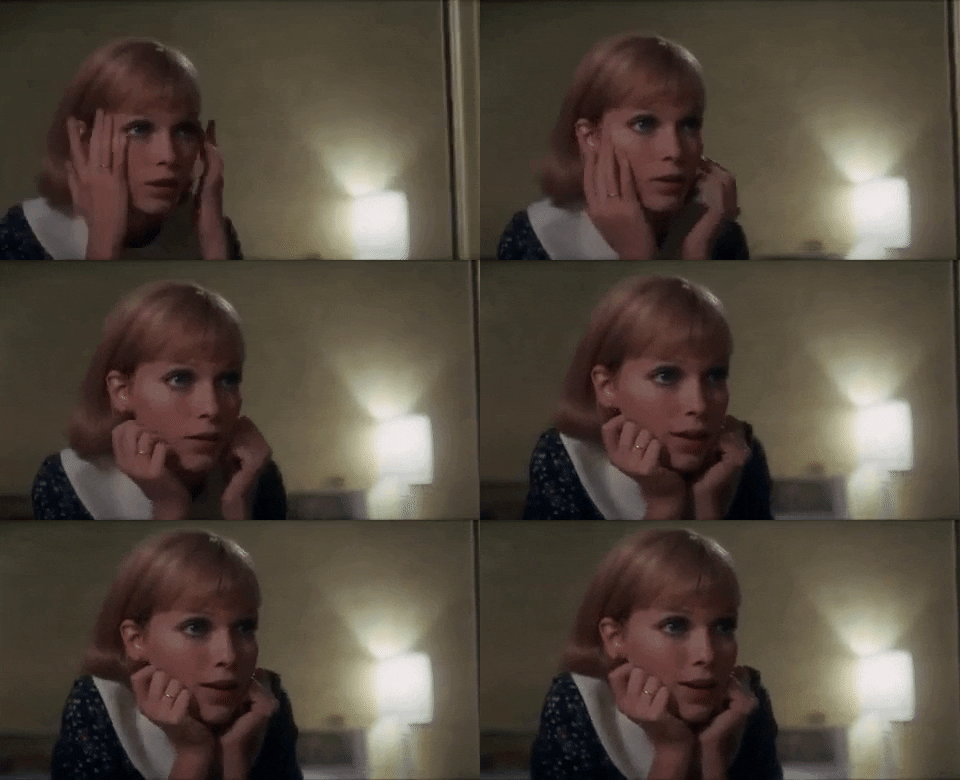 (Actually Rosemary in Rosemary’s Baby, looking happy for pretty much the last time ever)
Author Eleanor Johnson focuses on six domestic horror films:
- Rosemary’s Baby (1968)
- The Exorcist (1973)
- The Stepford Wives (1975)
- The Omen (1976)
- Alien (1979)
- The Shining (1980)
She defines a domestic horror film as:
- It takes place largely within a confined dwelling place, in which a female protagonist has restricted freedom.
- There is at least one male antagonist who is also within the dwelling place, and he cannot easily be removed.
- The horror that the film inflicts on its female protagonist centers on children, reproduction, or sex, and it includes an element of physical battery.
- All the films are either explicitly or implicitly thinking through contemporaneous legal conflicts in the United States about women’s rights.
In a chapter titled “Bad Men Making Good Films”, Johnson discusses the conundrum posed by the fact that these movies were directed by men who were, in some cases, themselves abusers on and off the movie lot:
Half of the directors of the original films – namely, Roman Polanski, William Friedkin, and Stanley Kubrick – were abusers of women themselves…
Of the abuse dealt to Ellen Burstyn on the set of The Exorcist and to Shelley Duvall on the set of The Shining, Johnson says:
Watching [The Shining], like watching The Exorcist, isn’t just watching a film about abuse-it’s watching actual abuse, however attenuated and ultimately escapable it was, both for Burstyn and Duvall.
And yet, these very un-feminist men directed movies that showed viewers the reality of social issues through a horrific lens. During the time that the Battered Women’s Movement was just beginning to form, the Equal Rights Amendment was under siege, and Roe v. Wade was hotly contested, these movies forced viewers to feel empathy with women who lacked the basic rights they needed in order to free themselves from horrific fates.
They illustrated toll of domestic violence and marital rape.
They made viewers feel empathy for women imperiled by being forced to carry unwanted fetuses.
They showed how demoralized and trapped many women felt by the opposition to the Equal Rights Amendment.
Says Johnson:
What’s so important about the domestic horror films in this book is that they make viewers – whether or not the viewers are female – carry the fear and vulnerability embodied by the women in the films home with them…they make these things [the social, political, and legal battles of the 1970s] feelable.
More recent movies described by Johnson (Paranormal Activity, Creep, and Creep 2) interrogate the role of movie and moviemaker. For instance, in Paranormal Activity, we are watching a home video filmed by a man who is emotionally abusive towards his girlfriend on and off camera. There is a greater sense in these three films that abusers should be held accountable regardless of the role they play in creating art.
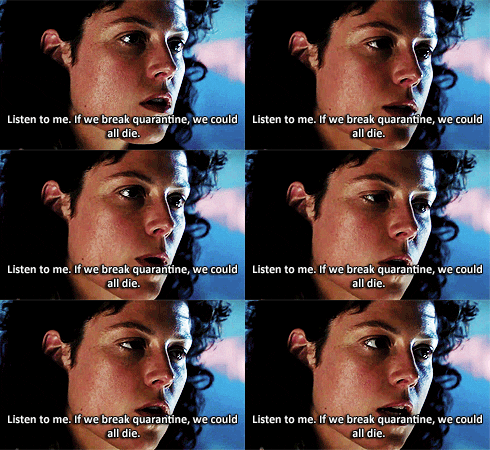
Ripley (in Alien) reminds us that men don’t listen to women often enough
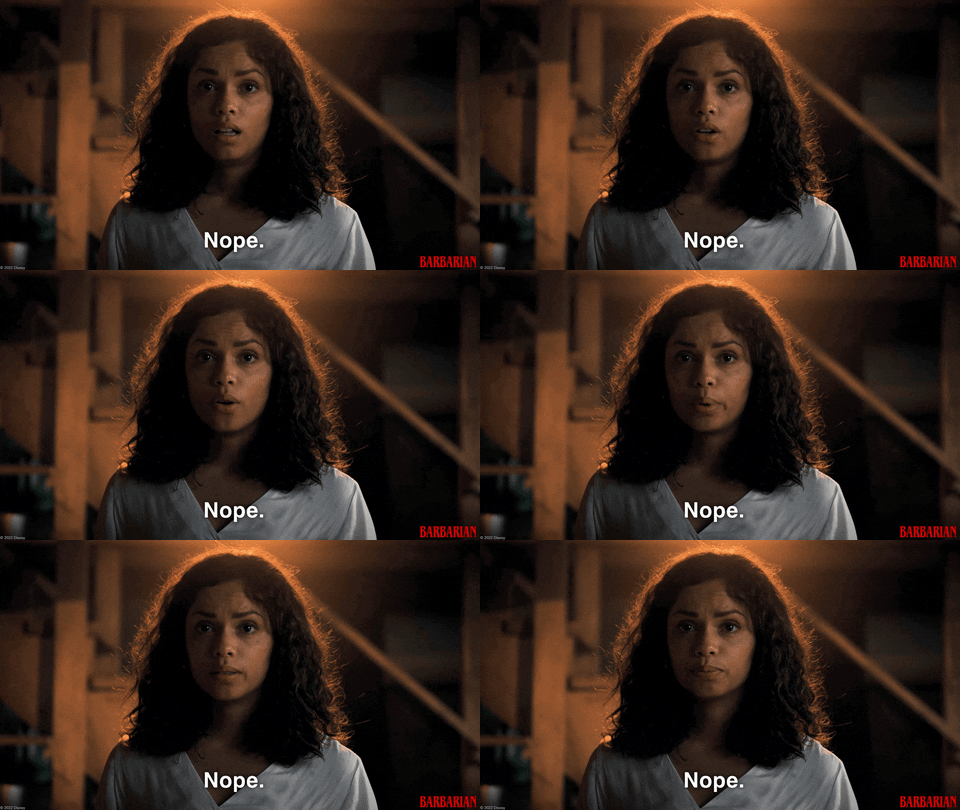
I know that Johnson wanted to keep her focus tight, but I hope she writes a second book. I would love to hear her thoughts on the more recent domestic horror movies about women of color, like Barbarian (2022), The Nanny (2022), His House (2020), or Huesera: The Bone Woman (2022). The absence of women of color in her book is a glaring void that illustrates how marginalized women of color were in filmmaking in the 1970s (especially in horror) and how marginalized they remain in the world of film analysis.
Although I didn’t agree with everything Johnson says, I loved her voice and I thought she had an excellent way of making arguments. Above all, she’s passionate about this topic and I think it’s that passion that makes this book so powerful. It’s intellectually sound, but it’s also unabashedly emotional, a cry for women’s equality on and off the screen.
In an epilogue, Johnson uses the movie Women Talking (2022) to frame a discussion of how current politics threatens women. She implores the readers of her book to write, to refuse to be silent, to literally and figuratively scream.
We certainly have plenty to scream about.
This book is available from:




As an Amazon Associate we earn from qualifying purchases.
We also may use affiliate links in our posts, as well.
Thanks!
